
Wiktionary:Pijaca

- sh: Ovo je stranica za razgovor zajednice. Zahtjevi za botovsku zastavicu bi takođe(r) trebali biti dani ovoj stranici. Ova wiki koristi standardnu polisu za botove, dozvoljava globalne botove kao i automatsko potvrđivanje određene vrste botova. Svi ostali zahtjevi za botove trebaju biti dani ispod ovog teksta, te ako nema prigovora pristup treba biti zatražen kod stjuarda.
- en: This is the community discussion page. Requests for the bot flag should also be made on this page. This wiki uses the standard bot policy, and allows global bots and automatic approval of certain types of bots. Other bots should apply below, and then request access from a steward if there is no objection.

(This message is in English, please translate as needed)
Greetings!
Notifications will inform users about new activity that affects them on this wiki in a unified way: for example, this new tool will let you know when you have new talk page messages, edit reverts, mentions or links -- and is designed to augment (rather than replace) the watchlist. The Wikimedia Foundation's editor engagement team developed this tool (code-named 'Echo') earlier this year, to help users contribute more productively to MediaWiki projects.
We're now getting ready to bring Notifications to almost all other Wikimedia sites, and are aiming for a 22 October deployment, as outlined in this release plan. It is important that notifications is translated for all of the languages we serve.
There are three major points of translation needed to be either done or checked:
- Echo on translatewiki for user interface - you must have an account on translatewiki to translate
- Thanks on translatewiki for user interface - you must have an account on translatewiki to translate
- Notifications help on mediawiki.org. This page can be hosted after translation on mediawiki.org or we can localize it to this Wikipedia. You do not have to have an account to translate on mediawiki, but single-user login will create it for you there if you follow the link.
Please let us know if you have any questions, suggestions or comments about this new tool. For more information, visit this project hub and this help page. Keegan (WMF) (talk) 19:12, 4 oktobar 2013 (UTC)
- (via the Global message delivery system) (wrong page? You can fix it.)
Introducting Beta Features[uredi]
(Apologies for writing in English. Please translate if necessary)
We would like to let you know about Beta Features, a new program from the Wikimedia Foundation that lets you try out new features before they are released for everyone.
Think of it as a digital laboratory where community members can preview upcoming software and give feedback to help improve them. This special preference page lets designers and engineers experiment with new features on a broad scale, but in a way that's not disruptive.
Beta Features is now ready for testing on MediaWiki.org. It will also be released on Wikimedia Commons and MetaWiki this Thursday, 7 November. Based on test results, the plan is to release it on all wikis worldwide on 21 November, 2013.
Here are the first features you can test this week:
- Media Viewer — view images in large size or full screen
- VisualEditor Formulæ (for wikis with VisualEditor) — edit algebra or equations on your pages
- Typography Refresh — make text more readable (coming Thursday)
Would you like to try out Beta Features now? After you log in on MediaWiki.org, a small 'Beta' link will appear next to your 'Preferences'. Click on it to see features you can test, check the ones you want, then click 'Save'. Learn more on the Beta Features page.
After you've tested Beta Features, please let the developers know what you think on this discussion page -- or report any bugs here on Bugzilla. You're also welcome to join this IRC office hours chat on Friday, 8 November at 18:30 UTC.
Beta Features was developed by the Wikimedia Foundation's Design, Multimedia and VisualEditor teams. Along with other developers, they will be adding new features to this experimental program every few weeks. They are very grateful to all the community members who helped create this project — and look forward to many more productive collaborations in the future.
Enjoy, and don't forget to let developers know what you think! Keegan (WMF) (talk) 20:36, 5 novembar 2013 (UTC)
- Distributed via Global message delivery (wrong page? Correct it here), 20:36, 5 novembar 2013 (UTC)
Call for comments on draft trademark policy[uredi]
Hi all,
The Wikimedia legal team invites you to participate in the development of the new Wikimedia trademark policy.
The current trademark policy was introduced in 2009 to protect the Wikimedia marks. We are now updating this policy to better balance permissive use of the marks with the legal requirements for preserving them for the community. The new draft trademark policy is ready for your review here, and we encourage you to discuss it here.
We would appreciate if someone would translate this message into your language so more members of your community can contribute to the conversation.
Request for comment on Commons: Should Wikimedia support MP4 video?[uredi]
I apologize for this message being only in English. Please translate it if needed to help your community.
The Wikimedia Foundation's multimedia team seeks community guidance on a proposal to support the MP4 video format. This digital video standard is used widely around the world to record, edit and watch videos on mobile phones, desktop computers and home video devices. It is also known as H.264/MPEG-4 or AVC.
Supporting the MP4 format would make it much easier for our users to view and contribute video on Wikipedia and Wikimedia projects -- and video files could be offered in dual formats on our sites, so we could continue to support current open formats (WebM and Ogg Theora).
However, MP4 is a patent-encumbered format, and using a proprietary format would be a departure from our current practice of only supporting open formats on our sites -- even though the licenses appear to have acceptable legal terms, with only a small fee required.
We would appreciate your guidance on whether or not to support MP4. Our Request for Comments presents views both in favor and against MP4 support, based on opinions we’ve heard in our discussions with community and team members.
Please join this RfC -- and share your advice.
All users are welcome to participate, whether you are active on Commons, Wikipedia, other Wikimedia project -- or any site that uses content from our free media repository.
You are also welcome to join tomorrow's Office hours chat on IRC, this Thursday, January 16, at 19:00 UTC, if you would like to discuss this project with our team and other community members.
We look forward to a constructive discussion with you, so we can make a more informed decision together on this important topic. Keegan (WMF) (talk) 06:47, 16 januar 2014 (UTC)
Nove korisničke grupe (molim pročitati detalje)[uredi]
Predlažem da se na sh.wiki uvedu sljedeće korisničke grupe:
- autopatroleri - bilo kakav članak urede, u Evidencijama će biti prikazano da su automatski pregledali promenu - ovo bi mogli biti aktivni automatski potvrđeni korisnici
- patroleri - patroliraju nedavne izmene (i možda da bude prvi korak prema kasnijem dobijanju statusa administratora)
- vraćači (rollbackeri) - vraćaju sve izmene jednim klikom miša.
- korisnik bot (flood flag) - svaki administrator i birokrata može dodeliti sebi ili nekom drugom korisniku za obavljanje rutinskih poslova
Srpskohrvatski Wiktionary je prešao broj 40.000 članak te smatram da bi ovo moglo koristi za projekat u budućnosti. Srpskohrvatski Wiktionary je najveći južnoslovenski rečnik sa preko 40.000 članaka. Najbolje bi bilo da se izjasnimo oko ovoga --Kolega2357 (razgovor) 20:16, 11 februar-вељача 2014 (UTC)
Autopatroleri (autopatrolled)[uredi]
Za (autopatrolled)[uredi]
 --Kolega2357 (razgovor) 21:18, 11 februar-вељача 2014 (UTC)
- --Soundwaweserb (razgovor) 21:28, 11 februar-вељача 2014 (UTC)
- --Ivan Štambuk (razgovor) 21:47, 11 februar-вељача 2014 (UTC)
- --Igorwindsor (razgovor) 22:15, 11 februar-вељача 2014 (UTC)
- --BokicaK (razgovor) 01:44, 12 februar-вељача 2014 (UTC)
- --Orijentolog (razgovor) 08:17, 12 februar-вељача 2014 (UTC)
- --OC Ripper (razgovor) 11:50, 12 februar-вељача 2014 (UTC)
- --Seiya (razgovor) 13:32, 12 februar-вељача 2014 (UTC)
- --Laslovarga (razgovor) 14:34, 12 februar-вељача 2014 (UTC)
- --Alekol (razgovor) 17:40, 12 februar-вељача 2014 (UTC)
- --Марко Станојевић (razgovor) 17:57, 12 februar-вељача 2014 (UTC)
- --Тајга (razgovor) 21:38, 12 februar-вељача 2014 (UTC)
- --Biblbroks (razgovor) 22:20, 12 februar-вељача 2014 (UTC)
- --Južni križ (talk) 22:46, 12 februar-вељача 2014 (UTC)
- --Mstudiodf (razgovor) 10:58, 13 februar-вељача 2014 (UTC)
- --Dean72 (razgovor) 17:47, 13 februar-вељача 2014 (UTC)
Protiv (autopatrolled)[uredi]
Komentari (autopatrolled)[uredi]
Patroleri (patroller)[uredi]
Za (patroller)[uredi]
- --Kolega2357 (razgovor) 21:19, 11 februar-вељача 2014 (UTC)
- --Soundwaweserb (razgovor) 21:28, 11 februar-вељача 2014 (UTC)
- --Ivan Štambuk (razgovor) 21:47, 11 februar-вељача 2014 (UTC)
- --Igorwindsor (razgovor) 22:15, 11 februar-вељача 2014 (UTC)
- --BokicaK (razgovor) 01:44, 12 februar-вељача 2014 (UTC)
- --Orijentolog (razgovor) 08:17, 12 februar-вељача 2014 (UTC)
- --OC Ripper (razgovor) 13:23, 12 februar-вељача 2014 (UTC)
- --Seiya (razgovor) 13:34, 12 februar-вељача 2014 (UTC)
- --Laslovarga (razgovor) 14:34, 12 februar-вељача 2014 (UTC)
- --Alekol (razgovor) 17:40, 12 februar-вељача 2014 (UTC)
- --Марко Станојевић (razgovor) 17:57, 12 februar-вељача 2014 (UTC)
- --Тајга (razgovor) 21:38, 12 februar-вељача 2014 (UTC)
- --Biblbroks (razgovor) 22:20, 12 februar-вељача 2014 (UTC)
- --Južni križ (talk) 22:46, 12 februar-вељача 2014 (UTC)
- --Mstudiodf (razgovor) 10:59, 13 februar-вељача 2014 (UTC)
- --Dean72 (razgovor) 17:47, 13 februar-вељача 2014 (UTC)
Protiv (patroller)[uredi]
Komentari (patroller)[uredi]
Vraćači (rollbacker)[uredi]
Za (rollbacker)[uredi]
- --Kolega2357 (razgovor) 21:19, 11 februar-вељача 2014 (UTC)
- --Soundwaweserb (razgovor) 21:28, 11 februar-вељача 2014 (UTC)
- --Ivan Štambuk (razgovor) 21:47, 11 februar-вељача 2014 (UTC)
- --Igorwindsor (razgovor) 22:16, 11 februar-вељача 2014 (UTC)
- --BokicaK (razgovor) 01:44, 12 februar-вељача 2014 (UTC)
- --Orijentolog (razgovor) 08:17, 12 februar-вељача 2014 (UTC)
- --OC Ripper (razgovor) 13:23, 12 februar-вељача 2014 (UTC)
- --Laslovarga (razgovor) 14:35, 12 februar-вељача 2014 (UTC)
- --Alekol (razgovor) 17:40, 12 februar-вељача 2014 (UTC)
- --Марко Станојевић (razgovor) 17:58, 12 februar-вељача 2014 (UTC)
- --Тајга (razgovor) 21:39, 12 februar-вељача 2014 (UTC)
- --Biblbroks (razgovor) 22:20, 12 februar-вељача 2014 (UTC)
- --Južni križ (talk) 22:46, 12 februar-вељача 2014 (UTC)
- --Mstudiodf (razgovor) 10:59, 13 februar-вељача 2014 (UTC)
- --Seiya (razgovor) 11:41, 13 februar-вељача 2014 (UTC)
- --Dean72 (razgovor) 17:48, 13 februar-вељача 2014 (UTC)
Protiv (rollbacker)[uredi]
Komentari (rollbacker)[uredi]
Korisnici botovi (flood flag)[uredi]
Za (flood flag)[uredi]
- --Kolega2357 (razgovor) 21:20, 11 februar-вељача 2014 (UTC)
- --Soundwaweserb (razgovor) 21:28, 11 februar-вељача 2014 (UTC)
- --Ivan Štambuk (razgovor) 21:47, 11 februar-вељача 2014 (UTC)
- --Igorwindsor (razgovor) 22:16, 11 februar-вељача 2014 (UTC)
- --BokicaK (razgovor) 01:44, 12 februar-вељача 2014 (UTC)
- --Orijentolog (razgovor) 08:17, 12 februar-вељача 2014 (UTC)
- --OC Ripper (razgovor) 11:50, 12 februar-вељача 2014 (UTC)
- --Laslovarga (razgovor) 14:35, 12 februar-вељача 2014 (UTC)
- --Alekol (razgovor) 17:40, 12 februar-вељача 2014 (UTC)
- --Марко Станојевић (razgovor) 17:57, 12 februar-вељача 2014 (UTC)
- --Тајга (razgovor) 21:46, 12 februar-вељача 2014 (UTC)
- --Biblbroks (razgovor) 22:20, 12 februar-вељача 2014 (UTC)
- --Južni križ (talk) 22:46, 12 februar-вељача 2014 (UTC)
- --Mstudiodf (razgovor) 10:59, 13 februar-вељача 2014 (UTC)
- --Seiya (razgovor) 11:42, 13 februar-вељача 2014 (UTC)
- --Dean72 (razgovor) 17:49, 13 februar-вељача 2014 (UTC)
Protiv (flood flag)[uredi]
Komentari (flood flag)[uredi]
Važno je napomenuti da korisnik koji nema Autopatroler status ne može dobiti flood flag. --Kolega2357 (razgovor) 12:57, 12 februar-вељача 2014 (UTC)
Komentari[uredi]
Glasanje zatvoreno. --Kolega2357 (razgovor) 13:42, 14 februar-вељача 2014 (UTC)
Patroliranje izmena[uredi]
Predlažem da se izmene na srpskohrvatskom Wiktionaryju patroliraju izmene to mnogo čemu pomaže kada je vandalizam, na primer:
- Svaka nepatrolirana izmena se vidi u spisku nadgledanja
- Svaki vandalizam kada se vrati jednim klikom automatski se nepatrolira jer za to nema potrebe
[1] Više o patroliranju se može ovde pročitati. --Kolega2357 (razgovor) 20:16, 11 februar-вељача 2014 (UTC)
Za[uredi]
- --Kolega2357 (razgovor) 21:19, 11 februar-вељача 2014 (UTC)
- --Soundwaweserb (razgovor) 21:28, 11 februar-вељача 2014 (UTC)
- --Ivan Štambuk (razgovor) 21:48, 11 februar-вељача 2014 (UTC)
- --Igorwindsor (razgovor) 22:16, 11 februar-вељача 2014 (UTC)
- --Orijentolog (razgovor) 07:51, 12 februar-вељача 2014 (UTC)
- --OC Ripper (razgovor) 11:51, 12 februar-вељача 2014 (UTC)
- --Seiya (razgovor) 13:34, 12 februar-вељача 2014 (UTC)
- --Laslovarga (razgovor) 14:35, 12 februar-вељача 2014 (UTC)
- --Alekol (razgovor) 17:40, 12 februar-вељача 2014 (UTC)
- --Марко Станојевић (razgovor) 17:57, 12 februar-вељача 2014 (UTC)
- --Тајга (razgovor) 21:45, 12 februar-вељача 2014 (UTC)
- --Biblbroks (razgovor) 22:21, 12 februar-вељача 2014 (UTC)
- --Južni križ (talk) 22:47, 12 februar-вељача 2014 (UTC)
- --Mstudiodf (razgovor) 10:59, 13 februar-вељача 2014 (UTC)
- --Dean72 (razgovor) 17:49, 13 februar-вељача 2014 (UTC)
- --BokicaK (razgovor) 04:37, 14 februar-вељача 2014 (UTC)
Protiv[uredi]
Komentari[uredi]
Glasanje zatvoreno. --Kolega2357 (razgovor) 13:42, 14 februar-вељача 2014 (UTC)
Universal Language Selector will be enabled by default again on this wiki by 21 February 2014[uredi]
On January 21 2014 the MediaWiki extension Universal Language Selector (ULS) was disabled on this wiki. A new preference was added for logged-in users to turn on ULS. This was done to prevent slow loading of pages due to ULS webfonts, a behaviour that had been observed by the Wikimedia Technical Operations team on some wikis.
We are now ready to enable ULS again. The temporary preference to enable ULS will be removed. A new checkbox has been added to the Language Panel to enable/disable font delivery. This will be unchecked by default for this wiki, but can be selected at any time by the users to enable webfonts. This is an interim solution while we improve the feature of webfonts delivery.
You can read the announcement and the development plan for more information. Apologies for writing this message only in English. Thank you. Runa
Amendment to the Terms of Use[uredi]
Hello all,
Please join a discussion about a proposed amendment to the Wikimedia Terms of Use regarding undisclosed paid editing and we encourage you to voice your thoughts there. Please translate this statement if you can, and we welcome you to translate the proposed amendment and introduction. Please see the discussion on Meta Wiki for more information. Thank you! Slaporte (WMF) 22:00, 21 februar-вељача 2014 (UTC)
Call for project ideas: funding is available for community experiments[uredi]

I apologize if this message is not in your language. Please help translate it.
Do you have an idea for a project that could improve your community? Individual Engagement Grants from the Wikimedia Foundation help support individuals and small teams to organize experiments for 6 months. You can get funding to try out your idea for online community organizing, outreach, tool-building, or research to help make Wiktionary better. In March, we’re looking for new project proposals.
Examples of past Individual Engagement Grant projects:
- Organizing social media for Chinese Wikipedia ($350 for materials)
- Improving gadgets for Visual Editor ($4500 for developers)
- Coordinating access to reliable sources for Wikipedians ($7500 for project management, consultants and materials)
- Building community and strategy for Wikisource (€10000 for organizing and travel)
Proposals are due by 31 March 2014. There are a number of ways to get involved!
Hope to have your participation,
--Siko Bouterse, Head of Individual Engagement Grants, Wikimedia Foundation 19:44, 28 februar-вељача 2014 (UTC)
Proposed optional changes to Terms of Use amendment[uredi]
Changes to the default site typography coming soon[uredi]
This week, the typography on Wikimedia sites will be updated for all readers and editors who use the default "Vector" skin. This change will involve new serif fonts for some headings, small tweaks to body content fonts, text size, text color, and spacing between elements. The schedule is:
- April 1st: non-Wikipedia projects will see this change live
- April 3rd: Wikipedias will see this change live
This change is very similar to the "Typography Update" Beta Feature that has been available on Wikimedia projects since November 2013. After several rounds of testing and with feedback from the community, this Beta Feature will be disabled and successful aspects enabled in the default site appearance. Users who are logged in may still choose to use another skin, or alter their personal CSS, if they prefer a different appearance. Local common CSS styles will also apply as normal, for issues with local styles and scripts that impact all users.
For more information:
- Summary of changes and FAQ
- Discussion page for feedback or questions
- Post on blog.wikimedia.org
-- Steven Walling (Product Manager) on behalf of the Wikimedia Foundation's User Experience Design team
Pronunciation Recording[uredi]
Dear Wiktionary community!
- About me
- My name is Rainer Rillke, and I have been volunteering at Wikimedia Commons for 3 years now, gathering experience around media files. I've been always interested in how things work and how one could improve them.
- The idea
- One idea that appeared last Summer was allowing the recording of small chunks of speech, uploading that to Wikimedia Commons in the background and including this into a Wiktionary entry without having the hassle doing everything by hand or installing additional software. That idea led to the foundation of MediaWiki extension PronunciationRecording during the Google Summer of Code. However, this was not completed; instead development is stale for over 5 months now.
- My proposal
- To make this going to work, so Wiktionary has an immediate benefit of this feature, I would like to provide the work done so far as a gadget and add some more work in regard to usability. You can see my plan at m:Grants:IEG/Finish Pronunciation Recording. And more importantly, you can give me a hand, if you are interested by writing your comments.
Thanks and kind regards --Rillke (razgovor) 17:26, 7 april-травањ 2014 (UTC)
This message was delivered based on commons:User:Rillke/gmd/prg. Translation fetched from: commons:User:Rillke/prg/en -- Rillke(q?) 17:42, 26 January 2013 (UTC)
Kolega2357 za birokrata[uredi]
Predlažem da se zajednica glasanjem izjasni želi li da Korisnik:Kolega2357 ostane birokrat. Neki su korisnici na drugim projektim iznijeli sumnje da je Kolegi birokratsko pravo dano na netransparentan način, pa bi ovo glasovanje potvrdilo konsenzus zajednice da kolega dobro vrši svoj posao.
Kao što se vidi iz njegovih priloga, Kolega2357 je vrlo aktivan korisnik u patroliranju izmjena, pružanja dobrodošlice novim korisnicima, pokretanju botova (između ostaloga i bota koji je generirao većinu članaka za srpskohrvatske flektirane forme u ovom trenutku) te općenitom održavanju projekta. --Ivan Štambuk (razgovor) 01:36, 25 april-травањ 2014 (UTC)
- Razlog glasanju je postupak na Meti za skidanje birokratskog prava; obavijest o tome je ovdje.
- Postupak skidanja prava pokrenut je zato što je Kolega2357 radio s botom sa svog glavnog naloga i ne obavijestivši o tome nikoga, što je protiv standardne polise o botovima citirane na vrhu ove stranice, odmah ispod naslova „Pijaca“ [2].
- Rasprava na Meti nalazi se ovdje. Maria Sieglinda von Nudeldorf (razgovor) 20:49, 27 april-травањ 2014 (UTC)
Za[uredi]
- --Ivan Štambuk (razgovor) 01:36, 25 april-травањ 2014 (UTC)
- - Njegova je aktivnost ovdje uglavnom konstruktivna. --OC Ripper (razgovor) 10:32, 26 april-травањ 2014 (UTC)
- Za održavanje projekta bilo bi dobro da ostane birokrat. --Igor Windsor (razgovor) 10:40, 26 april-травањ 2014 (UTC)
- --Orijentolog (razgovor) 05:39, 27 april-травањ 2014 (UTC)
- Ima volje i znanja. --Argo Navis (talk) 17:04, 27 april-травањ 2014 (UTC)
- Ako petoro redovnijih urednika misli da treba imati birokratu, no problemo. Ionako je to samo malo visi stepen poverenja od admina. --BokicaK (razgovor) 12:55, 28 april-травањ 2014 (UTC)
- Maria Sieglinda von Nudeldorf (razgovor) 17:54, 29 april-травањ 2014 (UTC)
- --Biblbroks (razgovor) 13:40, 3 maj-свибањ 2014 (UTC)
Protiv[uredi]
Komentari[uredi]
Patroliranje izmena 2[uredi]
Predlažem da se izmene na srpskohrvatskom Wiki rečniku patroliraju to u mnogo čemu pomaže kada je vandalizam, na primer:
- Svaka nepatrolirana izmena se vidi u spisku nadgledanja
- Svaki vandalizam kada se vrati jednim klikom automatski se nepatrolira jer za to nema potrebe
Za[uredi]
 --Kolega2357 (razgovor) 23:09, 29 april-травањ 2014 (UTC)
Protiv[uredi]
Komentari[uredi]
Using only UploadWizard for uploads[uredi]

Hello! It was noted that on this wiki you have less than 10 local files. Presumably, you therefore don't have interest nor energies to have hundreds templates with the now required HTML, even less a local EDP. However, this means that users here will experience a mostly broken and/or illegal uploading. I propose to
- have local upload restricted to the "Administratori" group (for emergency uploads) and
- the sidebar point to commons:Special:UploadWizard,
so that you can avoid local maintenance and all users can have a functioning, easy upload interface in their own language. All registered users can upload on Commons and existing files will not be affected.
I'll get this done in one week from now.
- If you disagree with the proposal, just remove your wiki from the list.
- To make the UploadWizard even better, please tell your experience and ideas on commons:Commons:Upload Wizard feedback.
Nemo 20:38, 19 maj-свибањ 2014 (UTC)
Media Viewer[uredi]
Greetings, my apologies for writing in English.
I wanted to let you know that Media Viewer will be released to this wiki in the coming weeks. Media Viewer allows readers of Wikimedia projects to have an enhanced view of files without having to visit the file page, but with more detail than a thumbnail. You can try Media Viewer out now by turning it on in your Beta Features. If you do not enjoy Media Viewer or if it interferes with your work after it is turned on you will be able to disable Media Viewer as well in your preferences. I invite you to share what you think about Media Viewer and how it can be made better in the future.
Thank you for your time. - Keegan (WMF) 21:29, 23 maj-свибањ 2014 (UTC)
--This message was sent using MassMessage. Was there an error? Report it!
Media Viewer is now live on this wiki[uredi]

Greetings— and sorry for writing in English, please translate if it will help your community,
The Wikimedia Foundation's Multimedia team is happy to announce that Media Viewer was just released on this site today.
Media Viewer displays images in larger size when you click on their thumbnails, to provide a better viewing experience. Users can now view images faster and more clearly, without having to jump to separate pages — and its user interface is more intuitive, offering easy access to full-resolution images and information, with links to the file repository for editing. The tool has been tested extensively across all Wikimedia wikis over the past six months as a Beta Feature and has been released to the largest Wikipedias, all language Wikisources, and the English Wikivoyage already.
If you do not like this feature, you can easily turn it off by clicking on "Disable Media Viewer" at the bottom of the screen, pulling up the information panel (or in your your preferences) whether you have an account or not. Learn more in this Media Viewer Help page.
Please let us know if you have any questions or comments about Media Viewer. You are invited to share your feedback in this discussion on MediaWiki.org in any language, to help improve this feature. You are also welcome to take this quick survey in English, en français, o español.
We hope you enjoy Media Viewer. Many thanks to all the community members who helped make it possible. - Fabrice Florin (WMF) (talk) 21:54, 19 jun-липањ 2014 (UTC)
--This message was sent using MassMessage. Was there an error? Report it!
Broz-Iveković[uredi]
Broz-Ivekovićev rječnik iz 1901. je izvan copyright-a i može se slobodno kopirati definicije iz njega. Korisne su i definicije i primjeri. U njemu fali mnogo suvremenih i tehničkih termina (za koje je dobro koristiti definicije iz Wikipedije), ali zato detaljno pokriva mnoge "obične" riječi. Rječnik je dostupan online na Internet arhivu: [3] [4], Može se referencirati u člancima koristeći šablon {{R:sh:BI 1901}}. --Ivan Štambuk (razgovor) 19:00, 25 jun-липањ 2014 (UTC)
Apsolutno podrzavam ovo Ivane. --Kolega2357 (razgovor) 19:18, 25 jun-липањ 2014 (UTC)
Letter petitioning WMF to reverse recent decisions[uredi]
The Wikimedia Foundation recently created a new feature, "superprotect" status. The purpose is to prevent pages from being edited by elected administrators -- but permitting WMF staff to edit them. It has been put to use in only one case: to protect the deployment of the Media Viewer software on German Wikipedia, in defiance of a clear decision of that community to disable the feature by default, unless users decide to enable it.
If you oppose these actions, please add your name to this letter. If you know non-Wikimedians who support our vision for the free sharing of knowledge, and would like to add their names to the list, please ask them to sign an identical version of the letter on change.org.
-- JurgenNL (talk) 17:35, 21 avgust-коловоз 2014 (UTC)
Process ideas for software development[uredi]
’’My apologies for writing in English.’’
Hello,
I am notifying you that a brainstorming session has been started on Meta to help the Wikimedia Foundation increase and better affect community participation in software development across all wiki projects. Basically, how can you be more involved in helping to create features on Wikimedia projects? We are inviting all interested users to voice their ideas on how communities can be more involved and informed in the product development process at the Wikimedia Foundation. It would be very appreciated if you could translate this message to help inform your local communities as well.
I and the rest of my team welcome you to participate. We hope to see you on Meta.
Kind regards, -- Rdicerb (WMF) talk 22:15, 21 avgust-коловоз 2014 (UTC)
--This message was sent using MassMessage. Was there an error? Report it!
Grants to improve your project[uredi]
- Apologies for English. Please help translate this message.
Greetings! The Individual Engagement Grants program is accepting proposals for funding new experiments from September 1st to 30th. Your idea could improve Wikimedia projects with a new tool or gadget, a better process to support community-building on your wiki, research on an important issue, or something else we haven't thought of yet. Whether you need $200 or $30,000 USD, Individual Engagement Grants can cover your own project development time in addition to hiring others to help you.
- Submit your proposal
- Get help: In IdeaLab or an upcoming Hangout session MediaWiki message delivery (razgovor) 16:52, 2 septembar-рујан 2014 (UTC)
Change in renaming process[uredi]
Part or all of this message may be in English. Please help translate if possible.
The process involves changing all rename processes into one global renaming process. The ability for local bureaucrats to rename users on this wiki will be turned off on Monday, 15 September 2014, as one of the first steps. Global renamers are in the process of being created to make sure projects and languages are represented by the time this occurs. I sent a note to every bureaucrat about this process three weeks ago with an invitation to participate and many have begun requesting to be a part of the group. Together with the stewards, the global renamers will be empowered to help editors work through the often difficult process of getting a global name.
In parting, visit Special:MergeAccount to unify your account if you have never done so. If your local pages about renaming still need to be updated, please do so and consider pointing people to m:SRUC for future rename requests, especially if this project does not have bureaucrats that hold global renamer permissions. If you have any questions, you can read more on the help page on Meta. You can also follow the technical progress on mediawiki.org. Contact me on Meta any time with questions as well. Thank you for your time.-- User:Keegan (WMF) (talk) 16:23, 9 septembar-рујан 2014 (UTC)
Meta RfCs on two new global groups[uredi]
There are currently requests for comment open on meta to create two new global groups. The first is a group for members of the OTRS permissions queue, which would grant them autopatrolled rights on all wikis except those who opt-out. That proposal can be found at m:Requests for comment/Creation of a global OTRS-permissions user group. The second is a group for Wikimedia Commons admins and OTRS agents to view deleted file pages through the 'viewdeletedfile' right on all wikis except those who opt-out. The second proposal can be found at m:Requests for comment/Global file deletion review.
We would like to hear what you think on both proposals. Both are in English; if you wanted to translate them into your native language that would also be appreciated.
It is possible for individual projects to opt-out, so that users in those groups do not have any additional rights on those projects. To do this please start a local discussion, and if there is consensus you can request to opt-out of either or both at m:Stewards' noticeboard.
Thanks and regards, Ajraddatz (talk) 18:05, 26 oktobar-листопад 2014 (UTC)Global AbuseFilter[uredi]
AbuseFilter is a MediaWiki extension used to detect likely abusive behavior patterns, like pattern vandalism and spam. In 2013, Global AbuseFilters were enabled on a limited set of wikis including Meta-Wiki, MediaWiki.org, Wikispecies and (in early 2014) all the "small wikis". Recently, global abuse filters were enabled on "medium sized wikis" as well. These filters are currently managed by stewards on Meta-Wiki and have shown to be very effective in preventing mass spam attacks across Wikimedia projects. However, there is currently no policy on how the global AbuseFilters will be managed although there are proposals. There is an ongoing request for comment on policy governing the use of the global AbuseFilters. In the meantime, specific wikis can opt out of using the global AbuseFilter. These wikis can simply add a request to this list on Meta-Wiki. More details can be found on this page at Meta-Wiki. If you have any questions, feel free to ask on m:Talk:Global AbuseFilter.
Thanks,
PiRSquared17, Glaisher— 17:36, 14 студени-novembar 2014 (UTC)
Dvije pogreške koje se provlače kroz ovaj rječnik[uredi]
Jat se u hrvatskim, bosanskim i crnogorskim varijantama srpskohrvatskog jezika ne dijeli na dva sloga, npr. u riječima poput "snijeg" (nije "sni-jeg"). Govor je primarni sistem, a u govoru kod takvih riječi postoji svega jedan slog ("bijel", "cijel", "brijeg", "zvijer"), ili, recimo, dva sloga u riječima poput "cvije-će", "svije-ća" itd. Netočna je hifenacija riječi "bicikl" (ovdje "bi-cikl"). Zar je moguće da se netko ide laćati leksikografskog posla, a da mu nije jasno da u srpskohrvatskom postoje slogotvorni alofoni glasova "l", "m" i "n"? Prema tome, "džen-tl-men" (ne, zaboga, "dže-ntlmen"), "bi-ci-kl", "ke-gl", "kri-gl", "nju-tn", "nju-tn-me-tar" (ne "nju-tnme-tar") itd.
89.172.26.80 12:47, 26 студени-novembar 2014 (UTC)
Projekat Wiktionary Meets Matica Srpska[uredi]
Želimo da vas obavestimo o projektu koji ima za cilj osnaživanje pokreta za otvoreno znanje i slobodni sadržaj kroz uspostavljanje dugoročnog strateškog partnerstva sa najstarijom srpskom naučno-kulturnom institucijom Maticom srpskom, kao i povećanje kvaliteta, tačnosti i obima Viki rečnika kroz digitalizaciju dva rečnika priređena od strane Matice srpske (Srpski ornitološki rečnik i rečnik srpskih govora u Vojvodini). Ujedno želimo da razvijemo model za buduću saradnju na svim Viki rečnicima i organizovaćemo 2 kampanje mobilizacije urednika Viki rečnika.
Potrebna nam je vaša pomoć i podrška oko aktivnosti u projektu. Želeli bismo da pokušamo da motivišemo što veći broj zajednica oko Vikirečnika da nam se pridruže u prevodu rečnika leksikografskih termina i ornitološkog rečnika. Ukoliko uspemo da motivišemo 100 zajednica da učestvuju u projektu, korist za svaki pojedinačni Vikirečnik biće ogromna - svaki rečnik bi bio obogaćen sa 37000 primarnih odrednica vezanih za ornitološki rečnik i 10000 vezanih za listu leksikografskih termina.
Projektom takođe počinjemo saradnju sa Maticom srpskom, vodećom leksikografskom institucijom u Srbiji. Time otvaramo put digitalizaciji obilja leksikografskog sadržaja - po uspešnom okončanju ovog projekta, Matica srpska je spremna da otvori i šestotomni Rečnik Matice srpske, što će značajno doprineti unapređenju sadržaja na srpskohrvatskom Vikirečniku.
Pored Srpskog ornitološko rečnika, tokom ovog projekta biće digitalizovan i Rečnik srpskih govora Vojvodine, koji ima preko 30.000 primarnih odrednica i oko 150.000 sekundarnih. Ako se provuče kroz generator fleksije, broj odrednica bi mogao da se poveća na preko dva miliona.
Nadamo se da će vam projekat biti zanimljiv jer bismo voleli da se uključi što veći broj volontera/ki. Možete se pridružiti koordinacionom timu i pomoći nam u komunikaciji sa Viki rečnicima na jezicima koje govorite, ili možete doprineti svojim znanjem programiranja (Python i/ili PHP).
Ukoliko ste zainteresovani, pridružite nam se na stranama za diskusiju, ili pošaljite mejl Milici (milica.gudovic@yahoo.com) ili Milošu (millosh@gmail.com).
Jako nas raduje rad na ovom projektu i iskreno se nadamo da ćete se priključiti!
--Godzzzilica (razgovor) 18:25, 6 januar-сијечањ 2015 (UTC)
[Global proposal] m.Wiktionary.org: (svi) Uređivanje stranica[uredi]

Hi, this message is to let you know that, on domains like sh.m.wikipedia.org, unregistered users cannot edit. At the Wikimedia Forum, where global configuration changes are normally discussed, a few dozens users propose to restore normal editing permissions on all mobile sites. Please read and comment!
Thanks and sorry for writing in English, Nemo 22:32, 1 mart-ожујак 2015 (UTC)
Inspire Campaign: Improving diversity, improving content[uredi]
This March, we’re organizing an Inspire Campaign to encourage and support new ideas for improving gender diversity on Wikimedia projects. Less than 20% of Wikimedia contributors are women, and many important topics are still missing in our content. We invite all Wikimedians to participate. If you have an idea that could help address this problem, please get involved today! The campaign runs until March 31.
All proposals are welcome - research projects, technical solutions, community organizing and outreach initiatives, or something completely new! Funding is available from the Wikimedia Foundation for projects that need financial support. Constructive, positive feedback on ideas is appreciated, and collaboration is encouraged - your skills and experience may help bring someone else’s project to life. Join us at the Inspire Campaign and help this project better represent the world’s knowledge!
(Sorry for the English - please translate this message!) MediaWiki message delivery (razgovor) 20:02, 4 mart-ожујак 2015 (UTC)
SUL finalization update[uredi]
Hi all,apologies for writing in English, please read this page for important information and an update involving SUL finalization, scheduled to take place in one month. Thanks. Keegan (WMF) (talk) 19:45, 13 mart-ожујак 2015 (UTC)
Stewards confirmation rules[uredi]
Hello, I made a proposal on Meta to change the rules for the steward confirmations. Currently consensus to remove is required for a steward to lose his status, however I think it's fairer to the community if every steward needed the consensus to keep. As this is an issue that affects all WMF wikis, I'm sending this notification to let people know & be able to participate. Best regards, --MF-W 16:12, 10 april-травањ 2015 (UTC)
This is a message from the 2015 Wikimedia Foundation Elections Committee. Translations are available.
.svg)
Greetings,
I am pleased to announce that nominations are now being accepted for the 2015 Wikimedia Foundation Elections. This year the Board and the FDC Staff are looking for a diverse set of candidates from regions and projects that are traditionally under-represented on the board and in the movement as well as candidates with experience in technology, product or finance. To this end they have published letters describing what they think is needed and, recognizing that those who know the community the best are the community themselves, the election committee is accepting nominations for community members you think should run and will reach out to those nominated to provide them with information about the job and the election process.
This year, elections are being held for the following roles:
Board of Trustees
The Board of Trustees is the decision-making body that is ultimately responsible for the long term sustainability of the Foundation, so we value wide input into its selection. There are three positions being filled. More information about this role can be found at the board elections page.
Funds Dissemination Committee (FDC)
The Funds Dissemination Committee (FDC) makes recommendations about how to allocate Wikimedia movement funds to eligible entities. There are five positions being filled. More information about this role can be found at the FDC elections page.
Funds Dissemination Committee (FDC) Ombud
The FDC Ombud receives complaints and feedback about the FDC process, investigates complaints at the request of the Board of Trustees, and summarizes the investigations and feedback for the Board of Trustees on an annual basis. One position is being filled. More information about this role can be found at the FDC Ombudsperson elections page.
The candidacy submission phase lasts from 00:00 UTC April 20 to 23:59 UTC May 5 for the Board and from 00:00 UTCApril 20 to 23:59 UTC April 30 for the FDC and FDC Ombudsperson. This year, we are accepting both self-nominations and nominations of others. More information on this election and the nomination process can be found on the 2015 Wikimedia elections page on Meta-Wiki.
Please feel free to post a note about the election on your project's village pump. Any questions related to the election can be posted on the talk page on Meta, or sent to the election committee's mailing list, board-elections -at- wikimedia.org
On behalf of the Elections Committee,
-Gregory Varnum (User:Varnent)
Coordinator, 2015 Wikimedia Foundation Elections Committee
Posted by the MediaWiki message delivery on behalf of the 2015 Wikimedia Foundation Elections Committee, 05:03, 21 April 2015 (UTC) • Translate • Get help

This is a message from the 2015 Wikimedia Foundation Elections Committee. Translations are available.
Voting has begun for eligible voters in the 2015 elections for the Funds Dissemination Committee (FDC) and FDC Ombudsperson. Questions and discussion with the candidates for the Funds Dissemination Committee (FDC) and FDC Ombudsperson will continue during the voting. Nominations for the Board of Trustees will be accepted until 23:59 UTC May 5.
The Funds Dissemination Committee (FDC) makes recommendations about how to allocate Wikimedia movement funds to eligible entities. There are five positions on the committee being filled.
The FDC Ombudsperson receives complaints and feedback about the FDC process, investigates complaints at the request of the Board of Trustees, and summarizes the investigations and feedback for the Board of Trustees on an annual basis. One position is being filled.
The voting phase lasts from 00:00 UTC May 3 to 23:59 UTC May 10. Click here to vote. Questions and discussion with the candidates will continue during that time. Click here to ask the FDC candidates a question. Click here to ask the FDC Ombudsperson candidates a question. More information on the candidates and the elections can be found on the 2015 FDC election page, the 2015 FDC Ombudsperson election page, and the 2015 Board election page on Meta-Wiki.
On behalf of the Elections Committee,
-Gregory Varnum (User:Varnent)
Volunteer Coordinator, 2015 Wikimedia Foundation Elections Committee
Posted by the MediaWiki message delivery 03:45, 4 May 2015 (UTC) • Translate • Get help

This is a message from the 2015 Wikimedia Foundation Elections Committee. Translations are available.
Voting has begun for eligible voters in the 2015 elections for the Wikimedia Foundation Board of Trustees. Questions and discussion with the candidates for the Board will continue during the voting.
The Wikimedia Foundation Board of Trustees is the ultimate governing authority of the Wikimedia Foundation, a 501(c)(3) non-profit organization registered in the United States. The Wikimedia Foundation manages many diverse projects such as Wikipedia and Commons.
The voting phase lasts from 00:00 UTC May 17 to 23:59 UTC May 31. Click here to vote. More information on the candidates and the elections can be found on the 2015 Board election page on Meta-Wiki.
On behalf of the Elections Committee,
-Gregory Varnum (User:Varnent)
Volunteer Coordinator, 2015 Wikimedia Foundation Elections Committee
Posted by the MediaWiki message delivery 17:20, 17 May 2015 (UTC) • Translate • Get help
Pywikibot compat will no longer be supported - Please migrate to pywikibot core[uredi]
Sorry for English, I hope someone translates this.
Pywikibot (then "Pywikipediabot") was started back in 2002. In 2007 a new branch (formerly known as "rewrite", now called "core") was started from scratch using the MediaWiki API. The developers of Pywikibot have decided to stop supporting the compat version of Pywikibot due to bad performance and architectural errors that make it hard to update, compared to core. If you are using pywikibot compat it is likely your code will break due to upcoming MediaWiki API changes (e.g. T101524). It is highly recommended you migrate to the core framework. There is a migration guide, and please contact us if you have any problem.
There is an upcoming MediaWiki API breaking change that compat will not be updated for. If your bot's name is in this list, your bot will most likely break.
Thank you,
The Pywikibot development team, 19:30, 5 June 2015 (UTC)
HTTPS[uredi]
Apologies for writing in English.
Hi everyone.
Over the last few years, the Wikimedia Foundation has been working towards enabling HTTPS by default for all users, including unregistered ones, for better privacy and security for both readers and editors. This has taken a long time, as there were different aspects to take into account. Our servers haven't been ready to handle it. The Wikimedia Foundation has had to balance sometimes conflicting goals.
Forced HTTPS has just been implemented on all Wikimedia projects. Some of you might already be aware of this, as a few Wikipedia language versions were converted to HTTPS last week and the then affected communities were notified.
Most of Wikimedia editors shouldn't be affected at all. If you edit as registered user, you've probably already had to log in through HTTPS. We'll keep an eye on this to make sure everything is working as it should. Do get in touch with us if you have any problems after this change or contact me if you have any other questions.
22:00, 19 jun-липањ 2015 (UTC)
HTTPS[uredi]
Apologies for writing in English.
Hi everyone.
Over the last few years, the Wikimedia Foundation has been working towards enabling HTTPS by default for all users, including unregistered ones, for better privacy and security for both readers and editors. This has taken a long time, as there were different aspects to take into account. Our servers haven't been ready to handle it. The Wikimedia Foundation has had to balance sometimes conflicting goals.
Forced HTTPS has just been implemented on all Wikimedia projects. Some of you might already be aware of this, as a few Wikipedia language versions were converted to HTTPS last week and the then affected communities were notified.
Most of Wikimedia editors shouldn't be affected at all. If you edit as registered user, you've probably already had to log in through HTTPS. We'll keep an eye on this to make sure everything is working as it should. Do get in touch with us if you have any problems after this change or contact me if you have any other questions.
23:59, 19 jun-липањ 2015 (UTC)
Proposal to create PNG thumbnails of static GIF images[uredi]
-3-phenyl-cyclohexanone.gif)
-3-phenyl-cyclohexanone.png)
There is a proposal at the Commons Village Pump requesting feedback about the thumbnails of static GIF images: It states that static GIF files should have their thumbnails created in PNG. The advantages of PNG over GIF would be visible especially with GIF images using an alpha channel. (compare the thumbnails on the side)
This change would affect all wikis, so if you support/oppose or want to give general feedback/concerns, please post them to the proposal page. Thank you. --McZusatz (talk) & MediaWiki message delivery (razgovor) 05:08, 24 jul-српањ 2015 (UTC)
What does a Healthy Community look like to you?[uredi]

Hi,
The Community Engagement department at the Wikimedia Foundation has launched a new learning campaign. The WMF wants to record community impressions about what makes a healthy online community.
Share your views and/or create a drawing and take a chance to win a Wikimania 2016 scholarship!
Join the WMF as we begin a conversation about Community Health. Contribute a drawing or answer the questions on the campaign's page.
Why get involved?[uredi]
The world is changing. The way we relate to knowledge is transforming. As the next billion people come online, the Wikimedia movement is working to bring more users on the wiki projects. The way we interact and collaborate online are key to building sustainable projects. How accessible are Wikimedia projects to newcomers today? Are we helping each other learn?
Share your views on this matter that affects us all!
We invite everyone to take part in this learning campaign. Wikimedia Foundation will distribute one Wikimania Scholarship 2016 among those participants who are eligible.
More information[uredi]
- All participants must have a registered user of at least one month antiquity on any Wikimedia project before the starting date of the campaign.
- All eligible contributions must be done until August 23, 2015 at 23:59 UTC
- Wiki link: Community Health learning campaign
- URL https://meta.wikimedia.org/wiki/Grants:Evaluation/Community_Health_learning_campaign
- Contact: María Cruz / Twitter: Šablon:@WikiEval #CommunityHealth / email: evalŠablon:@wikimediaŠablon:dotorg
Happy editing!
MediaWiki message delivery (razgovor) 23:42, 31 jul-српањ 2015 (UTC)
How can we improve Wikimedia grants to support you better?[uredi]
My apologies for posting this message in English. Please help translate it if you can.
Hello,
The Wikimedia Foundation would like your feedback about how we can reimagine Wikimedia Foundation grants, to better support people and ideas in your Wikimedia project. Ways to participate:
- Respond to questions on the discussion page of the idea.
- Join a small group conversation.
- Learn more about this consultation.
Feedback is welcome in any language.
With thanks,
I JethroBT (WMF), Community Resources, Wikimedia Foundation.
(Opt-out Instructions) This message was sent by I JethroBT (WMF) through MediaWiki message delivery. 23:08, 18 avgust-коловоз 2015 (UTC)
How can we improve Wikimedia grants to support you better?[uredi]
My apologies for posting this message in English. Please help translate it if you can.
Hello,
The Wikimedia Foundation would like your feedback about how we can reimagine Wikimedia Foundation grants, to better support people and ideas in your Wikimedia project. Ways to participate:
- Respond to questions on the discussion page of the idea.
- Join a small group conversation.
- Learn more about this consultation.
Feedback is welcome in any language.
With thanks,
I JethroBT (WMF), Community Resources, Wikimedia Foundation.
(Opt-out Instructions) This message was sent by Šablon:user through MediaWiki message delivery. 01:11, 19 avgust-коловоз 2015 (UTC)
Introducing the Wikimedia public policy site[uredi]
Hi all,
We are excited to introduce a new Wikimedia Public Policy site. The site includes resources and position statements on access, copyright, censorship, intermediary liability, and privacy. The site explains how good public policy supports the Wikimedia projects, editors, and mission.
Visit the public policy portal: https://policy.wikimedia.org/
Please help translate the statements on Meta Wiki. You can read more on the Wikimedia blog.
Thanks,
Yana and Stephen (Talk) 18:12, 2 septembar-рујан 2015 (UTC)
(Sent with the Global message delivery system)
Introducing the Wikimedia public policy site[uredi]
Hi all,
We are excited to introduce a new Wikimedia Public Policy site. The site includes resources and position statements on access, copyright, censorship, intermediary liability, and privacy. The site explains how good public policy supports the Wikimedia projects, editors, and mission.
Visit the public policy portal: https://policy.wikimedia.org/
Please help translate the statements on Meta Wiki. You can read more on the Wikimedia blog.
Thanks,
Yana and Stephen (Talk) 19:14, 2 septembar-рујан 2015 (UTC)
(Sent with the Global message delivery system)
Open call for Individual Engagement Grants[uredi]
My apologies for posting this message in English. Please help translate it if you can.
Greetings! The Individual Engagement Grants program is accepting proposals until September 29th to fund new tools, community-building processes, and other experimental ideas that enhance the work of Wikimedia volunteers. Whether you need a small or large amount of funds (up to $30,000 USD), Individual Engagement Grants can support you and your team’s project development time in addition to project expenses such as materials, travel, and rental space.
- Submit a grant request
- Get help with your proposal in IdeaLab or an upcoming Hangout session
- Learn from examples of completed Individual Engagement Grants
Thanks,
I JethroBT (WMF), Community Resources, Wikimedia Foundation. 20:52, 4 septembar-рујан 2015 (UTC)
(Opt-out Instructions) This message was sent by I JethroBT (WMF) (talk) through MediaWiki message delivery.
Open call for Individual Engagement Grants[uredi]
My apologies for posting this message in English. Please help translate it if you can.
Greetings! The Individual Engagement Grants program is accepting proposals until September 29th to fund new tools, community-building processes, and other experimental ideas that enhance the work of Wikimedia volunteers. Whether you need a small or large amount of funds (up to $30,000 USD), Individual Engagement Grants can support you and your team’s project development time in addition to project expenses such as materials, travel, and rental space.
- Submit a grant request
- Get help with your proposal in IdeaLab or an upcoming Hangout session
- Learn from examples of completed Individual Engagement Grants
Thanks,
I JethroBT (WMF), Community Resources, Wikimedia Foundation. 21:54, 4 septembar-рујан 2015 (UTC)
(Opt-out Instructions) This message was sent by I JethroBT (WMF) (talk) through MediaWiki message delivery.
Only one week left for Individual Engagement Grant proposals![uredi]
(Apologies for using English below, please help translate if you are able.)
There is still one week left to submit Individual Engagement Grant (IEG) proposals before the September 29th deadline. If you have ideas for new tools, community-building processes, and other experimental projects that enhance the work of Wikimedia volunteers, start your proposal today! Please encourage others who have great ideas to apply as well. Support is available if you want help turning your idea into a grant request.
- Submit a grant request
- Get help with your proposal in IdeaLab
- Learn from examples of completed Individual Engagement Grants
I JethroBT (WMF), Community Resources 21:01, 22 septembar-рујан 2015 (UTC)
Reimagining WMF grants report[uredi]
(My apologies for using English here, please help translate if you are able.)
Last month, we asked for community feedback on a proposal to change the structure of WMF grant programs. Thanks to the 200+ people who participated! A report on what we learned and changed based on this consultation is now available.
Come read about the findings and next steps as WMF’s Community Resources team begins to implement changes based on your feedback. Your questions and comments are welcome on the outcomes discussion page.
With thanks, I JethroBT (WMF) 16:56, 28 septembar-рујан 2015 (UTC)
Nedavno sam na srpski Vikirečnik uneo odrednice iz Rečnika sinonima Pavla Ćosića, ukupno oko 13.000 novih odrednica i oko 500 dopunjenih na ćirilici, kao i 13.500 novih na latinici. Sada tražim dozvolu za bota kako bi i na srpskohrvatski Vikirečnik uneo te iste odrednice ili dopunio postojeće.
Inače je u planu da se u skorije vreme unesu na srpski, uz saglasnost i putem saradnje sa Maticom srpskom njihovi rečnici: Rečnik srpskih govora Vojvodine i Srpski ornitološki rečnik. Navedene rečnike bih potom uneo i na srpskohrvatski Vikirečnik.
-- Миша 19:53, 6 oktobar-листопад 2015 (UTC)
- Ako si dobio dozvolu na ih staviš na srspki wikirječnik, onda implicitno imaš pravo ih dodati i na srpskohrvatski. Jednom kad je tekst release-an pod CC BY-SA 3.0/GFDL licencom on se može dalje kopirati (uz navođenje izvora), i ne zahtijeva naknadne dopusnice od izvornog autora.
- Ajde za početak napravi nekoliko testnih uređivanja na već postojećim člancima na latinici. Kasnije te izmjene lako zrcalimo na ćirilicu. --Ivan Štambuk (razgovor) 21:34, 10 oktobar-листопад 2015 (UTC)
- U redu, jedino što ću to učiniti tek za par nedelja pošto trenutno radim na nečemu drugom. Mislio sam da ubacujem i latinicu i ćirilicu, pošto je najmanji problem da odrednicu prebacim u drugo pismo. U svakom slučaju javiću kada uradim nekoliko članaka. --Миша (razgovor) 17:58, 14 oktobar-листопад 2015 (UTC)
- @Milos trifunovic:: Tvoj bot radi baš dobar posao na srpskom Vikirečniku, ali layout članaka na sh je drugačiji nego na sr. Ovdašnji je uglavnom baziran na en.wiktionary (videti: en:WT:ELE). A drugo i važnije: ovde postoji već preko 800.000 članaka/unosa (što je možda i preko milion natuknica) od čega je većina baš srpskohrvatskih. Doduše skoro sve one su bez definicije ali moguće je da kada bot počne da radi da će doći do preklapanja sa postojećim stanjem. Verujem da je Ivan samo zbog toga tražio da se prvo malo proveri kako bi se bot ponašao u dosta drugačijem okruženju - krcatom u odnosu na skoro pa prazni sr.wiktionary.org. --Biblbroks (razgovor) 17:50, 12 oktobar-листопад 2015 (UTC)
- Da li mogu da vidim obrazac po kom se radi ili neki od članaka koji ima uzoran layout? U principu, Iglbot ne briše ništa i ne bi trebalo da bude nikakvih gubitaka kad je reč o trenutnom sadržaju. Iglbot ne dodaje ono što već postoji već pregleda članak, pretraži šta je na njemu i uporedi sa onim što hoće da ubaci, ako nečeg ima onda to preskače, ili ako nečeg delimično ima, npr, nekih reči u odeljku sinonimi, onda ubacuje samo one koje nisu već na strani. Od odrednica iz Rečnika sinonima 9763 već postoji, tj. ima svoje članke na latinici, a nešto manje od 4000 ne postoji još. Što se tiče ćirilice mislim da ne postoji još ništa. --Миша (razgovor) 18:16, 14 oktobar-листопад 2015 (UTC)
- @Milos trifunovic:: Tvoj bot radi baš dobar posao na srpskom Vikirečniku, ali layout članaka na sh je drugačiji nego na sr. Ovdašnji je uglavnom baziran na en.wiktionary (videti: en:WT:ELE). A drugo i važnije: ovde postoji već preko 800.000 članaka/unosa (što je možda i preko milion natuknica) od čega je većina baš srpskohrvatskih. Doduše skoro sve one su bez definicije ali moguće je da kada bot počne da radi da će doći do preklapanja sa postojećim stanjem. Verujem da je Ivan samo zbog toga tražio da se prvo malo proveri kako bi se bot ponašao u dosta drugačijem okruženju - krcatom u odnosu na skoro pa prazni sr.wiktionary.org. --Biblbroks (razgovor) 17:50, 12 oktobar-листопад 2015 (UTC)
Budući da je moguće da ću trebati da pravim ispravke nakon unošenja rečnika putem bota, zahtevam i privremena administratorska prava, sa rokom do aprila 2016. do kada bi navedeni rečnici u zahtevu za bota bili uneti.
-- Миша 19:59, 6 oktobar-листопад 2015 (UTC)
- Osim ako ne misliš brisati članke, adminska prava ti ne trebaju. --Ivan Štambuk (razgovor) 21:35, 10 oktobar-листопад 2015 (UTC)
- Da, mala je šansa da će biti potrebe za brisanjem, već više za svaki slučaj. --Миша (razgovor) 18:18, 14 oktobar-листопад 2015 (UTC)
Community Wishlist Survey[uredi]
Hi everyone! Apologies for posting in English. Translations are very welcome.
The Community Tech team at the Wikimedia Foundation is focused on building improved curation and moderation tools for experienced Wikimedia contributors. We're now starting a Community Wishlist Survey to find the most useful projects that we can work on.
For phase 1 of the survey, we're inviting all active contributors to submit brief proposals, explaining the project that you'd like us to work on, and why it's important. Phase 1 will last for 2 weeks. In phase 2, we'll ask you to vote on the proposals. Afterwards, we'll analyze the top 10 proposals and create a prioritized wishlist.
While most of this process will be conducted in English, we're inviting people from any Wikimedia wiki to submit proposals. We'll also invite volunteer translators to help translate proposals into English.
Your proposal should include: the problem that you want to solve, who would benefit, and a proposed solution, if you have one. You can submit your proposal on the Community Wishlist Survey page, using the entry field and the big blue button. We will be accepting proposals for 2 weeks, ending on November 23.
We're looking forward to hearing your ideas!
Wikimania 2016 scholarships ambassadors needed[uredi]
Hello! Wikimania 2016 scholarships will soon be open; by the end of the week we'll form the committee and we need your help, see Scholarship committee for details.
If you want to carefully review nearly a thousand applications in January, you might be a perfect committee member. Otherwise, you can volunteer as "ambassador": you will observe all the committee activities, ensure that people from your language or project manage to apply for a scholarship, translate scholarship applications written in your language to English and so on. Ambassadors are allowed to ask for a scholarship, unlike committee members.
Wikimania 2016 scholarships subteam 10:48, 10 студени-novembar 2015 (UTC)
Harassment consultation[uredi]
Pomozite pri prevođenju na Vaš jezik
The Community Advocacy team the Wikimedia Foundation has opened a consultation on the topic of harassment on Meta. The consultation period is intended to run for one month from today, November 16, and end on December 17. Please share your thoughts there on harassment-related issues facing our communities and potential solutions. (Note: this consultation is not intended to evaluate specific cases of harassment, but rather to discuss the problem of harassment itself.)
This is a message regarding the proposed 2015 Free Bassel banner. Translations are available.
Hi everyone,
This is to inform all Wikimedia contributors that a straw poll seeking your involvement has just been started on Meta-Wiki.
As some of your might be aware, a small group of Wikimedia volunteers have proposed a banner campaign informing Wikipedia readers about the urgent situation of our fellow Wikipedian, open source software developer and Creative Commons activist, Bassel Khartabil. An exemplary banner and an explanatory page have now been prepared, and translated into about half a dozen languages by volunteer translators.
We are seeking your involvement to decide if the global Wikimedia community approves starting a banner campaign asking Wikipedia readers to call on the Syrian government to release Bassel from prison. We understand that a campaign like this would be unprecedented in Wikipedia's history, which is why we're seeking the widest possible consensus among the community.
Given Bassel's urgent situation and the resulting tight schedule, we ask everyone to get involved with the poll and the discussion to the widest possible extent, and to promote it among your communities as soon as possible.
(Apologies for writing in English; please kindly translate this message into your own language.)
Thank you for your participation!
Posted by the MediaWiki message delivery 21:47, 25 November 2015 (UTC) • Translate • Get help
Community Wishlist Survey[uredi]
Hi everyone! Apologies for posting this in English. Translations are very welcome.
We're beginning the second part of the Community Tech team's Community Wishlist Survey, and we're inviting all active contributors to vote on the proposals that have been submitted.
Thanks to you and other Wikimedia contributors, 111 proposals were submitted to the team. We've split the proposals into categories, and now it's time to vote! You can vote for any proposal listed on the pages, using the {{Support}} tag. Feel free to add comments pro or con, but only support votes will be counted. The voting period will be 2 weeks, ending on December 14.
The proposals with the most support votes will be the team's top priority backlog to investigate and address. Thank you for participating, and we're looking forward to hearing what you think!
Community Tech via
MediaWiki message delivery (razgovor) 14:39, 1 decembar-просинац 2015 (UTC)
This is a message from the Wikimedia Foundation. Translations are available.

As many of you know, January 15 is Wikipedia’s 15th Birthday!
People around the world are getting involved in the celebration and have started adding their events on Meta Page. While we are celebrating Wikipedia's birthday, we hope that all projects and affiliates will be able to utilize this celebration to raise awareness of our community's efforts.
Haven’t started planning? Don’t worry, there’s lots of ways to get involved. Here are some ideas:
- Join/host an event. We already have more than 80, and hope to have many more.
- Talk to local press. In the past 15 years, Wikipedia has accomplished extraordinary things. We’ve made a handy summary of milestones and encourage you to add your own. More resources, including a press release template and resources on working with the media, are also available.
- Design a Wikipedia 15 logo. In place of a single icon for Wikipedia 15, we’re making dozens. Add your own with something fun and representative of your community. Just use the visual guide so they share a common sensibility.
- Share a message on social media. Tell the world what Wikipedia means to you, and add #wikipedia15 to the post. We might re-tweet or share your message!
Everything is linked on the Wikipedia 15 Meta page. You’ll find a set of ten data visualization works that you can show at your events, and a list of all the Wikipedia 15 logos that community members have already designed.
If you have any questions, please contact Zachary McCune or Joe Sutherland.
Thanks and Happy nearly Wikipedia 15!
-The Wikimedia Foundation Communications team
Posted by the MediaWiki message delivery, 20:59, 18 decembar-просинац 2015 (UTC) • Pomozite pri prevođenju na Vaš jezik • Pomoć
Wikimania 2016 Scholarships - Deadline soon![uredi]
- Pomozite pri prevođenju na Vaš jezik
A reminder - applications for scholarships for Wikimania 2016 in Esino Lario, Italy, are closing soon! Please get your applications in by January 9th. To apply, visit the page below:
Patrick Earley (WMF) via MediaWiki message delivery (razgovor) 01:49, 5 januar-сијечањ 2016 (UTC)
2016 WMF Strategy consultation[uredi]
- Pomozite pri prevođenju na Vaš jezik
Hello, all.
The Wikimedia Foundation (WMF) has launched a consultation to help create and prioritize WMF strategy beginning July 2016 and for the 12 to 24 months thereafter. This consultation will be open, on Meta, from 18 January to 26 February, after which the Foundation will also use these ideas to help inform its Annual Plan. (More on our timeline can be found on that Meta page.)
Your input is welcome (and greatly desired) at the Meta discussion, 2016 Strategy/Community consultation.
Apologies for English, where this is posted on a non-English project. We thought it was more important to get the consultation translated as much as possible, and good headway has been made there in some languages. There is still much to do, however! We created m:2016 Strategy/Translations to try to help coordinate what needs translation and what progress is being made. :)
If you have questions, please reach out to me on my talk page or on the strategy consultation's talk page or by email to mdennis@wikimedia.org.
I hope you'll join us! Maggie Dennis via MediaWiki message delivery (razgovor) 19:06, 18 januar-сијечањ 2016 (UTC)
Open Call for Individual Engagement Grants[uredi]

Pomozite pri prevođenju na Vaš jezik:
Greetings! The Individual Engagement Grants (IEG) program is accepting proposals until April 12th to fund new tools, research, outreach efforts, and other experiments that enhance the work of Wikimedia volunteers. Whether you need a small or large amount of funds (up to $30,000 USD), IEGs can support you and your team’s project development time in addition to project expenses such as materials, travel, and rental space.
- Submit a grant request or draft your proposal in IdeaLab
- Get help with your proposal in an upcoming Hangout session
- Learn from examples of completed Individual Engagement Grants
With thanks, I JethroBT (WMF) 16:47, 31 mart 2016 (UTC)
Server switch 2016[uredi]
The Wikimedia Foundation will be testing its newest data center in Dallas. This will make sure Wikipedia and the other Wikimedia wikis can stay online even after a disaster. To make sure everything is working, the Wikimedia Technology department needs to conduct a planned test. This test will show whether they can reliably switch from one data center to the other. It requires many teams to prepare for the test and to be available to fix any unexpected problems.
They will switch all traffic to the new data center on Tuesday, 19 April.
On Thursday, 21 April, they will switch back to the primary data center.
Unfortunately, because of some limitations in MediaWiki, all editing must stop during those two switches. We apologize for this disruption, and we are working to minimize it in the future.
You will be able to read, but not edit, all wikis for a short period of time.
- You will not be able to edit for approximately 15 to 30 minutes on Tuesday, 19 April and Thursday, 21 April, starting at 14:00 UTC (15:00 BST, 16:00 CEST, 10:00 EDT, 07:00 PDT).
If you try to edit or save during these times, you will see an error message. We hope that no edits will be lost during these minutes, but we can't guarantee it. If you see the error message, then please wait until everything is back to normal. Then you should be able to save your edit. But, we recommend that you make a copy of your changes first, just in case.
Other effects:
- Background jobs will be slower and some may be dropped.
Red links might not be updated as quickly as normal. If you create an article that is already linked somewhere else, the link will stay red longer than usual. Some long-running scripts will have to be stopped.
- There will be a code freeze for the week of 18 April.
No non-essential code deployments will take place.
This test was originally planned to take place on March 22. April 19th and 21st are the new dates. You can read the schedule at wikitech.wikimedia.org. They will post any changes on that schedule. There will be more notifications about this. Please share this information with your community. /User:Whatamidoing (WMF) (talk) 21:08, 17 april 2016 (UTC)
Compact Links coming soon to this wiki[uredi]
Pomozite pri prevođenju na Vaš jezik

Hello, I wanted to give a heads up about an upcoming feature for this wiki which you may seen already in the Tech News. Compact Language Links has been available as a beta-feature on all Wikimedia wikis since 2014. With compact language links enabled, users are shown a much shorter list of languages on the interlanguage link section of an article (see image). This will be enabled as a feature in the soon for all users, which can be turned on or off using a preference setting. We look forward to your feedback and please do let us know if you have any questions. Details about Compact Language Links can be read in the project documentation.
Due to the large scale enablement of this feature, we have had to use MassMessage for this announcement and as a result it is only written in English. We will really appreciate if this message can be translated for other users of this wiki. The main announcement can also be translated on this page. Thank you. On behalf of the Wikimedia Language team: Runa Bhattacharjee (WMF) (talk)-13:06, 29 juni 2016 (UTC)
Compact Language Links enabled in this wiki today[uredi]
Pomozite pri prevođenju na Vaš jezik
Compact Language Links has been available as a beta-feature on all Wikimedia wikis since 2014. With compact language links enabled, users are shown a much shorter list of languages on the interlanguage link section of an article (see image). Based on several factors, this shorter list of languages is expected to be more relevant for them and valuable for finding similar content in a language known to them. More information about compact language links can be found in the documentation.
From today onwards, compact language links has been enabled as the default listing of interlanguage links on this wiki. However, using the button at the bottom, you will be able to see a longer list of all the languages the article has been written in. The setting for this compact list can be changed by using the checkbox under User Preferences -> Appearance -> Languages
The compact language links feature has been tested extensively by the Wikimedia Language team, which developed it. However, in case there are any problems or other feedback please let us know on the project talk page. It is to be noted that on some wikis the presence of an existing older gadget that was used for a similar purpose may cause an interference for compact language list. We would like to bring this to the attention of the admins of this wiki. Full details are on this phabricator ticket (in English).
Due to the large scale enablement of this feature, we have had to use MassMessage for this announcement and as a result it is only written in English. We will really appreciate if this message can be translated for other users of this wiki. Thank you. On behalf of the Wikimedia Language team: Runa Bhattacharjee (WMF) (talk)-03:05, 1 juli 2016 (UTC)
Open call for Project Grants[uredi]
Pomozite pri prevođenju na Vaš jezik:
- Greetings! The Project Grants program is accepting proposals from July 1st to August 2nd to fund new tools, research, offline outreach (including editathon series, workshops, etc), online organizing (including contests), and other experiments that enhance the work of Wikimedia volunteers.
- Whether you need a small or large amount of funds, Project Grants can support you and your team’s project development time in addition to project expenses such as materials, travel, and rental space.
- Submit a grant request or draft your proposal in IdeaLab
- Get help with your proposal in an upcoming Hangout session
- Learn from examples of completed Individual Engagement Grants or Project and Event Grants
- Also accepting candidates to join the Project Grants Committee through July 15.
- With thanks, I JethroBT (WMF) 15:25, 5 juli 2016 (UTC)
Save/Publish[uredi]
The Editing team is planning to change the name of the “Sačuvaj stranicu” button to “Objavi stranicu” and “Objavi izmjene”. “Objavi stranicu” will be used when you create a new page. “Objavi izmjene” will be used when you change an existing page. The names will be consistent in all editing environments.[5][6]
This change will probably happen during the week of 30 August 2016. The change will be announced in Tech News when it happens.
If you are fluent in a language other than English, please check the status of translations at translatewiki.net for “Objavi stranicu” and “Objavi izmjene”.
The main reason for this change is to avoid confusion for new editors. Repeated user research studies with new editors have shown that some new editors believed that “Sačuvaj stranicu” would save a private copy of a new page in their accounts, rather than permanently publishing their changes on the web. It is important for this part of the user interface to be clear, since it is difficult to remove public information after it is published. We believe that the confusion caused by the “Sačuvaj stranicu” button increases the workload for experienced editors, who have to clean up the information that people unintentionally disclose, and report it to the functionaries and stewards to suppress it. Clarifying what the button does will reduce this problem.
Beyond that, the goal is to make all the wikis and languages more consistent, and some wikis made this change many years ago. The Legal team at the Wikimedia Foundation supports this change. Making the edit interface easier to understand will make it easier to handle licensing and privacy questions that may arise.
Any help pages or other basic documentation about how to edit pages will also need to be updated, on-wiki and elsewhere. On wiki pages, you can use the wikitext codes {{int:Publishpage}} and {{int:Publishchanges}} to display the new labels in the user's preferred language. For the language settings in your account preferences, these wikitext codes produce “Objavi stranicu” and “Objavi izmjene”.
Please share this news with community members who teach new editors and with others who may be interested.
Whatamidoing (WMF) (talk) 18:03, 9 august 2016 (UTC)
RevisionSlider[uredi]
Birgit Müller (WMDE) 15:08, 12 septembar 2016 (UTC)
Wikidata for Wiktionary: let’s get ready for lexicographical data![uredi]
Hello all,
Sorry for writing this message in English, please feel free to translate it in your own language below.
The Wikidata development team will start working on integrating lexicographical data in the knowledge base soon and we want to make sure we do this together with you.
Wikidata is a constantly evolving project and after four years of existence, we start with implementing support for Wiktionary editors and content, by allowing you to store and improve lexicographical data, in addition to the concepts already maintained by thousands of editors on Wikidata.
We have been working on this idea for almost three years and improving it with a lot of inputs from community members to understand Wiktionary processes.
Starting this project, we hope that the editors will be able to collaborate across Wiktionaries more easily. We expect to increase the number of editors and visibility of languages, and we want to provide the groundwork for new tools for editors.
Our development plan contains several phases in order to build the structure to include lexicographical data:
- creating automatic interwiki links on Wiktionary,
- creating new entity types for lexemes, senses, and forms on Wikidata,
- providing data access to Wikidata from Wiktionary
- improving the display of lexicographical information on Wikidata.
During the next months, we will do our best to provide you the technical structure to store lexicographical data on Wikidata and use it on Wiktionary. Don’t hesitate to discuss this within your local community, and give us feedback about your needs and the particularities of your languages.
Information about supporting lexicographical entities on Wikidata is available on this page. You can find an overview of the project, the detail of the development plan, answers to frequently asked questions, and a list of people ready to help us. If you want to have general discussions and questions about the project, please use the general talk page, as we won’t be able to follow all the talk pages on Wiktionaries. If you don’t feel comfortable with English, you can write in your own language and hopefully someone will volunteer to translate.
Bests regards, Lea Lacroix (WMDE) (talk)
Grants to improve your project[uredi]
Pomozite pri prevođenju na Vaš jezik:
Greetings! The Project Grants program is currently accepting proposals for funding. There is just over a week left to submit before the October 11 deadline. If you have ideas for software, offline outreach, research, online community organizing, or other projects that enhance the work of Wikimedia volunteers, start your proposal today! Please encourage others who have great ideas to apply as well. Support is available if you want help turning your idea into a grant request.
- Submit a grant request
- Get help: In IdeaLab or an upcoming Hangout session
- Learn from examples of completed Individual Engagement Grants or Project and Event Grants
I JethroBT (WMF) (talk) 20:11, 30 septembar 2016 (UTC)
Creative Commons 4.0[uredi]
Hello! I'm writing from the Wikimedia Foundation to invite you to give your feedback on a proposed move from CC BY-SA 3.0 to a CC BY-SA 4.0 license across all Wikimedia projects. The consultation will run from October 5 to November 8, and we hope to receive a wide range of viewpoints and opinions. Please, if you are interested, take part in the discussion on Meta-Wiki.
Apologies that this message is only in English. This message can be read and translated in more languages here. Joe Sutherland (talk) 01:34, 6 oktobar 2016 (UTC)
Password reset[uredi]
I apologise that this message is in English. ⧼Centralnotice-shared-help-translate⧽
We are having a problem with attackers taking over wiki accounts with privileged user rights (for example, admins, bureaucrats, oversighters, checkusers). It appears that this may be because of weak or reused passwords.
Community members are working along with members of multiple teams at the Wikimedia Foundation to address this issue.
In the meantime, we ask that everyone takes a look at the passwords they have chosen for their wiki accounts. If you know that you've chosen a weak password, or if you've chosen a password that you are using somewhere else, please change those passwords.
Select strong passwords – eight or more characters long, and containing letters, numbers, and punctuation. Joe Sutherland (razgovor) / MediaWiki message delivery (razgovor) 23:59, 13 novembar 2016 (UTC)
Adding to the above section (Password reset)[uredi]
Please accept my apologies - that first line should read "Help with translations!". Joe Sutherland (WMF) (talk) / MediaWiki message delivery (razgovor) 00:11, 14 novembar 2016 (UTC)
New way to edit wikitext[uredi]
Summary: There's a new opt-in Beta Feature of a wikitext mode for the visual editor. Please go try it out.
We in the Wikimedia Foundation's Editing department are responsible for making editing better for all our editors, new and experienced alike. We've been slowly improving the visual editor based on feedback, user tests, and feature requests. However, that doesn't work for all our user needs: whether you need to edit a wikitext talk page, create a template, or fix some broken reference syntax, sometimes you need to use wikitext, and many experienced editors prefer it.
Consequently, we've planned a "wikitext mode" for the visual editor for a long time. It provides as much of the visual editor's features as possible, for those times that you need or want wikitext. It has the same user interface as the visual editor, including the same toolbar across the top with the same buttons. It provides access to the citoid service for formatting citations, integrated search options for inserting images, and the ability to add new templates in a simple dialog. Like in the visual editor, if you paste in formatted text copied from another page, then formatting (such as bolding) will automatically be converted into wikitext.
All wikis now have access to this mode as a Beta Feature. When enabled, it replaces your existing wikitext editor everywhere. If you don't like it, you can reverse this at any time by turning off the Beta Feature in your preferences. We don't want to surprise anyone, so it's strictly an opt-in-only Beta Feature. It won't switch on automatically for anyone, even if you have previously checked the box to "Automatski uključi većinu beta mogućnosti".
The new wikitext edit mode is based on the visual editor, so it requires JavaScript (as does the current wikitext editor). It doesn't work with gadgets that have only been designed for the older one (and vice versa), so some users will miss gadgets they find important. We're happy to work with gadget authors to help them update their code to work with both editors. We're not planning to get rid of the current main wikitext editor on desktop in the foreseeable future. We're also not going to remove the existing ability to edit plain wikitext without JavaScript. Finally, though it should go without saying, if you prefer to continue using the current wikitext editor, then you may so do.
This is an early version, and we'd love to know what you think so we can make it better. Please leave feedback about the new mode on the feedback page. You may write comments in any language. Thank you.
James Forrester (Product Manager, Editing department, Wikimedia Foundation) --19:32, 14 decembar 2016 (UTC)
Review of initial updates on Wikimedia movement strategy process[uredi]
Note: Apologies for cross-posting and sending in English. Message is available for translation on Meta-Wiki.
The Wikimedia movement is beginning a movement-wide strategy discussion, a process which will run throughout 2017. For 15 years, Wikimedians have worked together to build the largest free knowledge resource in human history. During this time, we've grown from a small group of editors to a diverse network of editors, developers, affiliates, readers, donors, and partners. Today, we are more than a group of websites. We are a movement rooted in values and a powerful vision: all knowledge for all people. As a movement, we have an opportunity to decide where we go from here.
This movement strategy discussion will focus on the future of our movement: where we want to go together, and what we want to achieve. We hope to design an inclusive process that makes space for everyone: editors, community leaders, affiliates, developers, readers, donors, technology platforms, institutional partners, and people we have yet to reach. There will be multiple ways to participate including on-wiki, in private spaces, and in-person meetings. You are warmly invited to join and make your voice heard.
The immediate goal is to have a strategic direction by Wikimania 2017 to help frame a discussion on how we work together toward that strategic direction.
Regular updates are being sent to the Wikimedia-l mailing list, and posted on Meta-Wiki. Beginning with this message, monthly reviews of these updates will be sent to this page as well. Sign up to receive future announcements and monthly highlights of strategy updates on your user talk page.
Here is a review of the updates that have been sent so far:
- Update 1 on Wikimedia movement strategy process (15 December 2016)
- Introduction to process and information about budget spending resolution to support it
- Update 2 on Wikimedia movement strategy process (23 December 2016)
- Start of search for Lead Architect for movement strategy process
- Update 3 on Wikimedia movement strategy process (8 January 2017)
- Plans for strategy sessions at upcoming Wikimedia Conference 2017
- Update 4 on Wikimedia movement strategy process (11 January 2017)
- Introduction of williamsworks
- Update 5 on Wikimedia movement strategy process (2 February 2017)
- The core movement strategy team, team tracks being developed, introduction of the Community Process Steering Committee, discussions at WikiIndaba conference 2017 and the Wikimedia movement affiliates executive directors gathering in Switzerland
- Update 6 on Wikimedia movement strategy process (10 February 2017)
- Tracks A & B process prototypes and providing feedback, updates on development of all four Tracks
More information about the movement strategy is available on the Meta-Wiki 2017 Wikimedia movement strategy portal.
Posted by MediaWiki message delivery on behalf of the Wikimedia Foundation, 20:31, 15 februar 2017 (KSV) • Pomozite pri prevođenju na Vaš jezik • Get help
Overview #2 of updates on Wikimedia movement strategy process[uredi]
Note: Apologies for cross-posting and sending in English. This message is available for translation on Meta-Wiki.
As we mentioned last month, the Wikimedia movement is beginning a movement-wide strategy discussion, a process which will run throughout 2017. This movement strategy discussion will focus on the future of our movement: where we want to go together, and what we want to achieve.
Regular updates are being sent to the Wikimedia-l mailing list, and posted on Meta-Wiki. Each month, we are sending overviews of these updates to this page as well. Sign up to receive future announcements and monthly highlights of strategy updates on your user talk page.
Here is a overview of the updates that have been sent since our message last month:
- Update 7 on Wikimedia movement strategy process (16 February 2017)
- Development of documentation for Tracks A & B
- Update 8 on Wikimedia movement strategy process (24 February 2017)
- Introduction of Track Leads for all four audience tracks
- Update 9 on Wikimedia movement strategy process (2 March 2017)
- Seeking feedback on documents being used to help facilitate upcoming community discussions
More information about the movement strategy is available on the Meta-Wiki 2017 Wikimedia movement strategy portal.
Posted by MediaWiki message delivery on behalf of the Wikimedia Foundation, 19:44, 9 mart 2017 (KSV) • Pomozite pri prevođenju na Vaš jezik • Get help
IMPORTANT: Admin activity review[uredi]
Hello. A policy regarding the removal of "advanced rights" (administrator, bureaucrat, etc. ) was adopted by global community consensus in 2013. According to this policy, the stewards are reviewing administrators' activity on all Wikimedia Foundation wikis with no inactivity policy. To the best of our knowledge, your wiki does not have a formal process for removing "advanced rights" from inactive accounts. This means that the stewards will take care of this according to the admin activity review.
We have determined that the following users meet the inactivity criteria (no edits and no log actions for more than 2 years):
- User:OC Ripper (administrator)
These users will receive a notification soon, asking them to start a community discussion if they want to retain some or all of their rights. If the users do not respond, then their advanced rights will be removed by the stewards.
However, if you as a community would like to create your own activity review process superseding the global one, want to make another decision about these inactive rights holders, or already have a policy that we missed, then please notify the stewards on Meta-Wiki so that we know not to proceed with the rights review on your wiki. Thanks, Melos (razgovor) 12:26, 16 mart 2017 (KSV)
We invite you to join the movement strategy conversation (now through April 15)[uredi]
- This message, "We invite you to join the movement strategy conversation (now through April 15)", was sent through multiple channels by Gregory Varnum on 15 and 16 of March 2017 to village pumps, affiliate talk pages, movement mailing lists, and MassMessage groups. A similar message was sent by Nicole Ebber to organized groups and their mailing lists on 15 of March 2017. This version of the message is available for translation and documentation purposes
Dear Wikimedians/Wikipedians:
Today we are starting a broad discussion to define Wikimedia's future role in the world and develop a collaborative strategy to fulfill that role. You are warmly invited to join the conversation.
There are many ways to participate, by joining an existing conversation or starting your own:
Track A (organized groups): Discussions with your affiliate, committee or other organized group (these are groups that support the Wikimedia movement).
Track B (individual contributors): On Meta or your local language or project wiki.
This is the first of three conversations, and it will run between now and April 15. The purpose of cycle 1 is to discuss the future of the movement and generate major themes around potential directions. What do we want to build or achieve together over the next 15 years?
We welcome you, as we create this conversation together, and look forward to broad and diverse participation from all parts of our movement.
- Find out more about the movement strategy process
- Learn more about volunteering to be a Discussion Coordinator
Sincerely,
Nicole Ebber (Track A Lead), Jaime Anstee (Track B Lead), & the engagement support teams05:10, 18 mart 2017 (KSV)
Please accept our apologies for cross-posting this message. This message is available for translation on Meta-Wiki.

On behalf of the Wikimedia Foundation Elections Committee, I am pleased to announce that self-nominations are being accepted for the 2017 Wikimedia Foundation Board of Trustees Elections.
The Board of Trustees (Board) is the decision-making body that is ultimately responsible for the long-term sustainability of the Wikimedia Foundation, so we value wide input into its selection. More information about this role can be found on Meta-Wiki. Please read the letter from the Board of Trustees calling for candidates.
The candidacy submission phase will last from April 7 (00:00 UTC) to April 20 (23:59 UTC).
We will also be accepting questions to ask the candidates from April 7 to April 20. You can submit your questions on Meta-Wiki.
Once the questions submission period has ended on April 20, the Elections Committee will then collate the questions for the candidates to respond to beginning on April 21.
The goal of this process is to fill the three community-selected seats on the Wikimedia Foundation Board of Trustees. The election results will be used by the Board itself to select its new members.
The full schedule for the Board elections is as follows. All dates are inclusive, that is, from the beginning of the first day (UTC) to the end of the last.
- April 7 (00:00 UTC) – April 20 (23:59 UTC) – Board nominations
- April 7 – April 20 – Board candidates questions submission period
- April 21 – April 30 – Board candidates answer questions
- May 1 – May 14 – Board voting period
- May 15–19 – Board vote checking
- May 20 – Board result announcement goal
In addition to the Board elections, we will also soon be holding elections for the following roles:
- Funds Dissemination Committee (FDC)
- There are five positions being filled. More information about this election will be available on Meta-Wiki.
- Funds Dissemination Committee Ombudsperson (Ombuds)
- One position is being filled. More information about this election will be available on Meta-Wiki.
Please note that this year the Board of Trustees elections will be held before the FDC and Ombuds elections. Candidates who are not elected to the Board are explicitly permitted and encouraged to submit themselves as candidates to the FDC or Ombuds positions after the results of the Board elections are announced.
More information on this year's elections can be found on Meta-Wiki. Any questions related to the election can be posted on the election talk page on Meta-Wiki, or sent to the election committee's mailing list, board-elections wikimedia.org.
On behalf of the Election Committee,
Katie Chan, Chair, Wikimedia Foundation Elections Committee
Joe Sutherland, Community Advocate, Wikimedia Foundation
Read-only mode for 20 to 30 minutes on 19 April and 3 May[uredi]
Read this message in another language • Pomozite pri prevođenju na Vaš jezik
The Wikimedia Foundation will be testing its secondary data center in Dallas. This will make sure that Wikipedia and the other Wikimedia wikis can stay online even after a disaster. To make sure everything is working, the Wikimedia Technology department needs to conduct a planned test. This test will show whether they can reliably switch from one data center to the other. It requires many teams to prepare for the test and to be available to fix any unexpected problems.
They will switch all traffic to the secondary data center on Wednesday, 19 April 2017. On Wednesday, 3 May 2017, they will switch back to the primary data center.
Unfortunately, because of some limitations in MediaWiki, all editing must stop during those two switches. We apologize for this disruption, and we are working to minimize it in the future.
You will be able to read, but not edit, all wikis for a short period of time.
- You will not be able to edit for approximately 20 to 30 minutes on Wednesday, 19 April and Wednesday, 3 May. The test will start at 14:00 UTC (15:00 BST, 16:00 CEST, 10:00 EDT, 07:00 PDT, 23:00 JST, and in New Zealand at 02:00 NZST on Thursday 20 April and Thursday 4 May).
- If you try to edit or save during these times, you will see an error message. We hope that no edits will be lost during these minutes, but we can't guarantee it. If you see the error message, then please wait until everything is back to normal. Then you should be able to save your edit. But, we recommend that you make a copy of your changes first, just in case.
Other effects:
- Background jobs will be slower and some may be dropped. Red links might not be updated as quickly as normal. If you create an article that is already linked somewhere else, the link will stay red longer than usual. Some long-running scripts will have to be stopped.
- There will be code freezes for the weeks of 17 April 2017 and 1 May 2017. Non-essential code deployments will not happen.
This project may be postponed if necessary. You can read the schedule at wikitech.wikimedia.org. Any changes will be announced in the schedule. There will be more notifications about this. Please share this information with your community. /User:Whatamidoing (WMF) (talk)
MediaWiki message delivery (razgovor) 17:34, 11 april 2017 (KSV)
Cognate & automatic interlanguage links[uredi]
Hello all,
(I'm sorry to write in English, feel free to translate in your own language below)
From April 24th, a new interlanguage link system will be deployed on all Wiktionaries. This extension, Cognate, automatically links the pages with the same title between the Wiktionaries. This means they no longer have to be added in the pages of the main namespace.
This new feature has been developed by Wikimedia Deutschland as the first step of the project Wikidata for Wiktionary, but does not rely on Wikidata.
To allow the feature to operate, all the former interlanguage links have to be removed from the wikitext. You can do this by using a bot, as it was done on Wikipedia in the past. If you leave them in they will overwrite the automatic links.
During the development we had a lot of discussions with Wiktionary editors to understand their needs, but it's possible that some automatic links don't work as you would expect. If you find some bugs or have suggestions for improvements, feel free to add a sub-task on Phabricator or add a message on this talk page.
Thanks, Lea Lacroix (WMDE) (talk)

Voting has begun for eligible voters in the 2017 elections for the Wikimedia Foundation Board of Trustees.
The Wikimedia Foundation Board of Trustees is the ultimate governing authority of the Wikimedia Foundation, a 501(c)(3) non-profit organization registered in the United States. The Wikimedia Foundation manages many diverse projects such as Wikipedia and Commons.
The voting phase lasts from 00:00 UTC May 1 to 23:59 UTC May 14. Click here to vote. More information on the candidates and the elections can be found on the 2017 Board of Trustees election page on Meta-Wiki.
On behalf of the Elections Committee,
Katie Chan, Chair, Wikimedia Foundation Elections Committee
Joe Sutherland, Community Advocate, Wikimedia Foundation
19:14, 3 maj 2017 (KSV)
Beta Feature Two Column Edit Conflict View[uredi]
Birgit Müller (WMDE) 14:41, 8 maj 2017 (KSV)
RevisionSlider[uredi]
Birgit Müller (WMDE) 14:44, 16 maj 2017 (KSV)

The Wikimedia movement strategy core team and working groups have completed reviewing the more than 1800 thematic statements we received from the first discussion. They have identified 5 themes that were consistent across all the conversations - each with their own set of sub-themes. These are not the final themes, just an initial working draft of the core concepts.
You are invited to join the online and offline discussions taking place on these 5 themes. This round of discussions will take place between now and June 12th. You can discuss as many as you like; we ask you to participate in the ones that are most (or least) important to you.
Here are the five themes, each has a page on Meta-Wiki with more information about the theme and how to participate in that theme's discussion:
- Healthy, Inclusive Communities
- The Augmented Age
- A Truly Global Movement
- The Most Respected Source of Knowledge
- Engaging in the Knowledge Ecosystem
On the movement strategy portal on Meta-Wiki, you can find more information about each of these themes, their discussions, and how to participate.
Posted by MediaWiki message delivery on behalf of the Wikimedia Foundation • Pomozite pri prevođenju na Vaš jezik • Get help21:10, 16 maj 2017 (KSV)
On behalf of the Wikimedia Foundation Elections Committee, we are pleased to announce that self-nominations are being accepted for the 2017 Wikimedia Foundation Funds Dissemination Committee and Funds Dissemination Committee Ombudsperson elections. Please read the letter from the Wikimedia Foundation calling for candidates at on the 2017 Wikimedia Foundation elections portal.
Funds Dissemination Committee
The Funds Dissemination Committee (FDC) makes recommendations about how to allocate Wikimedia movement funds to eligible entities. There are five positions being filled. More information about this role can be found at the FDC elections page.
Funds Dissemination Committee Ombudsperson
The Funds Dissemination Committee Ombudsperson receives complaints and feedback about the FDC process, investigates complaints at the request of the Board of Trustees, and summarizes the investigations and feedback for the Board of Trustees on an annual basis. One position is being filled. More information about this role can be found at the FDC Ombudsperson elections page.
The candidacy submission phase will last until May 28 (23:59 UTC).
We will also be accepting questions to ask the candidates until May 28. You can submit your questions on Meta-Wiki. Once the questions submission period has ended on May 28, the Elections Committee will then collate the questions for the candidates to respond to.
The goal of this process is to fill the five community-selected seats on the Wikimedia Foundation Funds Dissemination Committee and the community-selected ombudsperson. The election results will be used by the Board itself to make the appointments.
The full schedule for the FDC elections is as follows. All dates are inclusive, that is, from the beginning of the first day (UTC) to the end of the last.
- May 15 (00:00 UTC) – May 28 (23:59 UTC) – Nominations
- May 15 – May 28 – Candidates questions submission period
- May 29 – June 2 – Candidates answer questions
- June 3 – June 11 – Voting period
- June 12–14 – Vote checking
- June 15 – Goal date for announcing election results
More information on this year's elections can be found at the 2017 Wikimedia Foundation elections portal.
Please feel free to post a note about the election on your project's village pump. Any questions related to the election can be posted on the talk page on Meta-Wiki, or sent to the election committee's mailing list, board-electionswikimedia.org.
On behalf of the Election Committee,
Katie Chan, Chair, Wikimedia Foundation Elections Committee
Joe Sutherland, Community Advocate, Wikimedia Foundation
21:06, 23 maj 2017 (KSV)
Enable sitelinks on Wikidata for Wiktionary pages[uredi]
I’m sorry to write this message in English. Please help us translating the full message here!
Short version: From June 20th, we are going to store the interwiki links of all the namespaces (except main, user and talk) in Wikidata. This will not break your Wiktionary, but if you want to use all the features, you will have to remove your sitelinks from wikitext and connect your pages to Wikidata.
Long version available and translatable here.
If you have any question or concern, feel free to ping me.
Thanks, Lea Lacroix (WMDE) (talk) 08:38, 1 juni 2017 (KSV)Sitelinks are enabled on Wikidata for Wiktionary pages (outside main namespace)[uredi]
Hello,
I’m sorry to write this message in English. Please help us translating the full message here!
Short version: Since yesterday, we are able to store the interwiki links of all the Wiktionaries namespaces (except main, citations, user and talk) in Wikidata. This will not break your Wiktionary, but if you want to use all the features, you will have to remove your sitelinks from wikitext and connect your pages to Wikidata.
Important: even if it is technically possible, you should not link Wiktionary main namespace pages from Wikidata. The interwiki links for them are already provided by Cognate.
Long version available and translatable here.
If you encounter any problem or find a bug, feel free to ping me.
Thanks, MediaWiki message delivery (razgovor) 08:28, 21 juni 2017 (KSV)
Enabling Page Previews[uredi]
Enabling Page Previews
Hello,
Based on the positive results of a series of quantitative and qualitative tests, the Reading web team at the Wikimedia Foundation would like to enable the Page Previews feature for this project.
Page Previews provide a preview of any linked article, giving readers a quick understanding of a related article without leaving the current page. However, we realize the needs of the Wiktionary community will not be satisfied by the current implementation of the feature. We are interested in developing separate previews for Wiktionary that will display the wiktionary definition of an item, as well as an image, if available.
We'd like to invite some discussion around interest in this feature, as well as the requirements and elements that would make it useful for the Wiktionary community.
CKoerner (WMF) 15:03, 6 juli 2017 (KSV)
Accessible editing buttons[uredi]
You can see and use the old and new versions now. Most editors will only notice that some buttons are slightly larger and have different colors.
- Comparison of old and new styles
-
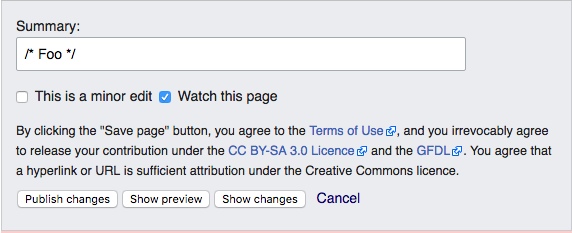 Buttons before the change
 -
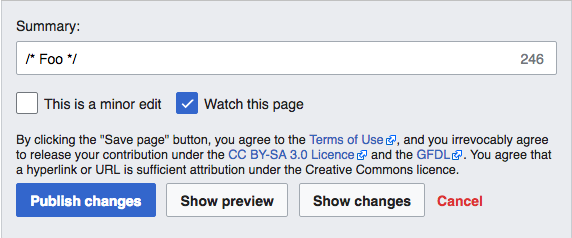 Buttons after the change


However, this change also affects some user scripts and gadgets. Unfortunately, some of them may not work well in the new system. If you maintain any user scripts or gadgets that are used for editing, please see mw:Contributors/Projects/Accessible editing buttons for information on how to test and fix your scripts. Outdated scripts can be tested and fixed now.
This change will probably reach this wiki on Tuesday, 1 August 2017. Please leave a note at mw:Talk:Contributors/Projects/Accessible editing buttons if you need help.--Whatamidoing (WMF) (talk) 16:56, 27 juli 2017 (KSV)
Columns for references[uredi]
Hello,
At the request of Wikipedia editors, a new feature has been added to MediaWiki. Long lists of references (also called citations or footnotes) will automatically be displayed in columns. This will make it easier for most people to read the references, especially on narrow screens. Short lists of references will not be affected.
I plan to enable this new feature at this wiki on Monday, 11 September 2017. After that date, use the normal <references /> tag on any page with many references to see this feature. If you do not want columns used on that page, then use this wikitext code instead: <references responsive="0" />
18:23, 1 septembar 2017 (KSV)
Changes to the global ban policy[uredi]
New print to pdf feature for mobile web readers[uredi]
New print to pdf feature for mobile web readers
The Readers web team will be deploying a new feature this week to make it easier to download PDF versions of articles on the mobile website.
Providing better offline functionality was one of the highlighted areas from the research done by the New Readers team in Mexico, Nigeria, and India. The teams created a prototype for mobile PDFs which was evaluated by user research and community feedback. The prototype evaluation received positive feedback and results, so development continued.
For the initial deployment, the feature will be available to Google Chrome browsers on Android. Support for other mobile browsers to come in the future. For Chrome, the feature will use the native Android print functionality. Users can choose to download a webpage as a PDF. Mobile print styles will be used for these PDFs to ensure optimal readability for smaller screens.
The feature is available starting Wednesday, Nov 15. For more information, see the project page on MediaWiki.org.
Hvala vam!
CKoerner (WMF) (talk) 22:07, 20 novembar 2017 (KSV)
Heads-up about a technical change affecting this wiki[uredi]
Pozdrav. Pomozite pri prevođenju na Vaš jezik. Hvala vam!

In July 2017, the Wikimedia Foundation announced the intention to replace Tidy with RemexHTML across the Wikimedia cluster by July 2018. In order to make this switch, a number of broken wikitext patterns were identified that required fixing on wikis, highlighted via the high priority categories in the Linter extension.
While still planning to finish turning off Tidy in July 2018, doing early switches of wikis from Tidy to Remex will let us identify any lingering issues that are not already caught by the linter categories and our QA testing. We are encouraging big wikis that have worked hard to switch sooner, for example.
Since your wiki has zero high-priority errors, we think that it is ready to switch from Tidy to Remex. To be clear, if we notice problems (or if the wiki requests it), we will revert the change, after identifying the source of the problem. If you notice any incorrect rendering, you can use ?action=parsermigration-edit to identify if the switch from Tidy actually caused it.
We are suggesting 5 December 2017 as the possible date for the switch to happen, so there would still be plenty of time to fix any issues before the holidays start. We look forward to hearing any concerns you would have with this plan, and about how we can help make this transition as smooth as possible: if you have any comments, please remember to ping me personally to make sure I notice and address them, otherwise we will assume this message is acknowledged and the deadline works for your community.
Best, mw:User:Elitre (WMF) 10:35, 28 novembar 2017 (KSV)
PS: Apologies if you are seeing this message on a page that is not the best location for it: I have looked for the appropriate target pages (for example, on Meta), but may have found none. Please, by all means, move the message where you see fit, but most importantly, fix the various distribution lists by adding the correct page there, to avoid that this happens again in the future. I appreciate your understanding, and am available for further information and explanations.
Tell us what you think about the automatic links for Wiktionary[uredi]
Hello all,
(Sorry for writing in English. Feel free to translate this message below.)
One year ago, the Wikidata team started deploying new automatic interwiki links for Wiktionaries. Today, the links for the main namespace are automatically displayed by a Mediawiki extension, and the links for other namespaces are stored in Wikidata. You can find the documentation here (feel free to help translating it in your language).
We would like to know if you encountered problems with the system, if you would have suggestions for further improvements. This could be for example:
- Some automatic links don’t work as expected
- Some problems you encountered with entering links (for non-main namespace) in Wikidata
- Some new features you’d like to have, related to links
To give feedback, you have two options:
- Let a message on this talk page
- Let a message here. If you do so, please mention me with the {{ping}} template, so I can get a notification.
Our preferred languages are English, French and German, but you can also let a message in your own language if you feel more comfortable with it.
I’m looking forward for your feedback! Lea Lacroix (WMDE) 10:23, 24 april 2018 (KSV)
AdvancedSearch[uredi]
Birgit Müller (WMDE) 14:53, 7 maj 2018 (KSV)
Lexicographical data is now available on Wikidata[uredi]
Hello,
Sorry for writing in English. Feel free to translate the content of this message below.
After several years discussing about it, and one year of development and discussion with the communities, the development team of Wikimedia Germany has now released the first version of lexicographical data support on Wikidata.
Since the start of Wikidata in 2012, the multilingual knowledge base was mainly focused on concepts: Q-items are related to a thing or an idea, not to the word describing it. Starting now, Wikidata stores a new type of data: words, phrases and sentences, in many languages, described in many languages. This information will be stored in new types of entities, called Lexemes, Forms and Senses.
The goal of lexicographical data on Wikidata is to provide a structured and machine-readable way to describe words and phrases in multiple languages, stored in a same place, reusable under CC-0. In the near future, this data will be available for Wiktionaries and other projects to reuse, as much as you want to.
For now, we’re at the first steps of this project: the new data structure has been released on Wikidata, and we’re looking for people to try it, and give us feedback on what is working or not. Participating to this project is the opportunity for you to have a voice in it, to make sure that your needs and requests are taken in account very early in the process, and to start populating Wikidata with words in your language!
Here’s how you can try lexicographical data on Wikidata:
- First of all, if you’re not familiar with the data model, I encourage you to have a look at the documentation page. If you’re not familiar with Wikidata at all, I suggest this page as a start point.
- You can also look at the Lexemes that already exists (search features will be improved in the future).
- When you feel ready to create a word, go on d:Special:NewLexeme.
- If some properties that you need are missing, you can suggest them on this page (if you’re not sure how to do it, just let a message on the talk page and someone will help you).
- The main discussion page is d:Wikidata:Lexicographical data. Here, you can ask for help, suggest ways to organize the data, but also leave feedback: if you encounter any bug or issue, let us know. We’re looking especially to know what are the most important features for you to be worked on next.
In any case, feel free to contact me if you have a question or problem, I’ll be very happy to help.
Global preferences are available[uredi]
Global preferences are now available, you can set them by visiting your new global preferences page. Visit mediawiki.org for information on how to use them and leave feedback. -- Keegan (WMF) (talk)
19:19, 10 juli 2018 (KSV)
New user group for editing sitewide CSS / JS[uredi]
(Pomozite pri prevođenju na Vaš jezik)
Hi all!
To improve the security of our readers and editors, permission handling for CSS/JS pages has changed. (These are pages like MediaWiki:Common.css and MediaWiki:Vector.js which contain code that is executed in the browsers of users of the site.)
A new user group, interface-admin, has been created.
Starting four weeks from now, only members of this group will be able edit CSS/JS pages that they do not own (that is, any page ending with .css or .js that is either in the MediaWiki: namespace or is another user's user subpage).
You can learn more about the motivation behind the change here.
Please add users who need to edit CSS/JS to the new group (this can be done the same way new administrators are added, by stewards or local bureaucrats). This is a dangerous permission; a malicious user or a hacker taking over the account of a careless interface-admin can abuse it in far worse ways than admin permissions could be abused. Please only assign it to users who need it, who are trusted by the community, and who follow common basic password and computer security practices (use strong passwords, do not reuse passwords, use two-factor authentication if possible, do not install software of questionable origin on your machine, use antivirus software if that's a standard thing in your environment).
Thanks!
Tgr (talk) 17:45, 30 juli 2018 (KSV) (via global message delivery)
IMPORTANT: Admin activity review[uredi]
Hello. A new policy regarding the removal of "advanced rights" (administrator, bureaucrat, etc) was adopted by global community consensus in 2013. According to this policy, the stewards are reviewing administrators' activity on smaller wikis. To the best of our knowledge, your wiki does not have a formal process for removing "advanced rights" from inactive accounts. This means that the stewards will take care of this according to the admin activity review.
We have determined that the following users meet the inactivity criteria (no edits and no log actions for more than 2 years):
- Ivan Štambuk (administrator)
- Millosh (bureaucrat, administrator)
These users will receive a notification soon, asking them to start a community discussion if they want to retain some or all of their rights. If the users do not respond, then their advanced rights will be removed by the stewards.
However, if you as a community would like to create your own activity review process superseding the global one, want to make another decision about these inactive rights holders, or already have a policy that we missed, then please notify the stewards on Meta-Wiki so that we know not to proceed with the rights review on your wiki. Thanks, Rschen7754 06:10, 10 august 2018 (KSV)
Wiktionary Cognate Dashboard[uredi]

Sorry for writing this message in English. Feel free to help translate it below.
Hello all,
A few months ago, we asked you for feedback about Cognate, the system allowing interwikilinks between Wiktionaries (on main namespace). Several community members gave some suggestions, one of them was to provide statistics about these interwikilinks.
The Wikidata team is pleased to present you the Wiktionary Cognate Dashboard, a website presenting a lot of interesting information about how Wiktionaries are connected to each others. You can find there, for example:
- the most interlinked Wiktionary entries not having a page on your Wiktionary
- the number of interlinks between each possible pair of Wiktionaries
- visualizations of the relationships between different Wiktionaries
To learn more about the tool, you can have a look at the documentation (please help us translating it in your language!). The interface of the tool itself can also be translated in other languages by using this page.
If you find a bug, please let a comment on this Phabricator task or ping me onwiki. Thanks a lot, Lea Lacroix (WMDE) 13:08, 14 august 2018 (KSV)
Editing of sitewide CSS/JS is only possible for interface administrators from now[uredi]
(Pomozite pri prevođenju na Vaš jezik)
Hi all,
as announced previously, permission handling for CSS/JS pages has changed: only members of the interface-admin (Administratori interfejsa) group, and a few highly privileged global groups such as stewards, can edit CSS/JS pages that they do not own (that is, any page ending with .css or .js that is either in the MediaWiki: namespace or is another user's user subpage). This is done to improve the security of readers and editors of Wikimedia projects. More information is available at Creation of separate user group for editing sitewide CSS/JS. If you encounter any unexpected problems, please contact me or file a bug.
Thanks!
Tgr (talk) 12:40, 27 august 2018 (KSV) (via global message delivery)
Read-only mode for up to an hour on 12 September and 10 October[uredi]
Read this message in another language • Pomozite pri prevođenju na Vaš jezik
The Wikimedia Foundation will be testing its secondary data centre. This will make sure that Wikipedia and the other Wikimedia wikis can stay online even after a disaster. To make sure everything is working, the Wikimedia Technology department needs to do a planned test. This test will show if they can reliably switch from one data centre to the other. It requires many teams to prepare for the test and to be available to fix any unexpected problems.
They will switch all traffic to the secondary data center on Wednesday, 12 September 2018. On Wednesday, 10 October 2018, they will switch back to the primary data center.
Unfortunately, because of some limitations in MediaWiki, all editing must stop when we switch. We apologize for this disruption, and we are working to minimize it in the future.
You will be able to read, but not edit, all wikis for a short period of time.
- You will not be able to edit for up to an hour on Wednesday, 12 September and Wednesday, 10 October. The test will start at 14:00 UTC (15:00 BST, 16:00 CEST, 10:00 EDT, 07:00 PDT, 23:00 JST, and in New Zealand at 02:00 NZST on Thursday 13 September and Thursday 11 October).
- If you try to edit or save during these times, you will see an error message. We hope that no edits will be lost during these minutes, but we can't guarantee it. If you see the error message, then please wait until everything is back to normal. Then you should be able to save your edit. But, we recommend that you make a copy of your changes first, just in case.
Other effects:
- Background jobs will be slower and some may be dropped. Red links might not be updated as quickly as normal. If you create an article that is already linked somewhere else, the link will stay red longer than usual. Some long-running scripts will have to be stopped.
- There will be code freezes for the weeks of 10 September 2018 and 8 October 2018. Non-essential code deployments will not happen.
This project may be postponed if necessary. You can read the schedule at wikitech.wikimedia.org. Any changes will be announced in the schedule. There will be more notifications about this. Please share this information with your community. /User:Johan(WMF) (talk)
13:33, 6 septembar 2018 (KSV)
Change coming to how certain templates will appear on the mobile web[uredi]
Change coming to how certain templates will appear on the mobile web
Pomozite pri prevođenju na Vaš jezik

Hello,
In a few weeks the Readers web team will be changing how some templates look on the mobile web site. We will make these templates more noticeable when viewing the article. We ask for your help in updating any templates that don't look correct.
What kind of templates? Specifically templates that notify readers and contributors about issues with the content of an article – the text and information in the article. Examples like Template:Unreferenced or Template:More citations needed. Right now these notifications are hidden behind a link under the title of an article. We will format templates like these (mostly those that use Template:Ambox or message box templates in general) to show a short summary under the page title. You can tap on the "Learn more" link to get more information.
For template editors we have some recommendations on how to make templates that are mobile-friendly and also further documentation on our work so far.
If you have questions about formatting templates for mobile, please leave a note on the project talk page or file a task in Phabricator and we will help you.
Hvala vam!
CKoerner (WMF) (talk) 19:35, 13 novembar 2018 (KSV)
Community Wishlist Survey vote[uredi]
The Community Wishlist Survey. Pomozite pri prevođenju na Vaš jezik.
Hey everyone,
The Community Wishlist Survey is the process when the Wikimedia communities decide what the Wikimedia Foundation Community Tech should work on over the next year.
The Community Tech team is focused on tools for experienced Wikimedia editors. The communities have now posted a long list of technical proposals. You can vote on the proposals from now until 30 November. You can read more on the wishlist survey page.
/User:Johan (WMF)18:13, 22 novembar 2018 (KSV)
Advanced Search[uredi]
Johanna Strodt (WMDE) (talk) 11:03, 26 novembar 2018 (KSV)
New Wikimedia password policy and requirements[uredi]
Pomozite pri prevođenju na Vaš jezik
The Wikimedia Foundation security team is implementing a new password policy and requirements. You can learn more about the project on MediaWiki.org.
These new requirements will apply to new accounts and privileged accounts. New accounts will be required to create a password with a minimum length of 8 characters. Privileged accounts will be prompted to update their password to one that is at least 10 characters in length.
These changes are planned to be in effect on December 13th. If you think your work or tools will be affected by this change, please let us know on the talk page.
Hvala vam!
CKoerner (WMF) (talk) 20:03, 6 decembar 2018 (KSV)
Selection of the Tremendous Wiktionary User Group representative to the Wikimedia Summit 2019[uredi]
Dear all,
Sorry for posting this message in English and last minute notification. The Tremendous Wiktionary User Group could send one representative to the Wikimedia Summit 2019 (formerly "Wikimedia Conference"). The Wikimedia Summit is an yearly conference of all organizations affiliated to the Wikimedia Movement (including our Tremendous Wiktionary User Group). It is a great place to talk about Wiktionary needs to the chapters and other user groups that compose the Wikimedia movement.
For context, there is a short report on what happened last year. The deadline is very close to 24 hrs. The last date for registration is 17 December 2018. As a last minute effort, there is a page on meta to decide who will be the representative of the user group to the Wikimedia Summit created.
Please feel free to ask any question on the wiktionary-l mailing list or on the talk page.
For the Tremendous Wiktionary User Group, -- Balajijagadesh 05:56, 16 decembar 2018 (KSV)
Invitation from Wiki Loves Love 2019[uredi]
Pomozite pri prevođenju na Vaš jezik
.svg)
Love is an important subject for humanity and it is expressed in different cultures and regions in different ways across the world through different gestures, ceremonies, festivals and to document expression of this rich and beautiful emotion, we need your help so we can share and spread the depth of cultures that each region has, the best of how people of that region, celebrate love.
Wiki Loves Love (WLL) is an international photography competition of Wikimedia Commons with the subject love testimonials happening in the month of February.
The primary goal of the competition is to document love testimonials through human cultural diversity such as monuments, ceremonies, snapshot of tender gesture, and miscellaneous objects used as symbol of love; to illustrate articles in the worldwide free encyclopedia Wikipedia, and other Wikimedia Foundation (WMF) projects.
The theme of 2019 iteration is Celebrations, Festivals, Ceremonies and rituals of love.
Sign up your affiliate or individually at Participants page.
To know more about the contest, check out our Commons Page and FAQs
There are several prizes to grab. Hope to see you spreading love this February with Wiki Loves Love!
Kind regards,
Imagine... the sum of all love!
--MediaWiki message delivery (razgovor) 10:13, 27 decembar 2018 (KSV)
FileExporter beta feature[uredi]

A new beta feature will soon be released on all wikis: The FileExporter. It allows exports of files from a local wiki to Wikimedia Commons, including their file history and page history. Which files can be exported is defined by each wiki's community: Please check your wiki's configuration file if you want to use this feature.
The FileExporter has already been a beta feature on mediawiki.org, meta.wikimedia, deWP, faWP, arWP, koWP and on wikisource.org. After some functionality was added, it's now becoming a beta feature on all wikis. Deployment is planned for January 16. More information can be found on the project page.
As always, feedback is highly appreciated. If you want to test the FileExporter, please activate it in your user preferences. The best place for feedback is the central talk page. Thank you from Wikimedia Deutschland's Technical Wishes project.
Johanna Strodt (WMDE) 09:41, 14 januar 2019 (KSV)
No editing for 30 minutes on 17 January[uredi]
18:54, 16 januar 2019 (KSV)
Talk to us about talking[uredi]

The Wikimedia Foundation is planning a global consultation about communication. The goal is to bring Wikimedians and wiki-minded people together to improve tools for communication.
We want all contributors to be able to talk to each other on the wikis, whatever their experience, their skills or their devices.
We are looking for input from as many different parts of the Wikimedia community as possible. It will come from multiple projects, in multiple languages, and with multiple perspectives.
We are currently planning the consultation. We need your help.
We need volunteers to help talk to their communities or user groups.
You can help by hosting a discussion at your wiki. Here's what to do:
- First, sign up your group here.
- Next, create a page (or a section on a Village pump, or an e-mail thread – whatever is natural for your group) to collect information from other people in your group. This is not a vote or decision-making discussion: we are just collecting feedback.
- Then ask people what they think about communication processes. We want to hear stories and other information about how people communicate with each other on and off wiki. Please consider asking these five questions:
- When you want to discuss a topic with your community, what tools work for you, and what problems block you?
- What about talk pages works for newcomers, and what blocks them?
- What do others struggle with in your community about talk pages?
- What do you wish you could do on talk pages, but can't due to the technical limitations?
- What are the important aspects of a "wiki discussion"?
- Finally, please go to Talk pages consultation 2019 on Mediawiki.org and report what you learned from your group. Please include links if the discussion is available to the public.
You can also help build the list of the many different ways people talk to each other.
Not all groups active on wikis or around wikis use the same way to discuss things: it can happen on wiki, on social networks, through external tools... Tell us how your group communicates.
You can read more about the overall process on mediawiki.org. If you have questions or ideas, you can leave feedback about the consultation process in the language you prefer.
Thank you! We're looking forward to talking with you.
Trizek (WMF) 15:01, 21 februar 2019 (KSV)
Read-only mode for up to 30 minutes on 11 April[uredi]
10:56, 8 april 2019 (KSV)
Wikimedia Foundation Medium-Term Plan feedback request[uredi]
Pomozite pri prevođenju na Vaš jezik
Update on the consultation about office actions[uredi]
Hello all,
Last month, the Wikimedia Foundation's Trust & Safety team announced a future consultation about partial and/or temporary office actions. We want to let you know that the draft version of this consultation has now been posted on Meta.
This is a draft. It is not intended to be the consultation itself, which will be posted on Meta likely in early September. Please do not treat this draft as a consultation. Instead, we ask your assistance in forming the final language for the consultation.
For that end, we would like your input over the next couple of weeks about what questions the consultation should ask about partial and temporary Foundation office action bans and how it should be formatted. Please post it on the draft talk page. Our goal is to provide space for the community to discuss all the aspects of these office actions that need to be discussed, and we want to ensure with your feedback that the consultation is presented in the best way to encourage frank and constructive conversation.
Please visit the consultation draft on Meta-wiki and leave your comments on the draft’s talk page about what the consultation should look like and what questions it should ask.
Thank you for your input! -- The Trust & Safety team 08:03, 16 august 2019 (KSV)
New tools and IP masking[uredi]
Hey everyone,
The Wikimedia Foundation wants to work on two things that affect how we patrol changes and handle vandalism and harassment. We want to make the tools that are used to handle bad edits better. We also want to get better privacy for unregistered users so their IP addresses are no longer shown to everyone in the world. We would not hide IP addresses until we have better tools for patrolling.
We have an idea of what tools could be working better and how a more limited access to IP addresses would change things, but we need to hear from more wikis. You can read more about the project on Meta and post comments and feedback. Now is when we need to hear from you to be able to give you better tools to handle vandalism, spam and harassment.
You can post in your language if you can't write in English.
Johan (WMF)14:19, 21 august 2019 (KSV)
The consultation on partial and temporary Foundation bans just started[uredi]
Hello,
In a recent statement, the Wikimedia Foundation Board of Trustees requested that staff hold a consultation to "re-evaluat[e] or add community input to the two new office action policy tools (temporary and partial Foundation bans)".
Accordingly, the Foundation's Trust & Safety team invites all Wikimedians to join this consultation and give their feedback from 30 September to 30 October.
How can you help?
- Suggest how partial and temporary Foundation bans should be used, if they should (eg: On all projects, or only on a subset);
- Give ideas about how partial and temporary Foundation bans should ideally implemented, if they should be; and/or
- Propose changes to the existing Office Actions policy on partial and temporary bans.
We offer our thanks in advance for your contributions, and we hope to get as much input as possible from community members during this consultation!
-- Kbrown (WMF) 17:14, 30 septembar 2019 (KSV)
Feedback wanted on Desktop Improvements project[uredi]
Pomozite pri prevođenju na Vaš jezik
Pozdrav. The Readers Web team at the WMF will work on some improvements to the desktop interface over the next couple of years. The goal is to increase usability without removing any functionality. We have been inspired by changes made by volunteers, but that currently only exist as local gadgets and user scripts, prototypes, and volunteer-led skins. We would like to begin the process of bringing some of these changes into the default experience on all Wikimedia projects.
We are currently in the research stage of this project and are looking for ideas for improvements, as well as feedback on our current ideas and mockups. So far, we have performed interviews with community members at Wikimania. We have gathered lists of previous volunteer and WMF work in this area. We are examining possible technical approaches for such changes.
We would like individual feedback on the following:
- Identifying focus areas for the project we have not yet discovered
- Expanding the list of existing gadgets and user scripts that are related to providing a better desktop experience. If you can think of some of these from your wiki, please let us know
- Feedback on the ideas and mockups we have collected so far
We would also like to gather a list of wikis that would be interested in being test wikis for this project - these wikis would be the first to receive the updates once we’re ready to start building.
When giving feedback, please consider the following goals of the project:
- Make it easier for readers to focus on the content
- Provide easier access to everyday actions (e.g. search, language switching, editing)
- Put things in logical and useful places
- Increase consistency in the interface with other platforms - mobile web and the apps
- Eliminate clutter
- Plan for future growth
As well as the following constraints:
- Not touching the content - no work will be done in terms of styling templates or to the structure of page contents themselves
- Not removing any functionality - things might move around, but all navigational items and other functionality currently available by default will remain
- No drastic changes to the layout - we're taking an evolutionary approach to the changes and want the site to continue feeling familiar to readers and editors
Please give all feedback (in any language) at mw:Talk:Reading/Web/Desktop Improvements
After this round of feedback, we plan on building a prototype of suggested changes based on the feedback we receive. You’ll hear from us again asking for feedback on this prototype.
Hvala vam! Quiddity (WMF) (talk)
07:15, 16 oktobar 2019 (KSV)
Community Wishlist 2020[uredi]

The 2020 Community Wishlist Survey is now open! This survey is the process where communities decide what the Community Tech team should work on over the next year. We encourage everyone to submit proposals until the deadline on November 11, 2019, or comment on other proposals to help make them better.
This year, we’re exclusively focusing on smaller projects (i.e., Wikibooks, Wiktionary, Wikiquote, Wikisource, Wikiversity, Wikispecies, Wikivoyage, and Wikinews). We want to help these projects and provide meaningful improvements to diverse communities. If you’re a member of any of these projects, please participate in the survey! To submit proposals, see the guidelines on the survey page. You can write proposals in any language, and we will translate them for you. Thank you, and we look forward to seeing your proposals!
IFried (WMF) 19:30, 4 novembar 2019 (KSV)
Harmonisation of templates[uredi]
Zdravo! I am a new contributor. Please excuse me for writing in English, I don't speak your language yet. I have several projects involving automated extraction of word information from Wiktionary. I noticed while working on them that some templates seem redundant or rarely used. For illustration, this is the list of templates that I found with the following command:
$ sed -n 's/.*{{\(sh-[^ |}]*\).*/\1/p' shwiktionary-20191101-pages-articles-multistream.xml | sort | uniq -c | sort -n
Unless I am mistaken and at least as far as the nouns are concerned, it seems to me that
- Šablon:sh-imenica2 (88526 uses) could be used everywhere instead of Šablon:sh-imenica (95 uses) and Šablon:sh-noun (1 use);
- Šablon:sh-imenica-deklinacija2 (39983 uses) could be used everywhere instead of Šablon:sh-imenica-deklinacija (83 uses), Šablon:sh-decl-noun (6 uses), Šablon:sh-decl-noun-unc (4 uses), Šablon:sh-dekl-imenica (3 uses), Šablon:sh-dekl-imenica-mnozina (1 use).
If there is no specific reason for keeping these rarely used templates around, I would suggest to convert them to the most popular templates, sh-imenica2 and sh-imenica-deklinacija2. This would help the automated extraction of data, and also reduce a risk of mistake and template misuse (sh-imenica-deklinacija and sh-imenica-deklinacija2 do not have the same case order, which lead to some mistakes in some cases).
All of this concerns less than 100 pages and I would be more than happy to make the changes needed if this seems reasonable. If there is some templating work required to adapt the new templates to some edge cases, I would be very happy to help with this too. Please let me know what you think and if/how I can be helpful, Armavica (razgovor) 01:36, 14 novembar 2019 (KSV)
Wiki Loves Folklore[uredi]
Hello Folks,
Wiki Loves Love is back again in 2020 iteration as Wiki Loves Folklore from 1 February, 2020 - 29 February, 2020. Join us to celebrate the local cultural heritage of your region with the theme of folklore in the international photography contest at Wikimedia Commons. Images, videos and audios representing different forms of folk cultures and new forms of heritage that haven’t otherwise been documented so far are welcome submissions in Wiki Loves Folklore. Learn more about the contest at Meta-Wiki and Commons.
Kind regards,
Wiki Loves Folklore International Team
— Tulsi Bhagat (contribs | talk)
sent using MediaWiki message delivery (razgovor) 06:15, 18 januar 2020 (KSV)
Movement Learning and Leadership Development Project[uredi]
Hello
The Wikimedia Foundation’s Community Development team is seeking to learn more about the way volunteers learn and develop into the many different roles that exist in the movement. Our goal is to build a movement informed framework that provides shared clarity and outlines accessible pathways on how to grow and develop skills within the movement. To this end, we are looking to speak with you, our community to learn about your journey as a Wikimedia volunteer. Whether you joined yesterday or have been here from the very start, we want to hear about the many ways volunteers join and contribute to our movement.
To learn more about the project, please visit the Meta page. If you are interested in participating in the project, please complete this simple Google form. Although we may not be able to speak to everyone who expresses interest, we encourage you to complete this short form if you are interested in participating!
-- LMiranda (WMF) (talk) 19:01, 22 januar 2020 (KSV)
Additional interface for edit conflicts on talk pages[uredi]
Sorry, for writing this text in English. If you could help to translate it, it would be appreciated.
You might know the new interface for edit conflicts (currently a beta feature). Now, Wikimedia Germany is designing an additional interface to solve edit conflicts on talk pages. This interface is shown to you when you write on a discussion page and another person writes a discussion post in the same line and saves it before you do. With this additional editing conflict interface you can adjust the order of the comments and edit your comment. We are inviting everyone to have a look at the planned feature. Let us know what you think on our central feedback page! -- For the Technical Wishes Team: Max Klemm (WMDE) 14:15, 26 februar 2020 (KSV)
Feedback on movement names[uredi]
Pozdrav. Apologies if you are not reading this message in your native language. Pomozite pri prevođenju na Vaš jezik if necessary. Hvala vam!
There are a lot of conversations happening about the future of our movement names. We hope that you are part of these discussions and that your community is represented.
Since 16 June, the Foundation Brand Team has been running a survey in 7 languages about 3 naming options. There are also community members sharing concerns about renaming in a Community Open Letter.
Our goal in this call for feedback is to hear from across the community, so we encourage you to participate in the survey, the open letter, or both. The survey will go through 7 July in all timezones. Input from the survey and discussions will be analyzed and published on Meta-Wiki.
Thanks for thinking about the future of the movement, --The Brand Project team, 19:39, 2 juli 2020 (KSV)
Note: The survey is conducted via a third-party service, which may subject it to additional terms. For more information on privacy and data-handling, see the survey privacy statement.
Announcing a new wiki project! Welcome, Abstract Wikipedia[uredi]
Hi all,
It is my honor to introduce Abstract Wikipedia, a new project that has been unanimously approved by the Wikimedia Foundation Board of Trustees. Abstract Wikipedia proposes a new way to generate baseline encyclopedic content in a multilingual fashion, allowing more contributors and more readers to share more knowledge in more languages. It is an approach that aims to make cross-lingual cooperation easier on our projects, increase the sustainability of our movement through expanding access to participation, improve the user experience for readers of all languages, and innovate in free knowledge by connecting some of the strengths of our movement to create something new.
This is our first new project in over seven years. Abstract Wikipedia was submitted as a project proposal by Denny Vrandečić in May 2020 [1] after years of preparation and research, leading to a detailed plan and lively discussions in the Wikimedia communities. We know that the energy and the creativity of the community often runs up against language barriers, and information that is available in one language may not make it to other language Wikipedias. Abstract Wikipedia intends to look and feel like a Wikipedia, but build on the powerful, language-independent conceptual models of Wikidata, with the goal of letting volunteers create and maintain Wikipedia articles across our polyglot Wikimedia world.
The project will allow volunteers to assemble the fundamentals of an article using words and entities from Wikidata. Because Wikidata uses conceptual models that are meant to be universal across languages, it should be possible to use and extend these building blocks of knowledge to create models for articles that also have universal value. Using code, volunteers will be able to translate these abstract “articles” into their own languages. If successful, this could eventually allow everyone to read about any topic in Wikidata in their own language.
As you can imagine, this work will require a lot of software development, and a lot of cooperation among Wikimedians. In order to make this effort possible, Denny will join the Foundation as a staff member in July and lead this initiative. You may know Denny as the creator of Wikidata, a long-time community member, a former staff member at Wikimedia Deutschland, and a former Trustee at the Wikimedia Foundation [2]. We are very excited that Denny will bring his skills and expertise to work on this project alongside the Foundation’s product, technology, and community liaison teams.
It is important to acknowledge that this is an experimental project, and that every Wikipedia community has different needs. This project may offer some communities great advantages. Other communities may engage less. Every language Wikipedia community will be free to choose and moderate whether or how they would use content from this project.
We are excited that this new wiki-project has the possibility to advance knowledge equity through increased access to knowledge. It also invites us to consider and engage with critical questions about how and by whom knowledge is constructed. We look forward to working in cooperation with the communities to think through these important questions.
There is much to do as we begin designing a plan for Abstract Wikipedia in close collaboration with our communities. I encourage you to get involved by going to the project page and joining the new mailing list [3]. We recognize that Abstract Wikipedia is ambitious, but we also recognize its potential. We invite you all to join us on a new, unexplored path.
Yours,
Katherine Maher (Executive Director, Wikimedia Foundation)
Sent by m:User:Elitre (WMF) 20:13, 9 juli 2020 (KSV) - m:Special:MyLanguage/Abstract Wikipedia/July 2020 announcement
Technical Wishes: FileExporter and FileImporter become default features on all Wikis[uredi]
The FileExporter and FileImporter will become a default features on all wikis until August 7, 2020. They are planned to help you to move files from your local wiki to Wikimedia Commons easier while keeping all original file information (Description, Source, Date, Author, View History) intact. Additionally, the move is documented in the files view history. How does it work?
Step 1: If you are an auto-confirmed user, you will see a link "Move file to Wikimedia Commons" on the local file page.
Step 2: When you click on this link, the FileImporter checks if the file can in fact be moved to Wikimedia Commons. These checks are performed based on the wiki's configuration file which is created and maintained by each local wiki community.
Step 3: If the file is compatible with Wikimedia Commons, you will be taken to an import page, at which you can update or add information regarding the file, such as the description. You can also add the 'Now Commons' template to the file on the local wiki by clicking the corresponding check box in the import form. Admins can delete the file from the local wiki by enabling the corresponding checkbox. By clicking on the 'Import' button at the end of the page, the file is imported to Wikimedia Commons.
If you want to know more about the FileImporter extension or the Technical Wishes Project, follow the links. --For the Technical Wishes Team:Max Klemm (WMDE) 09:14, 6 august 2020 (KSV)
Important: maintenance operation on September 1st[uredi]
Read this message in another language • Pomozite pri prevođenju na Vaš jezik
The Wikimedia Foundation will be testing its secondary data centre. This will make sure that Wikipedia and the other Wikimedia wikis can stay online even after a disaster. To make sure everything is working, the Wikimedia Technology department needs to do a planned test. This test will show if they can reliably switch from one data centre to the other. It requires many teams to prepare for the test and to be available to fix any unexpected problems.
They will switch all traffic to the secondary data centre on Tuesday, September 1st 2020.
Unfortunately, because of some limitations in MediaWiki, all editing must stop while the switch is made. We apologize for this disruption, and we are working to minimize it in the future.
You will be able to read, but not edit, all wikis for a short period of time.
- You will not be able to edit for up to an hour on Tuesday, September 1st. The test will start at 14:00 UTC (15:00 BST, 16:00 CEST, 10:00 EDT, 19:30 IST, 07:00 PDT, 23:00 JST, and in New Zealand at 02:00 NZST on Wednesday September 2).
- If you try to edit or save during these times, you will see an error message. We hope that no edits will be lost during these minutes, but we can't guarantee it. If you see the error message, then please wait until everything is back to normal. Then you should be able to save your edit. But, we recommend that you make a copy of your changes first, just in case.
Other effects:
- Background jobs will be slower and some may be dropped. Red links might not be updated as quickly as normal. If you create an article that is already linked somewhere else, the link will stay red longer than usual. Some long-running scripts will have to be stopped.
- There will be code freezes for the week of September 1st, 2020. Non-essential code deployments will not happen.
This project may be postponed if necessary. You can read the schedule at wikitech.wikimedia.org. Any changes will be announced in the schedule. There will be more notifications about this. Please share this information with your community.
Trizek (WMF) (talk) 13:49, 26 august 2020 (KSV)
Invitation to participate in the conversation[uredi]
Pozdrav. Apologies for cross-posting, and that you may not be reading this message in your native language: translations of the following announcement may be available on Meta. Pomozite pri prevođenju na Vaš jezik. Hvala vam!
We are excited to share a draft of the Universal Code of Conduct, which the Wikimedia Foundation Board of Trustees called for earlier this year, for your review and feedback. The discussion will be open until October 6, 2020.
The UCoC Drafting Committee wants to learn which parts of the draft would present challenges for you or your work. What is missing from this draft? What do you like, and what could be improved?
Please join the conversation and share this invitation with others who may be interested to join, too.
To reduce language barriers during the process, you are welcomed to translate this message and the Universal Code of Conduct/Draft review. You and your community may choose to provide your opinions/feedback using your local languages.
To learn more about the UCoC project, see the Universal Code of Conduct page, and the FAQ, on Meta.
Thanks in advance for your attention and contributions, The Trust and Safety team at Wikimedia Foundation, 17:55, 10 septembar 2020 (KSV)Wiktionary sitelinks dashboard: URL update[uredi]
Hello all, and sorry for writing in English. Feel free to translate this message below.
The Wiktionary Cognate Dashboard presents interesting data about the extension powering your sitelinks. I just wanted to let you know that the URL of this tool changed: it is now accessible at https://wiktionary-analytics.wmcloud.org/Wiktionary_CognateDashboard/ . The former URLs, https://wmdeanalytics.wmflabs.org/Wiktionary_CognateDashboard/ and https://wdcm.wmflabs.org/Wiktionary_CognateDashboard/ , will be disabled on September 25th. Don't forget to update your documentation pages accordingly.
If you have questions about the tool or the URL switch, feel free to ping me. Cheers, Lea Lacroix (WMDE) 11:46, 14 septembar 2020 (KSV)
Wiki of functions naming contest[uredi]
Pomozite pri prevođenju na Vaš jezik.
Pozdrav. Please help pick a name for the new Wikimedia wiki project. This project will be a wiki where the community can work together on a library of functions. The community can create new functions, read about them, discuss them, and share them. Some of these functions will be used to help create language-independent Wikipedia articles that can be displayed in any language, as part of the Abstract Wikipedia project. But functions will also be usable in many other situations.
There will be two rounds of voting, each followed by legal review of candidates, with voting beginning on 29 September and 27 October. Our goal is to have a final project name selected on 8 December. If you would like to participate, then please learn more and vote now at meta-wiki. Hvala vam! --Quiddity (WMF)21:16, 29 septembar 2020 (KSV)
Call for feedback about Wikimedia Foundation Bylaws changes and Board candidate rubric[uredi]
Pozdrav. Apologies if you are not reading this message in your native language. Pomozite pri prevođenju na Vaš jezik.
Today the Wikimedia Foundation Board of Trustees starts two calls for feedback. One is about changes to the Bylaws mainly to increase the Board size from 10 to 16 members. The other one is about a trustee candidate rubric to introduce new, more effective ways to evaluate new Board candidates. The Board welcomes your comments through 26 October. For more details, check the full announcement.
Hvala vam! Qgil-WMF (talk) 17:11, 7 oktobar 2020 (KSV)
Important: maintenance operation on October 27[uredi]
Read this message in another language • Pomozite pri prevođenju na Vaš jezik
The Wikimedia Foundation tests the switch between its first and secondary data centers. This will make sure that Wikipedia and the other Wikimedia wikis can stay online even after a disaster. To make sure everything is working, the Wikimedia Technology department needs to do a planned test. This test will show if they can reliably switch from one data centre to the other. It requires many teams to prepare for the test and to be available to fix any unexpected problems.
They will switch all traffic back to the primary data center on Tuesday, October 27 2020.
Unfortunately, because of some limitations in MediaWiki, all editing must stop while the switch is made. We apologize for this disruption, and we are working to minimize it in the future.
You will be able to read, but not edit, all wikis for a short period of time.
- You will not be able to edit for up to an hour on Tuesday, October 27. The test will start at 14:00 UTC (14:00 WET, 15:00 CET, 10:00 EDT, 19:30 IST, 07:00 PDT, 23:00 JST, and in New Zealand at 03:00 NZDT on Wednesday October 28).
- If you try to edit or save during these times, you will see an error message. We hope that no edits will be lost during these minutes, but we can't guarantee it. If you see the error message, then please wait until everything is back to normal. Then you should be able to save your edit. But, we recommend that you make a copy of your changes first, just in case.
Other effects:
- Background jobs will be slower and some may be dropped. Red links might not be updated as quickly as normal. If you create an article that is already linked somewhere else, the link will stay red longer than usual. Some long-running scripts will have to be stopped.
- There will be code freezes for the week of October 26, 2020. Non-essential code deployments will not happen.
-- Trizek (WMF) (talk) 17:12, 21 oktobar 2020 (KSV)
Important: maintenance operation on October 27[uredi]
Read this message in another language • Pomozite pri prevođenju na Vaš jezik
The Wikimedia Foundation tests the switch between its first and secondary data centers. This will make sure that Wikipedia and the other Wikimedia wikis can stay online even after a disaster. To make sure everything is working, the Wikimedia Technology department needs to do a planned test. This test will show if they can reliably switch from one data centre to the other. It requires many teams to prepare for the test and to be available to fix any unexpected problems.
They will switch all traffic back to the primary data center on Tuesday, October 27 2020.
Unfortunately, because of some limitations in MediaWiki, all editing must stop while the switch is made. We apologize for this disruption, and we are working to minimize it in the future.
You will be able to read, but not edit, all wikis for a short period of time.
- You will not be able to edit for up to an hour on Tuesday, October 27. The test will start at 14:00 UTC (14:00 WET, 15:00 CET, 10:00 EDT, 19:30 IST, 07:00 PDT, 23:00 JST, and in New Zealand at 03:00 NZDT on Wednesday October 28).
- If you try to edit or save during these times, you will see an error message. We hope that no edits will be lost during these minutes, but we can't guarantee it. If you see the error message, then please wait until everything is back to normal. Then you should be able to save your edit. But, we recommend that you make a copy of your changes first, just in case.
Other effects:
- Background jobs will be slower and some may be dropped. Red links might not be updated as quickly as normal. If you create an article that is already linked somewhere else, the link will stay red longer than usual. Some long-running scripts will have to be stopped.
- There will be code freezes for the week of October 26, 2020. Non-essential code deployments will not happen.
-- Trizek (WMF) (talk) 11:51, 22 oktobar 2020 (KSV)
Wiki of functions naming contest - Round 2[uredi]
Pozdrav. Reminder: Please help to choose the name for the new Wikimedia wiki project - the library of functions. The finalist vote starts today. The finalists for the name are: Wikicode, Wikicodex, Wikifunctions, Wikifusion, Wikilambda, Wikimedia Functions. If you would like to participate, then please learn more and vote now at Meta-wiki. Hvala vam! --Quiddity (WMF)
22:11, 5 novembar 2020 (KSV)
The 2021 Community Wishlist Survey is now open! This survey is the process where communities decide what the Community Tech team should work on over the next year. We encourage everyone to submit proposals until the deadline on 30 novembra, or comment on other proposals to help make them better. The communities will vote on the proposals between 8 decembra and 21 decembra.
The Community Tech team is focused on tools for experienced Wikimedia editors. You can write proposals in any language, and we will translate them for you. Thank you, and we look forward to seeing your proposals!
18:09, 20 novembar 2020 (KSV)
Global bot policy proposal: invitation to a Meta discussion[uredi]
Pozdrav!
I apologize for sending a message in English. Pomozite pri prevođenju na Vaš jezik. According to the list, your wiki project currently is opted in to the global bot policy. Under this policy, bots that fix double redirects or maintain interwiki links are allowed to operate under a global bot flag that is assigned directly by the stewards.
As the Wikimedia projects developed, the need for the current global bot policy decreased, and in the past years, no bots were appointed via that policy. That is mainly given Wikidata were estabilished in 2013, and it is no longer necessary to have dozens of bots that maintain interwiki links.
A proposal was made at Meta-Wiki, which proposes that the stewards will be authorized to determine whether an uncontroversial task may be assigned a global bot flag. The stewards already assign permissions that are more impactful on many wikis, namely, global sysops and global renamers, and I do not think that trust should be an issue. The stewards will assign the permission only to time-proven bots that are already approved at a number of projects, like ListeriaBot.
By this message, I would like to invite you to comment in the global RFC, to voice your opinion about this matter.
Thank you for your time.
Best regards,
Martin Urbanec (razgovor) 11:49, 24 novembar 2020 (KSV)
Wikidata descriptions changes to be included more often in Recent Changes and Watchlist[uredi]
Sorry for sending this message in English. Translations are available on this page. Feel free to translate it in more languages!
As you may know, you can include changes coming from Wikidata in your Watchlist and Recent Changes (in your preferences). Until now, this feature didn’t always include changes made on Wikidata descriptions due to the way Wikidata tracks the data used in a given article.
Starting on December 3rd, the Watchlist and Recent Changes will include changes on the descriptions of Wikidata Items that are used in the pages that you watch. This will only include descriptions in the language of your wiki to make sure that you’re only seeing changes that are relevant to your wiki.
This improvement was requested by many users from different projects. We hope that it can help you monitor the changes on Wikidata descriptions that affect your wiki and participate in the effort of improving the data quality on Wikidata for all Wikimedia wikis and beyond.
Note: if you didn’t use the Wikidata watchlist integration feature for a long time, feel free to give it another chance! The feature has been improved since the beginning and the content it displays is more precise and useful than at the beginning of the feature in 2015.
If you encounter any issue or want to provide feedback, feel free to use this Phabricator ticket. Thanks!
2020 Coolest Tool Award Ceremony on December 11th[uredi]
Hello all,
The ceremony of the 2020 Wikimedia Coolest Tool Award will take place virtually on Friday, December 11th, at 17:00 GMT. This award is highlighting tools that have been nominated by contributors to the Wikimedia projects, and the ceremony will be a nice moment to show appreciation to the tools developers and maybe discover new tools!
You will find more information here about the livestream and the discussions channels. Thanks for your attention, Lea Lacroix (WMDE) 10:55, 7 decembar 2020 (KSV)
Community Wishlist Survey 2021[uredi]
We invite all registered users to vote on the 2021 Community Wishlist Survey. You can vote from now until 21 December for as many different wishes as you want.
In the Survey, wishes for new and improved tools for experienced editors are collected. After the voting, we will do our best to grant your wishes. We will start with the most popular ones.
We, the Community Tech, are one of the Wikimedia Foundation teams. We create and improve editing and wiki moderation tools. What we work on is decided based on results of the Community Wishlist Survey. Once a year, you can submit wishes. After two weeks, you can vote on the ones that you're most interested in. Next, we choose wishes from the survey to work on. Some of the wishes may be granted by volunteer developers or other teams.
You can view and vote all proposals here.
We are waiting for your votes. Thank you!
00:52, 15 decembar 2020 (KSV)
Moving Wikimania 2021 to a Virtual Event[uredi]

Pozdrav. Apologies if you are not reading this message in your native language. Pomozite pri prevođenju na Vaš jezik. Hvala vam!
Wikimania will be a virtual event this year, and hosted by a wide group of community members. Whenever the next in-person large gathering is possible again, the ESEAP Core Organizing Team will be in charge of it. Stay tuned for more information about how you can get involved in the planning process and other aspects of the event. Please read the longer version of this announcement on wikimedia-l.
ESEAP Core Organizing Team, Wikimania Steering Committee, Wikimedia Foundation Events Team, 15:16, 27 januar 2021 (KSV)
Project Grant Open Call[uredi]
This is the announcement for the Project Grants program open call that started on January 11, with the submission deadline of February 10, 2021.
This first open call will be focussed on Community Organizing proposals. A second open call focused on research and software proposals is scheduled from February 15 with a submission deadline of March 16, 2021.
For the Round 1 open call, we invite you to propose grant applications that fall under community development and organizing (offline and online) categories. Project Grant funds are available to support individuals, groups, and organizations to implement new experiments and proven ideas, from organizing a better process on your wiki, coordinating a campaign or editathon series to providing other support for community building. We offer the following resources to help you plan your project and complete a grant proposal:
- Weekly proposals clinics via Zoom during the Open Call. Join us for #Upcoming_Proposal_Clinics|real-time discussions with Program Officers and select thematic experts and get live feedback about your Project Grants proposal. We’ll answer questions and help you make your proposal better. We also offer these support pages to help you build your proposal:
- Video tutorials for writing a strong application
- General planning page for Project Grants
- Program guidelines and criteria
Program officers are also available to offer individualized proposal support upon request. Contact us if you would like feedback or more information.
We are excited to see your grant ideas that will support our community and make an impact on the future of Wikimedia projects. Put your idea into motion, and submit your proposal by February 10, 2021!
Please feel free to get in touch with questions about getting started with your grant application, or about serving on the Project Grants Committee. Contact us at projectgrantsŠablon:atwikimedia.org. Please help us translate this message to your local language. MediaWiki message delivery (razgovor) 08:01, 28 januar 2021 (KSV)
Wiki Loves Folklore 2021 is back![uredi]
Pomozite pri prevođenju na Vaš jezik

You are humbly invited to participate in the Wiki Loves Folklore 2021 an international photography contest organized on Wikimedia Commons to document folklore and intangible cultural heritage from different regions, including, folk creative activities and many more. It is held every year from the 1st till the 28th of February.
You can help in enriching the folklore documentation on Commons from your region by taking photos, audios, videos, and submitting them in this commons contest.
Please support us in translating the project page and a banner message to help us spread the word in your native language.
Kind regards,
Wiki loves Folklore International Team
MediaWiki message delivery (razgovor) 13:25, 6 februar 2021 (KSV)
IMPORTANT: Admin activity review[uredi]
Hello. A policy regarding the removal of "advanced rights" (administrator, bureaucrat, interface administrator, etc.) was adopted by global community consensus in 2013. According to this policy, the stewards are reviewing administrators' activity on all Wikimedia Foundation wikis with no inactivity policy. To the best of our knowledge, your wiki does not have a formal process for removing "advanced rights" from inactive accounts. This means that the stewards will take care of this according to the admin activity review.
We have determined that the following users meet the inactivity criteria (no edits and no logged actions for more than 2 years):
- Ivan Štambuk (administrator)
These users will receive a notification soon, asking them to start a community discussion if they want to retain some or all of their rights. If the users do not respond, then their advanced rights will be removed by the stewards.
However, if you as a community would like to create your own activity review process superseding the global one, want to make another decision about these inactive rights holders, or already have a policy that we missed, then please notify the stewards on Meta-Wiki so that we know not to proceed with the rights review on your wiki. Thanks, --علاء (razgovor) 18:53, 7 februar 2021 (KSV)
Proposal: Set two-letter project shortcuts as alias to project namespace globally[uredi]
Pomozite pri prevođenju na Vaš jezik
Hello everyone,
I apologize for posting in English. I would like to inform everyone that I created a new global request for comment (GRFC) at Meta Wiki, which may affect your project: m:Requests for comment/Set short project namespace aliases by default globally.
In this GRFC, I propose that two-project shortcuts for project names will become a default alias for the project namespace. For instance, on all Wikipedias, WP will be an alias to the Wikipedia: namespace (and similar for other projects). Full list is available in the GRFC.
This is already the case for Wikivoyages, and many individual projects asked for this alias to be implemented. I believe this makes it easier to access the materials in the project namespace, as well as creating shortcuts like WP:NPOV, as well as helps new projects to use this feature, without having to figure out how to request site configuration changes first.
As far as I can see, Wiktionary currently does not have such an alias set. This means that such an alias will be set for you, if the GRFC is accepted by the global community.
I would like to ask all community members to participate in the request for comment at Meta-Wiki, see m:Requests for comment/Set short project namespace aliases by default globally.
Please feel free to ask me if you have any questions about this proposal.
Best regards,
--Martin Urbanec (talk) 14:12, 18 februar 2021 (KSV)
Wikifunctions logo contest[uredi]
01:52, 2 mart 2021 (KSV)
Universal Code of Conduct – 2021 consultations[uredi]
Universal Code of Conduct Phase 2[uredi]
Pomozite pri prevođenju na Vaš jezik
The Universal Code of Conduct (UCoC) provides a universal baseline of acceptable behavior for the entire Wikimedia movement and all its projects. The project is currently in Phase 2, outlining clear enforcement pathways. You can read more about the whole project on its project page.
Drafting Committee: Call for applications[uredi]
The Wikimedia Foundation is recruiting volunteers to join a committee to draft how to make the code enforceable. Volunteers on the committee will commit between 2 and 6 hours per week from late April through July and again in October and November. It is important that the committee be diverse and inclusive, and have a range of experiences, including both experienced users and newcomers, and those who have received or responded to, as well as those who have been falsely accused of harassment.
To apply and learn more about the process, see Universal Code of Conduct/Drafting committee.
2021 community consultations: Notice and call for volunteers / translators[uredi]
From 5 April – 5 May 2021 there will be conversations on many Wikimedia projects about how to enforce the UCoC. We are looking for volunteers to translate key material, as well as to help host consultations on their own languages or projects using suggested key questions. If you are interested in volunteering for either of these roles, please contact us in whatever language you are most comfortable.
To learn more about this work and other conversations taking place, see Universal Code of Conduct/2021 consultations.
Global bot policy changes[uredi]
Pozdrav!
I apologize for sending a message in English. Pomozite pri prevođenju na Vaš jezik. According to the list, your wiki project is currently opted in to the global bot policy. As such, I want to let you know about some changes that were made after the global RfC was closed.
- Global bots are now subject to a 2 week discussion, and it'll be publicized via a MassMessage list, available at Bot policy/New global bot discussion on Meta. Please subscribe yourself or your wiki if you are interested in new global bots proposals.
- For a bot to be considered for approval, it must demonstrate it is welcomed in multiple projects, and a good way to do that is to have the bot flag on at least 5 wikis for a single task.
- The bot operator should make sure to adhere to the wiki's preference as related to the use of the bot flag (i.e., if a wiki doesn't want a bot to use the flag as it edits, that should be followed).
Thank you for your time.
Best regards,
—Thanks for the fish! talk•contribs 18:48, 6 april 2021 (KSV)
Line numbering coming soon to all wikis[uredi]

From April 15, you can enable line numbering in some wikitext editors - for now in the template namespace, coming to more namespaces soon. This will make it easier to detect line breaks and to refer to a particular line in discussions. These numbers will be shown if you enable the syntax highlighting feature (CodeMirror extension), which is supported in the 2010 and 2017 wikitext editors.
More information can be found on this project page. Everyone is invited to test the feature, and to give feedback on this talk page.
-- Johanna Strodt (WMDE) 15:09, 12 april 2021 (KSV)
Suggested Values[uredi]
From April 29, it will be possible to suggest values for parameters in templates. Suggested values can be added to TemplateData and will then be shown as a drop-down list in VisualEditor. This allows template users to quickly select an appropriate value. This way, it prevents potential errors and reduces the effort needed to fill the template with values. It will still be possible to fill in values other than the suggested ones.
More information, including the supported parameter types and how to create suggested values: [1] [2]. Everyone is invited to test the feature, and to give feedback on this talk page.
Timur Vorkul (WMDE) 14:08, 22 april 2021 (KSV)
Universal Code of Conduct News – Issue 1[uredi]
Universal Code of Conduct News
Issue 1, June 2021Read the full newsletter
Welcome to the first issue of Universal Code of Conduct News! This newsletter will help Wikimedians stay involved with the development of the new code, and will distribute relevant news, research, and upcoming events related to the UCoC.
Please note, this is the first issue of UCoC Newsletter which is delivered to all subscribers and projects as an announcement of the initiative. If you want the future issues delivered to your talk page, village pumps, or any specific pages you find appropriate, you need to subscribe here.
You can help us by translating the newsletter issues in your languages to spread the news and create awareness of the new conduct to keep our beloved community safe for all of us. Please add your name here if you want to be informed of the draft issue to translate beforehand. Your participation is valued and appreciated.
- Affiliate consultations – Wikimedia affiliates of all sizes and types were invited to participate in the UCoC affiliate consultation throughout March and April 2021. (continue reading)
- 2021 key consultations – The Wikimedia Foundation held enforcement key questions consultations in April and May 2021 to request input about UCoC enforcement from the broader Wikimedia community. (continue reading)
- Roundtable discussions – The UCoC facilitation team hosted two 90-minute-long public roundtable discussions in May 2021 to discuss UCoC key enforcement questions. More conversations are scheduled. (continue reading)
- Phase 2 drafting committee – The drafting committee for the phase 2 of the UCoC started their work on 12 May 2021. Read more about their work. (continue reading)
- Diff blogs – The UCoC facilitators wrote several blog posts based on interesting findings and insights from each community during local project consultation that took place in the 1st quarter of 2021. (continue reading)
--MediaWiki message delivery (razgovor) 23:06, 11 juni 2021 (KSV)
Wikimania 2021: Individual Program Submissions[uredi]
Dear all,
Wikimania 2021 will be hosted virtually for the first time in the event's 15-year history. Since there is no in-person host, the event is being organized by a diverse group of Wikimedia volunteers that form the Core Organizing Team (COT) for Wikimania 2021.
Event Program - Individuals or a group of individuals can submit their session proposals to be a part of the program. There will be translation support for sessions provided in a number of languages. See more information here.
Below are some links to guide you through;
Please note that the deadline for submission is 18th June 2021.
Announcements- To keep up to date with the developments around Wikimania, the COT sends out weekly updates. You can view them in the Announcement section here.
Office Hour - If you are left with questions, the COT will be hosting some office hours (in multiple languages), in multiple time-zones, to answer any programming questions that you might have. Details can be found here.
Best regards,
MediaWiki message delivery (razgovor) 04:19, 16 juni 2021 (KSV)
On behalf of Wikimania 2021 Core Organizing Team
Editing news 2021 #2[uredi]
Read this in another language • Subscription list for this multilingual newsletter

Earlier this year, the Editing team ran a large study of the Reply Tool. The main goal was to find out whether the Reply Tool helped newer editors communicate on wiki. The second goal was to see whether the comments that newer editors made using the tool needed to be reverted more frequently than comments newer editors made with the existing wikitext page editor.
The key results were:
- Newer editors who had automatic ("default on") access to the Reply tool were more likely to post a comment on a talk page.
- The comments that newer editors made with the Reply Tool were also less likely to be reverted than the comments that newer editors made with page editing.
These results give the Editing team confidence that the tool is helpful.
Looking ahead
The team is planning to make the Reply tool available to everyone as an opt-out preference in the coming months. This has already happened at the Arabic, Czech, and Hungarian Wikipedias.
The next step is to resolve a technical challenge. Then, they will deploy the Reply tool first to the Wikipedias that participated in the study. After that, they will deploy it, in stages, to the other Wikipedias and all WMF-hosted wikis.
You can turn on "Alati za razgovor" in Beta Features now. After you get the Reply tool, you can change your preferences at any time in Special:Preferences#mw-prefsection-editing-discussion.
14:15, 24 juni 2021 (KSV)
Server switch[uredi]
Read this message in another language • Pomozite pri prevođenju na Vaš jezik
The Wikimedia Foundation tests the switch between its first and secondary data centers. This will make sure that Wikipedia and the other Wikimedia wikis can stay online even after a disaster. To make sure everything is working, the Wikimedia Technology department needs to do a planned test. This test will show if they can reliably switch from one data centre to the other. It requires many teams to prepare for the test and to be available to fix any unexpected problems.
Unfortunately, because of some limitations in MediaWiki, all editing must stop while the switch is made. We apologize for this disruption, and we are working to minimize it in the future.
You will be able to read, but not edit, all wikis for a short period of time.
- You will not be able to edit for up to an hour on Tuesday, 29 June 2021. The test will start at 14:00 UTC (07:00 PDT, 10:00 EDT, 15:00 WEST/BST, 16:00 CEST, 19:30 IST, 23:00 JST, and in New Zealand at 02:00 NZST on Wednesday 30 June).
- If you try to edit or save during these times, you will see an error message. We hope that no edits will be lost during these minutes, but we can't guarantee it. If you see the error message, then please wait until everything is back to normal. Then you should be able to save your edit. But, we recommend that you make a copy of your changes first, just in case.
Other effects:
- Background jobs will be slower and some may be dropped. Red links might not be updated as quickly as normal. If you create an article that is already linked somewhere else, the link will stay red longer than usual. Some long-running scripts will have to be stopped.
- There will be code freezes for the week of June 28. Non-essential code deployments will not happen.
SGrabarczuk (WMF) 01:19, 27 juni 2021 (KSV)
Universal Code of Conduct - Enforcement draft guidelines review[uredi]
The Universal Code of Conduct Phase 2 drafting committee would like comments about the enforcement draft guidelines for the Universal Code of Conduct (UCoC). This review period is planned for 17 August 2021 through 17 October 2021.
These guidelines are not final but you can help move the progress forward. The committee will revise the guidelines based upon community input.
Comments can be shared in any language on the draft review talk page and multiple other venues. Community members are encouraged to organize conversations in their communities.
There are planned live discussions about the UCoC enforcement draft guidelines:
- Wikimania 2021 session (recorded 16 August)
- Conversation hours - 24 August, 31 August, 7 September @ 03:00 UTC & 14:00 UTC
- Roundtable calls - 18 September @ 03:00 UTC & 15:00 UTC
Summaries of discussions will be posted every two weeks here.
Please let me know if you have any questions.
Xeno (WMF) 22:59, 17 august 2021 (KSV)
Wikimedia Foundation Board of Trustees election has come to an end[uredi]
Thank you for participating in the 2021 Wikimedia Foundation Board of Trustees election! Voting closed August 31 at 23:59. The official data, including the four most voted candidates, will be announced as soon as the Elections Committee completes their review of the ballots. The official announcement of the new trustees appointed will happen later, once the selected candidates have been confirmed by the Board.
6,946 community members from 216 wiki projects have voted. This makes 10.2% global participation, 1.1% higher than in the last Board elections. In 2017, 5167 people from 202 wiki projects cast their vote. A full analysis is planned to be published in a few days when the confirmed results are announced. In the meantime, you can check the data produced during the election.
Diversity was an important goal with these elections. Messages about the Board election were translated into 61 languages. This outreach worked well. There were 70 communities with eligible voters voting in this election for the first time. With your help, next year’s Board of Trustees election will be even better.
20:58, 1 septembar 2021 (KSV)
The 2022 Community Wishlist Survey will happen in January[uredi]
Hello everyone,
We hope all of you are as well and safe as possible during these trying times! We wanted to share some news about a change to the Community Wishlist Survey 2022. We would like to hear your opinions as well.
Summary:
We will be running the Community Wishlist Survey 2022 in January 2022. We need more time to work on the 2021 wishes. We also need time to prepare some changes to the Wishlist 2022. In the meantime, you can use a dedicated sandbox to leave early ideas for the 2022 wishes.
Proposing and wish-fulfillment will happen during the same year[uredi]
In the past, the Community Tech team has run the Community Wishlist Survey for the following year in November of the prior year. For example, we ran the Wishlist for 2021 in November 2020. That worked well a few years ago. At that time, we used to start working on the Wishlist soon after the results of the voting were published.
However, in 2021, there was a delay between the voting and the time when we could start working on the new wishes. Until July 2021, we were working on wishes from the Wishlist for 2020.
We hope having the Wishlist 2022 in January 2022 will be more intuitive. This will also give us time to fulfill more wishes from the 2021 Wishlist.
Encouraging wider participation from historically excluded communities[uredi]
We are thinking how to make the Wishlist easier to participate in. We want to support more translations, and encourage under-resourced communities to be more active. We would like to have some time to make these changes.
A new space to talk to us about priorities and wishes not granted yet[uredi]
We will have gone 365 days without a Wishlist. We encourage you to approach us. We hope to hear from you in the talk page, but we also hope to see you at our bi-monthly Talk to Us meetings! These will be hosted at two different times friendly to time zones around the globe.
We will begin our first meeting September 15th at 23:00 UTC. More details about the agenda and format coming soon!
Brainstorm and draft proposals before the proposal phase[uredi]
If you have early ideas for wishes, you can use the new Community Wishlist Survey sandbox. This way, you will not forget about these before January 2022. You will be able to come back and refine your ideas. Remember, edits in the sandbox don't count as wishes!
Feedback[uredi]
- What should we do to improve the Wishlist pages?
- How would you like to use our new sandbox?
- What, if any, risks do you foresee in our decision to change the date of the Wishlist 2022?
- What will help more people participate in the Wishlist 2022?
Answer on the talk page (in any language you prefer) or at our Talk to Us meetings.
SGrabarczuk (WMF) (talk) 00:24, 7 septembar 2021 (KSV)
Call for Candidates for the Movement Charter Drafting Committee ending 14 September 2021[uredi]
Movement Strategy announces the Call for Candidates for the Movement Charter Drafting Committee. The Call opens August 2, 2021 and closes September 14, 2021.
The Committee is expected to represent diversity in the Movement. Diversity includes gender, language, geography, and experience. This comprises participation in projects, affiliates, and the Wikimedia Foundation.
English fluency is not required to become a member. If needed, translation and interpretation support is provided. Members will receive an allowance to offset participation costs. It is US$100 every two months.
We are looking for people who have some of the following skills:
- Know how to write collaboratively. (demonstrated experience is a plus)
- Are ready to find compromises.
- Focus on inclusion and diversity.
- Have knowledge of community consultations.
- Have intercultural communication experience.
- Have governance or organization experience in non-profits or communities.
- Have experience negotiating with different parties.
The Committee is expected to start with 15 people. If there are 20 or more candidates, a mixed election and selection process will happen. If there are 19 or fewer candidates, then the process of selection without election takes place.
Will you help move Wikimedia forward in this important role? Submit your candidacy here. Please contact strategy2030 wikimedia.org with questions.
Xeno (WMF) 17:10, 10 septembar 2021 (KSV)
Server switch[uredi]
Read this message in another language • Pomozite pri prevođenju na Vaš jezik
The Wikimedia Foundation tests the switch between its first and secondary data centers. This will make sure that Wikipedia and the other Wikimedia wikis can stay online even after a disaster. To make sure everything is working, the Wikimedia Technology department needs to do a planned test. This test will show if they can reliably switch from one data centre to the other. It requires many teams to prepare for the test and to be available to fix any unexpected problems.
They will switch all traffic back to the primary data center on Tuesday, 14 September 2021.
Unfortunately, because of some limitations in MediaWiki, all editing must stop while the switch is made. We apologize for this disruption, and we are working to minimize it in the future.
You will be able to read, but not edit, all wikis for a short period of time.
- You will not be able to edit for up to an hour on Tuesday, 14 September 2021. The test will start at 14:00 UTC (07:00 PDT, 10:00 EDT, 15:00 WEST/BST, 16:00 CEST, 19:30 IST, 23:00 JST, and in New Zealand at 02:00 NZST on Wednesday, 15 September).
- If you try to edit or save during these times, you will see an error message. We hope that no edits will be lost during these minutes, but we can't guarantee it. If you see the error message, then please wait until everything is back to normal. Then you should be able to save your edit. But, we recommend that you make a copy of your changes first, just in case.
Other effects:
- Background jobs will be slower and some may be dropped. Red links might not be updated as quickly as normal. If you create an article that is already linked somewhere else, the link will stay red longer than usual. Some long-running scripts will have to be stopped.
- We expect the code deployments to happen as any other week. However, some case-by-case code freezes could punctually happen if the operation require them afterwards.
SGrabarczuk (WMF) (razgovor) 00:46, 11 septembar 2021 (KSV)
Talk to the Community Tech[uredi]
Read this message in another language • Pomozite pri prevođenju na Vaš jezik
Hello!
As we have recently announced, we, the team working on the Community Wishlist Survey, would like to invite you to an online meeting with us. It will take place on September 15th, 23:00 UTC on Zoom, and will last an hour. Click here to join.
Agenda
- How we prioritize the wishes to be granted
- Why we decided to change the date from November 2021 to January 2022
- Update on the disambiguation and the real-time preview wishes
- Questions and answers
Format
The meeting will not be recorded or streamed. Notes without attribution will be taken and published on Meta-Wiki. The presentation (first three points in the agenda) will be given in English.
We can answer questions asked in English, French, Polish, and Spanish. If you would like to ask questions in advance, add them on the Community Wishlist Survey talk page or send to sgrabarczuk@wikimedia.org.
Natalia Rodriguez (the Community Tech manager) will be hosting this meeting.
Invitation link
- Join online
- Meeting ID: 898 2861 5390
- One tap mobile
- +16465588656,,89828615390# US (New York)
- +16699006833,,89828615390# US (San Jose)
- Dial by your location
See you! SGrabarczuk (WMF) (razgovor) 03:04, 11 septembar 2021 (KSV)
Glasanje za izbore za članove odbora za izradu Povelje pokreta je sada otvoreno[uredi]
Glasanje za izbore za članove odbora za izradu Povelje pokreta je sada otvoreno. Ukupno se 70 Wikimedijanaca iz cijelog svijeta natječe za 7 mjesta na ovim izborima.
Glasanje je otvoreno od 12. do 24. listopada 2021. (bilo gdje na Zemlji).
Odbor će se sastojati od ukupno 15 članova: online zajednice glasaju za 7 članova, 6 članova odabrat će podružnice Wikimedije paralelnim postupkom, a 2 člana će imenovati Zaklada Wikimedia. Plan je okupiti odbor do 1. studenog 2021. godine.
Saznajte više o svakom kandidatu kako biste glasali na jeziku koji preferirate:<https://meta.wikimedia.org/wiki/Special:MyLanguage/Movement_Charter/Drafting_Committee/Candidates>
Saznajte više o Odboru za izradu nacrta:<https://meta.wikimedia.org/wiki/Special:MyLanguage/Movement_Charter/Drafting_Committee>
Pilotiramo aplikaciju za savjet o glasanju za ove izbore. Kliknite sami kroz alat i vidjet ćete koji vam je kandidat najbliži! Provjerite <https://mcdc-election-compass.toolforge.org/>
Pročitajte cijelu objavu: <https://meta.wikimedia.org/wiki/Special:MyLanguage/Movement_Charter/Drafting_Committee/Elections>
Glasajte na SecurePoll-u: <https://meta.wikimedia.org/wiki/Special:MyLanguage/Movement_Charter/Drafting_Committee/Elections>
Sve najbolje,
Tim za strategiju pokreta i upravljanje, Zaklade Wikimedija
Xeno (WMF) 01:53, 15 oktobar 2021 (KSV)
Learn how Movement Strategy Implementation Grants can support your Movement Strategy plans[uredi]
Movement Strategy Implementation grants now provide more than $2,000 USD to put Movement Strategy plans into action. Find out more about Movement Strategy Implementation grants, the criteria, and how to apply.
MNadzikiewicz (WMF) (talk) 13:30, 29 October 2021 (UTC)
Meet the new Movement Charter Drafting Committee members[uredi]
The Movement Charter Drafting Committee election and selection processes are complete.
- The election results have been published. 1018 participants voted to elect seven members to the committee: Richard Knipel (Pharos), Anne Clin (Risker), Alice Wiegand (Lyzzy), Michał Buczyński (Aegis Maelstrom), Richard (Nosebagbear), Ravan J Al-Taie (Ravan), Ciell (Ciell).
- The affiliate process has selected six members: Anass Sedrati (Anass Sedrati), Érica Azzellini (EricaAzzellini), Jamie Li-Yun Lin (Li-Yun Lin), Georges Fodouop (Geugeor), Manavpreet Kaur (Manavpreet Kaur), Pepe Flores (Padaguan).
- The Wikimedia Foundation has appointed two members: Runa Bhattacharjee (Runab WMF), Jorge Vargas (JVargas (WMF)).
The committee will convene soon to start its work. The committee can appoint up to three more members to bridge diversity and expertise gaps.
If you are interested in engaging with Movement Charter drafting process, follow the updates on Meta and join the Telegram group.
With thanks from the Movement Strategy and Governance team
15:53, 5 novembar 2021 (KSV)
Upcoming Call for Feedback about the Board of Trustees elections[uredi]
- You can find this message translated into additional languages on Meta-wiki.
The Board of Trustees is preparing a call for feedback about the upcoming Board Elections, from January 7 - February 10, 2022.
While details will be finalized the week before the call, we have confirmed at least two questions that will be asked during this call for feedback:
- What is the best way to ensure fair representation of emerging communities among the Board?
- What involvement should candidates have during the election?
While additional questions may be added, the Movement Strategy and Governance team wants to provide time for community members and affiliates to consider and prepare ideas on the confirmed questions before the call opens. We apologize for not having a complete list of questions at this time. The list of questions should only grow by one or two questions. The intention is to not overwhelm the community with requests, but provide notice and welcome feedback on these important questions.
Do you want to help organize local conversation during this Call?
Contact the Movement Strategy and Governance team on Meta, on Telegram, or via email at msgwikimedia.org.
Reach out if you have any questions or concerns. The Movement Strategy and Governance team will be minimally staffed until January 3. Please excuse any delayed response during this time. We also recognize some community members and affiliates are offline during the December holidays. We apologize if our message has reached you while you are on holiday.
Best,
Movement Strategy and Governance
Hvala lijepa! Xeno (WMF) 17:50, 27 decembar 2021 (KSV)
Wiki Loves Folklore is back![uredi]
Pomozite pri prevođenju na Vaš jezik
You are humbly invited to participate in the Wiki Loves Folklore 2022 an international photography contest organized on Wikimedia Commons to document folklore and intangible cultural heritage from different regions, including, folk creative activities and many more. It is held every year from the 1st till the 28th of February.
You can help in enriching the folklore documentation on Commons from your region by taking photos, audios, videos, and submitting them in this commons contest.
You can also organize a local contest in your country and support us in translating the project pages to help us spread the word in your native language.
Feel free to contact us on our project Talk page if you need any assistance.
Kind regards,
Wiki loves Folklore International Team
--MediaWiki message delivery (razgovor) 13:15, 9 januar 2022 (KSV)
[uredi]
Dear community members,
Greetings from the EWOC Newsletter team and the education team at Wikimedia Foundation. We are very excited to share that we on tenth years of Education Newsletter (This Month in Education) invite you to join us by subscribing to the newsletter on your talk page or by sharing your activities in the upcoming newsletters. The Wikimedia Education newsletter is a monthly newsletter that collects articles written by community members using Wikimedia projects in education around the world, and it is published by the EWOC Newsletter team in collaboration with the Education team. These stories can bring you new ideas to try, valuable insights about the success and challenges of our community members in running education programs in their context.
If your affiliate/language project is developing its own education initiatives, please remember to take advantage of this newsletter to publish your stories with the wider movement that shares your passion for education. You can submit newsletter articles in your own language or submit bilingual articles for the education newsletter. For the month of January the deadline to submit articles is on the 20th January. We look forward to reading your stories.
Older versions of this newsletter can be found in the complete archive.
More information about the newsletter can be found at Education/Newsletter/About.
For more information, please contact spatnaikŠablon:@wikimedia.org.
IMPORTANT: Admin activity review[uredi]
Hello. A policy regarding the removal of "advanced rights" (administrator, bureaucrat, interface administrator, etc.) was adopted by global community consensus in 2013. According to this policy, the stewards are reviewing administrators' activity on all Wikimedia Foundation wikis with no inactivity policy. To the best of our knowledge, your wiki does not have a formal process for removing "advanced rights" from inactive accounts. This means that the stewards will take care of this according to the admin activity review.
We have determined that the following users meet the inactivity criteria (no edits and no logged actions for more than 2 years):
- Kolega2357 (interface administrator, bureaucrat, administrator)
- OC Ripper (interface administrator, bureaucrat, administrator)
These users will receive a notification soon, asking them to start a community discussion if they want to retain some or all of their rights. If the users do not respond, then their advanced rights will be removed by the stewards.
However, if you as a community would like to create your own activity review process superseding the global one, want to make another decision about these inactive rights holders, or already have a policy that we missed, then please notify the stewards on Meta-Wiki so that we know not to proceed with the rights review on your wiki. Thanks, Stanglavine (razgovor) 01:31, 19 januar 2022 (KSV)
Radna grupa za razvoj liderstva: Objava poziva za prikupljanje povratnih informacija[uredi]
Poštovani članovi zajednice,
Tim za razvoj zajednice pri Fondaciji Wikimedia podržava stvaranje globalne Radne grupe za razvoj liderstva vođene zajednicom. Svrha Radne grupe je da pruža savete u oblasti rada na razvoju liderstva.
Tim traži povratne informacije o odgovornostima Radne grupe za razvoj liderstva.
Na ovoj Meta stranici nalazi se predlog za formiranje Radne grupe za razvoj liderstva i kako možete da pomognete.
Povratne informacije o predlogu će se prikupljati od 7. do 25. februara 2022. godine.
Svoje komentare i sugestije možete ostaviti ovde ili na Meta stranici za razgovor.
Srdačno,
--BPipal (WMF) (razgovor) 18:52, 9 februar 2022 (KSV)
Tim za Strategiju i upravljanje pokretom
Wiki Loves Folklore is extended till 15th March[uredi]
Greetings from Wiki Loves Folklore International Team,
We are pleased to inform you that Wiki Loves Folklore an international photographic contest on Wikimedia Commons has been extended till the 15th of March 2022. The scope of the contest is focused on folk culture of different regions on categories, such as, but not limited to, folk festivals, folk dances, folk music, folk activities, etc.
We would like to have your immense participation in the photographic contest to document your local Folk culture on Wikipedia. You can also help with the translation of project pages and share a word in your local language.
Best wishes,
International Team
Wiki Loves Folklore
MediaWiki message delivery (razgovor) 04:50, 22 februar 2022 (KSV)
Coming soon[uredi]
Several improvements around templates[uredi]
Hello, from March 9, several improvements around templates will become available on your wiki:
- Fundamental improvements of the VisualEditor template dialog (1, 2),
- Improvements to make it easier to put a template on a page (3) (for the template dialogs in VisualEditor, 2010 Wikitext and New Wikitext Mode),
- and improvements in the syntax highlighting extension CodeMirror (4, 5) (which is available on wikis with writing direction left-to-right).
- Johanna Strodt (WMDE) 12:38, 28 februar 2022 (KSV)
Wiki Loves Folklore 2022 ends tomorrow[uredi]
International photographic contest Wiki Loves Folklore 2022 ends on 15th March 2022 23:59:59 UTC. This is the last chance of the year to upload images about local folk culture, festival, cuisine, costume, folklore etc on Wikimedia Commons. Watch out our social media handles for regular updates and declaration of Winners.
(Facebook , Twitter , Instagram)
The writing competition Feminism and Folklore will run till 31st of March 2022 23:59:59 UTC. Write about your local folk tradition, women, folk festivals, folk dances, folk music, folk activities, folk games, folk cuisine, folk wear, folklore, and tradition, including ballads, folktales, fairy tales, legends, traditional song and dance, folk plays, games, seasonal events, calendar customs, folk arts, folk religion, mythology etc. on your local Wikipedia. Check if your local Wikipedia is participating
A special competition called Wiki Loves Falles is organised in Spain and the world during 15th March 2022 till 15th April 2022 to document local folk culture and Falles in Valencia, Spain. Learn more about it on Catalan Wikipedia project page.
We look forward for your immense co-operation.
Thanks Wiki Loves Folklore international Team MediaWiki message delivery (razgovor) 14:41, 14 mart 2022 (KSV)
Bilten Strategije i upravljanja pokretom[uredi]
Broj 6, april 2022.Pročitajte ceo bilten
Dobrodošli u šesto izdanje Biltena Strategije i upravljanja pokretom! Ovaj preuređeni bilten prenosi važne vesti i događaje o Povelji pokreta, Univerzalnom kodeksu ponašanja, grantovima za implementaciju Strategije pokreta, izborima za Odbor poverenika i drugim relevantnim temama MSG-a.
Ovaj bilten će izlaziti kvartalno, dok će se određene vesti dostavljati nedeljno. Ne zaboravite da se prijavite ovde ako želite da primate buduća izdanja ovog biltena.
- Razvoj liderstva - Formira se radna grupa! - Prijava za pridruživanje Radnoj grupi za razvoj liderstva zatvorena je 10. aprila 2022. i biće izabrano najviše 12 članova zajednice koji će učestvovati u njenom radu. (Nastavite sa čitanjem)
- Objavljeni su rezultati ratifikacije Univerzalnog kodeksa ponašanja! - Globalni proces odlučivanja o sprovođenju UCoC održan je od 7. do 21. marta putem SecurePoll sistema. Preko 2.300 birača sa pravom glasa iz najmanje 128 različitih projekata dalo je svoja mišljenja i komentare. (Nastavite sa čitanjem)
- Diskusija o habovima – Globalni razgovor o regionalnim i tematskim čvorištima održan je u subotu, 12. marta, a prisustvovalo mu je 84 različita Vikimedijanaca iz celog pokreta. (Nastavite sa čitanjem)
- Grantovi strategije pokreta ostaju otvoreni! - Od početka godine odobreno je šest predloga ukupne vrednosti oko 80.000 USD. Da li imate ideju za projekat Strategije pokreta? Obratite nam se! (Nastavite sa čitanjem)
- Odbor za izradu Povelje pokreta je spreman! - Komisija od petnaest članova, koja je izabrana u oktobru 2021. godine, usaglasila je suštinske vrednosti i metode za svoj rad i pristupila izradi predloga nacrta Povelje pokreta. (Nastavite sa čitanjem)
- Predstavljamo nedeljnik Strategije pokreta - Dajte svoj doprinos i prijavite se! - MSG tim je pokrenuo portal novosti koji je povezan sa različitim stranicama Strategije pokreta na Meta-vikiju. Prijavite se da biste dobijali najnovije vesti o tekućim projektima. (Nastavite sa čitanjem)
- Diff blogovi - Pogledajte najnovije publikacije o Strategiji pokreta na stranici Vikimedija Diff. (Nastavite sa čitanjem)
--BPipal (WMF) (razgovor) 16:49, 13 april 2022 (KSV)
Coming soon: Improvements for templates[uredi]
Hello, more changes around templates are coming to your wiki soon:
The template dialog in VisualEditor and in the 2017 Wikitext Editor (beta) will be improved fundamentally: This should help users understand better what the template expects, how to navigate the template, and how to add parameters.
In syntax highlighting (CodeMirror extension), you can activate a colorblind-friendly color scheme with a user setting.
Deployment is planned for May 10. This is the last set of improvements from WMDE Technical Wishes' focus area “Templates”.
We would love to hear your feedback on our talk pages!
-- Johanna Strodt (WMDE) 11:14, 29 april 2022 (KSV)
Editing news 2022 #1[uredi]
Read this in another language • Subscription list for this multilingual newsletter

The New topic tool helps editors create new ==Sections== on discussion pages. New editors are more successful with this new tool. You can read the report. Soon, the Editing team will offer this to all editors at the 20 Wikipedias that participated in the test. You will be able to turn it off at Special:Preferences#mw-prefsection-editing-discussion.
Whatamidoing (WMF) 18:56, 2 maj 2022 (KSV)
CEE Spring 2022 na HBS Wikivoyage[uredi]
HBS Wikivodič koji je napredovao u fazi inkubacije do prvih nekoliko članaka treba vašu pomoć. Uključite se u akciju prevođenja i izrade novih članka iz šire regije kao dio kampanje CEE Spring 2022 i zaslužite nagrade ili poklone zahvale. https://w.wiki/5BeX U slučaju da zajedno napravimo oko 100 članaka u sljedećih mjesec dana projekt može kandidatirati za osamostaljenje iz inkubatora! --Zblace (razgovor) 14:07, 20 maj 2022 (KSV)
- Sumnjam da mnogo ljudi ovde čita poruke. :p Ali svaka čast za trud oko promocije projekta. -Vipz (razgovor) 18:34, 21 maj 2022 (KSV)
Results of Wiki Loves Folklore 2022 is out![uredi]
Pomozite pri prevođenju na Vaš jezik
Hi, Greetings
The winners for Wiki Loves Folklore 2022 is announced!
We are happy to share with you winning images for this year's edition. This year saw over 8,584 images represented on commons in over 92 countries. Kindly see images here
Our profound gratitude to all the people who participated and organized local contests and photo walks for this project.
We hope to have you contribute to the campaign next year.
Thank you,
Wiki Loves Folklore International Team
--MediaWiki message delivery (razgovor) 16:13, 4 juli 2022 (KSV)
Zahtjev za ovlašćenje administratora (i administratora interfejsa) - Korisnik:Vipz[uredi]
Na projektu je trenutno samo jedan, ali neaktivni administrator, @Bogorm. Osim u iznimnom slučaju da se Bogorm pojavi povodom ovog pinga, ovlašćenja bi mi morali dati stjuardi sa Mete, tako da se ovdje formalno nominiram u roku od 7 dana jer to zahtjevaju. Želim da imam adminska ovlašćenja na SH wječniku da projekt mogu održavati i ovlašćivati druge korisnike koji se u budućnosti pojave ako budem u mogućnosti. Aktivan sam na SH Wikipediji, a ovdje zalazim svakih par dana. -Vipz (razgovor) 03:53, 21 august 2022 (KSV)
- Ja sam ZA (ako se moj glas broji). Čak i ako se @Bogorm javi mislim da je OK da wikiprojekt ima bar 2 administratora i bar jednog kojemu je jezik maternji. --Zblace (razgovor) 08:36, 21 august 2022 (KSV)
- Ja sam isto tako za, ali administratori ne mogu davati administratorska ovlašćenja drugim korisnicima. Bogorm (razgovor) 21:36, 26 septembar 2022 (KSV)
- Hvala, drago mi je vidjeti da si tu! Bio sam pretpostavio da mogu, no u redu je i da ne mogu, glavno je da se mogu brisati vandalizmi i nepotrebne stranice. -Vipz (razgovor) 05:45, 2 oktobar 2022 (KSV)
- Ja sam isto tako za, ali administratori ne mogu davati administratorska ovlašćenja drugim korisnicima. Bogorm (razgovor) 21:36, 26 septembar 2022 (KSV)
Hello all,
Please feel free to provide a translation of this message in your language below. In line with the global ban policy, local project communities where the user was active should be informed of the discussion in a prominent public place.
This ban request has been live for about a month now, but proper notification was not made. The ban request will continue for at least a few more weeks, and input is welcome on the RfC page linked in this section heading.
Thank you for your time, Vermont (razgovor) 02:32, 27 august 2022 (KSV)
- Noting that the global ban discussion has ended, with consensus in favor of a ban. Vermont (razgovor) 21:19, 10 septembar 2022 (KSV)
The Vector 2022 skin as the default in two weeks?[uredi]

Hello. I'm writing on behalf of the Wikimedia Foundation Web team. In two weeks, we would like to make the Vector 2022 skin the default on this wiki.
We have been working on it for the past three years. So far, it has been the default on more than 30 wikis, including sister projects, all accounting for more than 1 billion pageviews per month. On average 87% of active logged-in users of those wikis use Vector 2022.
It would become the default for all logged-out users, and also all logged-in users who currently use Vector legacy. Logged-in users can at any time switch to any other skins. No changes are expected for users of these skins.
- Top of an article
-
 Vector legacy (current default)
 -
 Vector 2022


- A section of an article
-
 Vector legacy (current default)
 -
 Vector 2022


About the skin[uredi]
[Why is a change necessary] The current default skin meets the needs of the readers and editors as these were 13 years ago. Since then, new users have begun using Wikimedia projects. The old Vector doesn't meet their needs.
[Objective] The objective for the new skin is to make the interface more welcoming and comfortable for readers and useful for advanced users. It draws inspiration from previous requests, the Community Wishlist Surveys, and gadgets and scripts. The work helped our code follow the standards and improve all other skins. We reduced PHP code in Wikimedia deployed skins by 75%. The project has also focused on making it easier to support gadgets and use APIs.
[Changes and test results] The skin introduces a series of changes that improve readability and usability. The new skin does not remove any functionality currently available on the Vector skin.
- The sticky header makes it easier to find tools that editors use often. It decreases scrolling to the top of the page by 16%.
- The new table of contents makes it easier to navigate to different sections. Readers and editors jumped to different sections of the page 50% more than with the old table of contents. It also looks a bit different on talk pages.
- The new search bar is easier to find and makes it easier to find the correct search result from the list. This increased the amount of searches started by 30% on the wikis we tested on.
- The skin does not negatively affect pageviews, edit rates, or account creation. There is evidence of increases in pageviews and account creation across partner communities.
[Try it out] Try out the new skin by going to the appearance tab in your preferences and selecting Vector 2022 from the list of skins.
How can editors change and customize this skin?[uredi]
It's possible to configure and personalize our changes. We support volunteers who create new gadgets and user scripts. Check out our repository for a list of currently available customizations, or add your own.
Our plan[uredi]
If no large concerns are raised, we plan on deploying in the week of October 3, 2022. If your community would like to request more time to discuss the changes, hit the button and write to us. We can adjust the calendar.
If you'd like ask our team anything, if you have questions, concerns, or additional thoughts, please ping me here or write on the talk page of the project. We will gladly answer! Also, see our FAQ. Thank you! SGrabarczuk (WMF) (talk) 04:15, 22 septembar 2022 (KSV)
Community Wishlist Survey 2023 opens in January[uredi]
Pomozite pri prevođenju na Vaš jezik
(There is a translatable version of this message on MetaWiki)
Pozdrav
The Community Wishlist Survey (CWS) 2023, which lets contributors propose and vote for tools and improvements, starts next month on Monday, 23 January 2023, at 18:00 UTC and will continue annually.
We are inviting you to share your ideas for technical improvements to our tools and platforms. Long experience in editing or technical skills is not required. If you have ever used our software and thought of an idea to improve it, this is the place to come share those ideas!
The dates for the phases of the Survey will be as follows:
- Phase 1: Submit, discuss, and revise proposals – Monday, Jan 23, 2023 to Sunday, Feb 6, 2023
- Phase 2: WMF/Community Tech reviews and organizes proposals – Monday, Jan 30, 2023 to Friday, Feb 10, 2023
- Phase 3: Vote on proposals – Friday, Feb 10, 2023 to Friday, Feb 24, 2023
- Phase 4: Results posted – Tuesday, Feb 28, 2023
If you want to start writing out your ideas ahead of the Survey, you can start thinking about your proposals and draft them in the CWS sandbox.
We are grateful to all who participated last year. See you in January 2023!
Hvala vam! Community Tech, STei (WMF) 16:44, 15 decembar 2022 (KSV)
Global ban for PlanespotterA320/RespectCE[uredi]
Per the Global bans policy, I'm informing the project of this request for comment: m:Requests for comment/Global ban for PlanespotterA320 (2) about banning a member from your community. Thank you.--Lemonaka (talk) 21:40, 6 February 2023 (UTC)
Editing news 2023 #1[uredi]
Read this in another language • Subscription list for this multilingual newsletter
This newsletter includes two key updates about the Editing team's work:
- The Editing team will finish adding new features to the Talk pages project and deploy it.
- They are beginning a new project, Edit check.
Talk pages project

The Editing team is nearly finished with this first phase of the Talk pages project. Nearly all new features are available now in the Beta Feature for Alati za razgovor.
It will show information about how active a discussion is, such as the date of the most recent comment. There will soon be a new "Dodaj temu" button. You will be able to turn them off at Special:Preferences#mw-prefsection-editing-discussion. Please tell them what you think.

An A/B test for Alati za razgovor on the mobile site has finished. Editors were more successful with Alati za razgovor. The Editing team is enabling these features for all editors on the mobile site.
New Project: Edit Check
The Editing team is beginning a project to help new editors of Wikipedia. It will help people identify some problems before they click "Objavi izmjene". The first tool will encourage people to add references when they add new content. Please watch that page for more information. You can join a conference call on 3 March 2023 to learn more.
–Whatamidoing (WMF) (razgovor) 23:25, 22 februar 2023 (KSV)
Your wiki will be in read only soon[uredi]
Pročitajte ovu poruku na drugome jeziku • Pomozite pri prevođenju na Vaš jezik
Wikimedijina Zaklada testira prebačaj s prvog na sekundarni podatkovni centar. Time se želi osigurati da Wikipedija i drugi wikimedijini wikiji mogu ostati dostupni čak i poslije nepogode. Da bi osigurali da je sve ispravno i radi, tehnički odjel Wikimedije provodi planirani test. Taj će test pokazati je li moguć naizmjenični rad ovih podatkovnih centara. Potreban je rad više ekipa ljudi za testiranje i otklanjanje nepredviđenih problema.
Sav će promet u 1 ožujka. Test počinje u 14:00 UTC.
Nažalost, uslijed ograničenja u softveru MediaWiki, nije moguće uređivanje tijekom ove zamjene. Ispričavamo se na smetnji, radimo na tome da sljedeći put zamjena bude brža.
Moći ćete čitati wikistranice, ali uređivanje neće biti moguće kraće vremensko razdoblje.
- Uređivanje neće biti moguće do sat vremena u srijeda 1 ožujka 2023 godine.
- Ako pokušate uređivati, bit će Vam prikazana poruka o pogrješci. Nadamo se da Vaša uređivanja u to vrijeme neće biti izgubljena, ali ne jamčimo to. Ako vidite poruku o pogrješci, molimo Vas, pričekajte dok sve ne proradi na uobičajen način. Tada ćete moći snimiti Vaše uređivanje. Ali, preporučujemo da napravite kopiju Vaših uređivanja, za svaki slučaj.
Drugi učinci:
- Pozadinski poslovi mogu biti sporiji ili zaustavljeni. Crvene poveznice mogu ne biti ažurirane jednako brzo kao inače. Ako stvorite članak koji je povezan negdje drugdje, poveznica će ostati crvena dulje nego je uobičajeno. Skripte koje se dugo izvršavaju bit će zaustavljene.
- We expect the code deployments to happen as any other week. However, some case-by-case code freezes could punctually happen if the operation require them afterwards.
- GitLab will be unavailable for about 90 minutes.
Trizek (WMF) (Razgovor) 21:21, 27 februar 2023 (KSV)
[uredi]
Istekao mi je privremeni šestomjesečni 'mandat' admina pa bih ga želio reaktivirati tako da mogu nastaviti s održavanjem ovog projekta. — Vipz (razgovor) 18:59, 12 mart 2023 (KSV)
- Podrška s moje strane. Dosad si radio odličan posao kad je riječ o borbi protiv vandalizma i održavanju projekta. – Aca (razgovor) 08:27, 19 mart 2023 (KSV)
- I moja podrška. Nadam se da neko razvije entuzijazam i za dodavanje sadržaja. — Zblace (razgovor) 12:31, 23 mart 2023 (KSV)
Wikimania 2023 Welcoming Program Submissions[uredi]

Naziv projekta[uredi]
Poštovanje! Trenutno se kao naziv ovoga projekta u interfejsu upotrebljava nepreveden termin „Wiktionary”. Želite li da lokaliziramo naziv? Primjetio sam da je „W(j)ečnik” isplivao kao jedan od prijevoda, no on sadrži zagrađeni tekst, što izgleda pomalo nezgrapno, i potpuno zamagljuje prefiks „Wiki-”. Šta mislite o opcijama poput Wikileksikon, Wikivokabular, Wikiglosar i Wikitezaurus, gdje bi se izbjegao refleks jata. Alternativno možemo razmatrati i ijekavsko-ekavske opcije Wikirječnik i Wikir(j)ečnik. Unapred zahvalan na komentarima, Aca (razgovor) 08:16, 19 mart 2023 (KSV)
- Evo još jedne alternative: 'Wikipojmovnik'. — Vipz (razgovor) 09:18, 19 mart 2023 (KSV)
- @Bogorm kao admina i @Druryhunter36, @ToruMarx pošto ste uradili bar 1 izmjenu u posljednjih mjesec dana, pingam ako se želite izjasniti. ^-^ — Vipz (razgovor) 18:52, 20 mart 2023 (KSV)
- Zdravo svima, prvo želim vam čestitati na napredovanju projekta. Meni se strašno sviđaju neke stvari iz slovenskog jezika, oni za rječnik kažu slovar pa bi to bilo wikislovar. Mi nemamo te riječi i ok... Isto wikipojmovnik lijepo izgleda, ali tijesno graniči sa samom idejom enciklopedije i to bi činilo ovaj projekt slabo prepoznatljiv, odnosno to bi pojmove slabo razlikovalo, dok važnost naziva je prvenstveno u razlikovanju (ili, ako poželjno, u spajanju). Što fali drugim varijantama? To što su latinizmi. Ako baš moram se opredijeliti, rekao bih 50% Wikir(j)ečnik, 50% Glosar.--Inokosni organ (razgovor) 16:44, 21 mart 2023 (KSV)
- @Bogorm kao admina i @Druryhunter36, @ToruMarx pošto ste uradili bar 1 izmjenu u posljednjih mjesec dana, pingam ako se želite izjasniti. ^-^ — Vipz (razgovor) 18:52, 20 mart 2023 (KSV)
- Mislim da možda ima više smisla o ovom raspravljati kad se identificira bar 3-4 korisnika koji žele doprinositi redovitije. — Zblace (razgovor) 12:33, 23 mart 2023 (KSV)
- Nema mi smisla čekati da na vrbi rodi grožđe da bi smjeli poboljšati naziv projekta. — Vipz (razgovor) 12:48, 23 mart 2023 (KSV)
- Radite kako hoćete, ali simptomatično mi je da neko ko ne doprinosi projektu predlaže izmjenu imena kao svoj prvi edit. Na većim i zrelijim projektima to bi se prepoznalo kao toksično ponašanje. — Zblace (razgovor) 07:06, 29 mart 2023 (KSV)
- Iako se prva poruka od tebe čini objavljena u dobroj namjeri, ova druga je već čisti argumentum ad hominem. Zato w:en:WP:NPA: "Comment on content, not on the contributor" i idemo dalje. — Vipz (razgovor) 18:19, 29 mart 2023 (KSV)
- Radite kako hoćete, ali simptomatično mi je da neko ko ne doprinosi projektu predlaže izmjenu imena kao svoj prvi edit. Na većim i zrelijim projektima to bi se prepoznalo kao toksično ponašanje. — Zblace (razgovor) 07:06, 29 mart 2023 (KSV)
- Nema mi smisla čekati da na vrbi rodi grožđe da bi smjeli poboljšati naziv projekta. — Vipz (razgovor) 12:48, 23 mart 2023 (KSV)
- Wikibular (šala). Možda najpre Wikirječnik. Alalch E. (razgovor) 12:54, 29 mart 2023 (KSV)
- Vikšeneri. Alalch E. (razgovor) 12:55, 29 mart 2023 (KSV)
Your wiki will be in read-only soon[uredi]
Pročitajte ovu poruku na drugome jeziku • Pomozite pri prevođenju na Vaš jezik
Wikimedijina Zaklada testira prebačaj s prvog na sekundarni podatkovni centar. Time se želi osigurati da Wikipedija i drugi wikimedijini wikiji mogu ostati dostupni čak i poslije nepogode. Da bi osigurali da je sve ispravno i radi, tehnički odjel Wikimedije provodi planirani test. Taj će test pokazati je li moguć naizmjenični rad ovih podatkovnih centara. Potreban je rad više ekipa ljudi za testiranje i otklanjanje nepredviđenih problema.
Sav će promet u 26 travnja. Test počinje u 14:00 UTC.
Nažalost, uslijed ograničenja u softveru MediaWiki, nije moguće uređivanje tijekom ove zamjene. Ispričavamo se na smetnji, radimo na tome da sljedeći put zamjena bude brža.
Moći ćete čitati wikistranice, ali uređivanje neće biti moguće kraće vremensko razdoblje.
- Uređivanje neće biti moguće do sat vremena u srijeda 26 travnja 2023 godine.
- Ako pokušate uređivati, bit će Vam prikazana poruka o pogrješci. Nadamo se da Vaša uređivanja u to vrijeme neće biti izgubljena, ali ne jamčimo to. Ako vidite poruku o pogrješci, molimo Vas, pričekajte dok sve ne proradi na uobičajen način. Tada ćete moći snimiti Vaše uređivanje. Ali, preporučujemo da napravite kopiju Vaših uređivanja, za svaki slučaj.
Drugi učinci:
- Pozadinski poslovi mogu biti sporiji ili zaustavljeni. Crvene poveznice mogu ne biti ažurirane jednako brzo kao inače. Ako stvorite članak koji je povezan negdje drugdje, poveznica će ostati crvena dulje nego je uobičajeno. Skripte koje se dugo izvršavaju bit će zaustavljene.
- We expect the code deployments to happen as any other week. However, some case-by-case code freezes could punctually happen if the operation require them afterwards.
- GitLab will be unavailable for about 90 minutes.
MediaWiki message delivery 00:41, 21 april 2023 (KSV)
Seeking volunteers for the next step in the Universal Code of Conduct process[uredi]
Hello,
As follow-up to the message about the Universal Code of Conduct Enforcement Guidelines by Wikimedia Foundation Board of Trustees Vice Chair, Shani Evenstein Sigalov, I am reaching out about the next steps. I want to bring your attention to the next stage of the Universal Code of Conduct process, which is forming a building committee for the Universal Code of Conduct Coordinating Committee (U4C). I invite community members with experience and deep interest in community health and governance to nominate themselves to be part of the U4C building committee, which needs people who are:
- Community members in good standing
- Knowledgeable about movement community processes, such as, but not limited to, policy drafting, participatory decision making, and application of existing rules and policies on Wikimedia projects
- Aware and appreciative of the diversity of the movement, such as, but not limited to, languages spoken, identity, geography, and project type
- Committed to participate for the entire U4C Building Committee period from mid-May - December 2023
- Comfortable with engaging in difficult, but productive conversations
- Confidently able to communicate in English
The Building Committee shall consist of volunteer community members, affiliate board or staff, and Wikimedia Foundation staff.
The Universal Code of Conduct has been a process strengthened by the skills and knowledge of the community and I look forward to what the U4C Building Committee creates. If you are interested in joining the Building Committee, please either sign up on the Meta-Wiki page, or contact ucocprojectwikimedia.org by May 12, 2023. Read more on Meta-Wiki.
Best regards,
Xeno (WMF) 19:01, 26 april 2023 (KSV)
Selection of the U4C Building Committee[uredi]
The next stage in the Universal Code of Conduct process is establishing a Building Committee to create the charter for the Universal Code of Conduct Coordinating Committee (U4C). The Building Committee has been selected. Read about the members and the work ahead on Meta-wiki.
-- UCoC Project Team, 04:21, 27 maj 2023 (KSV)
Announcing the new Elections Committee members[uredi]
Hello there,
We are glad to announce the new members and advisors of the Elections Committee. The Elections Committee assists with the design and implementation of the process to select Community- and Affiliate-Selected trustees for the Wikimedia Foundation Board of Trustees. After an open nomination process, the strongest candidates spoke with the Board and four candidates were asked to join the Elections Committee. Four other candidates were asked to participate as advisors.
Thank you to all the community members who submitted their names for consideration. We look forward to working with the Elections Committee in the near future.
On behalf of the Wikimedia Foundation Board of Trustees,
RamzyM (WMF) 18:00, 28 juni 2023 (KSV)
Deploying the Phonos in-line audio player to your Wiki[uredi]
Pozdrav!
Apologies if this message is not in your language, ⧼Please help translate⧽ to your language.
This wiki will soon be able to use the inline audio player implemented by the Phonos extension. This is part of fulfilling a wishlist proposal of providing audio links that play on click.
With the inline audio player, you can add text-to-speech audio snippets to wiki pages by simply using a tag:
<phonos file="audio file" label="Listen"/>
The above tag will show the text next to a speaker icon, and clicking on it will play the audio instantly without taking you to another page. A common example where you can use this feature is in adding pronunciation to words as illustrated on the English Wiktionary below.
{{audio|en|En-uk-English.oga|Audio (UK)}}
Could become:
<phonos file="En-uk-English.oga" label="Audio (UK)"/>
The inline audio player will be available in your wiki in 2 weeks time; in the meantime, we would like you to read about the features and give us feedback or ask questions about it in this talk page.
Thank you!UOzurumba (WMF), on behalf of the Foundation's Language team
02:26, 27 juli 2023 (KSV)
Review the Charter for the Universal Code of Conduct Coordinating Committee[uredi]
Hello all,
I am pleased to share the next step in the Universal Code of Conduct work. The Universal Code of Conduct Coordinating Committee (U4C) draft charter is now ready for your review.
The Enforcement Guidelines require a Building Committee form to draft a charter that outlines procedures and details for a global committee to be called the Universal Code of Conduct Coordinating Committee (U4C). Over the past few months, the U4C Building Committee worked together as a group to discuss and draft the U4C charter. The U4C Building Committee welcomes feedback about the draft charter now through 22 September 2023. After that date, the U4C Building Committee will revise the charter as needed and a community vote will open shortly afterward.
Join the conversation during the conversation hours or on Meta-wiki.
Best,
RamzyM (WMF), on behalf of the U4C Building Committee, 15:36, 28 august 2023 (KSV)
Your wiki will be in read-only soon[uredi]
Pročitajte ovu poruku na drugome jeziku • Pomozite pri prevođenju na Vaš jezik
Zaklada Wikimedija testira prebacivanje s primarnog na sekundarni podatkovni centar. Time se želi osigurati da Wikipedija i drugi wikiji mogu ostati dostupni čak i poslije nepogode. Kako bi osigurali da sve radi, tehnički odjel Zaklade provodi planirani test. Taj će test pokazati je li moguć naizmjeničan rad podatkovnih centara. Potreban je rad više ekipa za testiranje i otklanjanje nepredviđenih problema.
Sav će promet u 20 rujna. Test počinje u 14:00 UTC.
Nažalost, uslijed ograničenja u softveru MediaWiki, nije moguće uređivanje tijekom ove zamjene. Ispričavamo se na smetnji, radimo na tome da sljedeći put zamjena bude brža.
Moći ćete čitati wikistranice, ali uređivanje neće biti moguće kraće vremensko razdoblje.
- Uređivanje neće biti moguće do sat vremena u srijeda 20 rujna 2023 godine.
- Ako pokušate uređivati, bit će Vam prikazana poruka o pogrešci. Nadamo se da Vaša uređivanja u to vrijeme neće biti izgubljena, ali ne jamčimo to. Ako vidite poruku o pogrješci, molimo Vas, pričekajte dok sve ne proradi na uobičajen način. Tada ćete moći snimiti Vaše uređivanje. Ali, preporučujemo da napravite kopiju Vaših uređivanja, za svaki slučaj.
Drugi učinci:
- Pozadinski poslovi mogu biti sporiji ili zaustavljeni. Crvene poveznice mogu ne biti ažurirane jednako brzo kao inače. Ako stvorite članak koji je povezan negdje drugdje, poveznica će ostati crvena dulje nego je uobičajeno. Skripte koje se dugo izvršavaju bit će zaustavljene.
- We expect the code deployments to happen as any other week. However, some case-by-case code freezes could punctually happen if the operation require them afterwards.
- GitLab will be unavailable for about 90 minutes.
Trizek_(WMF) (talk) 09:24, 15 septembar 2023 (KSV)
== Opportunities open for the Affiliations Committee, Ombuds commission, and the Case Review Committee ==[uredi]
You can find this message translated into additional languages on Meta-wiki.
Više jezika • Pomozite pri prevođenju na Vaš jezikHi everyone! The Affiliations Committee (AffCom), Ombuds commission (OC), and the Case Review Committee (CRC) are looking for new members. These volunteer groups provide important structural and oversight support for the community and movement. People are encouraged to nominate themselves or encourage others they feel would contribute to these groups to apply. There is more information about the roles of the groups, the skills needed, and the opportunity to apply on the Meta-wiki page.
On behalf of the Committee Support team,
Review and comment on the 2024 Wikimedia Foundation Board of Trustees selection rules package[uredi]
Dear all,
Please review and comment on the Wikimedia Foundation Board of Trustees selection rules package from now until 29 October 2023. The selection rules package was based on older versions by the Elections Committee and will be used in the 2024 Board of Trustees selection. Providing your comments now will help them provide a smoother, better Board selection process. More on the Meta-wiki page.
Best,
Katie Chan
Chair of the Elections Committee
01:13, 17 oktobar 2023 (KSV)
The Vector 2022 skin as the default in three weeks?[uredi]
Read this in your language • Pomozite pri prevođenju na Vaš jezik • Please tell other users about these changes
Hello. I'm writing on behalf of the Wikimedia Foundation Web team. In two weeks, we would like to make the Vector 2022 skin the default on this wiki.

If you prefer keeping the current skin select "Vector legacy (2010)" on the appearance tab of the global preferences and save the change. We encourage you to give the new skin a try, though.
Since I last came to you with this question, many things have changed. The skin is now the default on most Wikipedias, and all logos are done! We have also made some tweaks in the skin itself. Below is the text I've sent to you once, but I'm sending it again, just slightly edited, for those who haven't seen it.
If you know what this is about, jump straight to the section "Our plan":
It would become the default for all logged-out users, and also all logged-in users who currently use Vector legacy as a local (but not global) preference. Logged-in users can at any time switch to any other skin. No changes are expected for these skins.
- Top of an article
-
 Vector legacy (current default)
 -
 Vector 2022
- A section of an article
-
 Vector legacy (current default)
 -
 Vector 2022
About the skin[uredi]

[Why is a change necessary] When the current default skin was created, it reflected the needs of the readers and editors as these were 14 years ago. Since then, new users have begun using the Internet and Wikimedia projects in different ways. The old Vector does not meet their needs.
[Objective] The objective for the Vector 2022 skin is to make the interface more welcoming and comfortable for readers and useful for advanced users. It introduces a series of changes that aim to improve problems new and existing readers and editors were having with the old skin. It draws inspiration from previous user requests, the Community Wishlist Surveys, and gadgets and scripts. The work helped our code follow the standards and improve all other skins. The PHP code in the other available skins has been reduced by 75%. The project has also focused on making it easier to support gadgets and use APIs.

[Changes in a nutshell] The skin introduces changes that improve readability and usability. The new skin does not remove any functionality currently available on the Vector skin.
- The limited width and pin-able menus allow to adjust the interface to the screen size, and focus on editing or reading. Logged-in and logged-out users may use a toggle button to keep the full width, though.
- The sticky header makes it easier to find tools that editors use often. It decreases scrolling to the top of the page by 16%.
- The new table of contents makes it easier to navigate to different sections. Readers and editors jump to different sections of the page 50% more than with the old table of contents. It also looks a bit different on talk pages.
- The new search bar is easier to find and makes it easier to find the correct search result from the list. This increased the amount of searches started by 30% on the tested wikis.
- The skin does not negatively affect pageviews, edit rates, or account creation. There is evidence of increases in pageviews and account creation across partner communities.
[Customize this skin] It's possible to configure and personalize our changes. We support volunteers who create new gadgets and user scripts. Check out the repository for a list of currently available customizations and changes, or add your own.
Our plan[uredi]
If no large concerns are raised, we plan on deploying on 14 November. If you'd like to ask our team anything, if you have questions, concerns, or additional thoughts, please comment in any language. If this is the first comment to my message, make sure to ping me. We will gladly answer! Also, check out our FAQ. Thank you! SGrabarczuk (WMF) (razgovor) 01:09, 26 oktobar 2023 (KSV)
(New) Feature on Kartographer: Adding geopoints via QID[uredi]
Since September 2022, it is possible to create geopoints using a QID. Many wiki contributors have asked for this feature, but it is not being used much. Therefore, we would like to remind you about it. More information can be found on the project page. If you have any comments, please let us know on the talk page. – Best regards, the team of Technical Wishes at Wikimedia Deutschland
Thereza Mengs (WMDE) 12:31, 13 decembar 2023 (KSV)
Do you use Wikidata in Wikimedia sibling projects? Tell us about your experiences[uredi]
Note: Apologies for cross-posting and sending in English.
Hello, the Wikidata for Wikimedia Projects team at Wikimedia Deutschland would like to hear about your experiences using Wikidata in the sibling projects. If you are interested in sharing your opinion and insights, please consider signing up for an interview with us in this Registration form.
Currently, we are only able to conduct interviews in English.
The front page of the form has more details about what the conversation will be like, including how we would compensate you for your time.
For more information, visit our project issue page where you can also share your experiences in written form, without an interview.
We look forward to speaking with you, Danny Benjafield (WMDE) (talk) 08:53, 5 January 2024 (UTC)
Reusing references: Can we look over your shoulder?[uredi]
Apologies for writing in English.
The Technical Wishes team at Wikimedia Deutschland is planning to make reusing references easier. For our research, we are looking for wiki contributors willing to show us how they are interacting with references.
- The format will be a 1-hour video call, where you would share your screen. More information here.
- Interviews can be conducted in English, German or Dutch.
- Compensation is available.
- Sessions will be held in January and February.
- Sign up here if you are interested.
- Please note that we probably won’t be able to have sessions with everyone who is interested. Our UX researcher will try to create a good balance of wiki contributors, e.g. in terms of wiki experience, tech experience, editing preferences, gender, disability and more. If you’re a fit, she will reach out to you to schedule an appointment.
We’re looking forward to seeing you, Thereza Mengs (WMDE)
Vote on the Charter for the Universal Code of Conduct Coordinating Committee[uredi]
- You can find this message translated into additional languages on Meta-wiki. Pomozite pri prevođenju na Vaš jezik
Hello all,
I am reaching out to you today to announce that the voting period for the Universal Code of Conduct Coordinating Committee (U4C) Charter is now open. Community members may cast their vote and provide comments about the charter via SecurePoll now through 2 February 2024. Those of you who voiced your opinions during the development of the UCoC Enforcement Guidelines will find this process familiar.
The current version of the U4C Charter is on Meta-wiki with translations available.
Read the charter, go vote and share this note with others in your community. I can confidently say the U4C Building Committee looks forward to your participation.
On behalf of the UCoC Project team,
RamzyM (WMF) 18:09, 19 januar 2024 (KSV)
Last days to vote on the Charter for the Universal Code of Conduct Coordinating Committee[uredi]
- You can find this message translated into additional languages on Meta-wiki. Pomozite pri prevođenju na Vaš jezik
Hello all,
I am reaching out to you today to remind you that the voting period for the Universal Code of Conduct Coordinating Committee (U4C) charter will close on 2 February 2024. Community members may cast their vote and provide comments about the charter via SecurePoll. Those of you who voiced your opinions during the development of the UCoC Enforcement Guidelines will find this process familiar.
The current version of the U4C charter is on Meta-wiki with translations available.
Read the charter, go vote and share this note with others in your community. I can confidently say the U4C Building Committee looks forward to your participation.
On behalf of the UCoC Project team,
RamzyM (WMF) 17:01, 31 januar 2024 (KSV)
Announcing the results of the UCoC Coordinating Committee Charter ratification vote[uredi]
- You can find this message translated into additional languages on Meta-wiki. Pomozite pri prevođenju na Vaš jezik
Dear all,
Thank you everyone for following the progress of the Universal Code of Conduct. I am writing to you today to announce the outcome of the ratification vote on the Universal Code of Conduct Coordinating Committee Charter. 1746 contributors voted in this ratification vote with 1249 voters supporting the Charter and 420 voters not. The ratification vote process allowed for voters to provide comments about the Charter.
A report of voting statistics and a summary of voter comments will be published on Meta-wiki in the coming weeks.
Please look forward to hearing about the next steps soon.
On behalf of the UCoC Project team,
RamzyM (WMF) 18:24, 12 februar 2024 (KSV)
Report of the U4C Charter ratification and U4C Call for Candidates now available[uredi]
- You can find this message translated into additional languages on Meta-wiki. Pomozite pri prevođenju na Vaš jezik
Hello all,
I am writing to you today with two important pieces of information. First, the report of the comments from the Universal Code of Conduct Coordinating Committee (U4C) Charter ratification is now available. Secondly, the call for candidates for the U4C is open now through April 1, 2024.
The Universal Code of Conduct Coordinating Committee (U4C) is a global group dedicated to providing an equitable and consistent implementation of the UCoC. Community members are invited to submit their applications for the U4C. For more information and the responsibilities of the U4C, please review the U4C Charter.
Per the charter, there are 16 seats on the U4C: eight community-at-large seats and eight regional seats to ensure the U4C represents the diversity of the movement.
Read more and submit your application on Meta-wiki.
On behalf of the UCoC project team,
RamzyM (WMF) 16:26, 5 mart 2024 (KSV)
Wikimedia Foundation Board of Trustees 2024 Selection[uredi]
Dear all,
This year, the term of 4 (four) Community- and Affiliate-selected Trustees on the Wikimedia Foundation Board of Trustees will come to an end [1]. The Board invites the whole movement to participate in this year’s selection process and vote to fill those seats.
The Elections Committee will oversee this process with support from Foundation staff [2]. The Board Governance Committee created a Board Selection Working Group from Trustees who cannot be candidates in the 2024 community- and affiliate-selected trustee selection process composed of Dariusz Jemielniak, Nataliia Tymkiv, Esra'a Al Shafei, Kathy Collins, and Shani Evenstein Sigalov [3]. The group is tasked with providing Board oversight for the 2024 trustee selection process, and for keeping the Board informed. More details on the roles of the Elections Committee, Board, and staff are here [4].
Here are the key planned dates:
- May 2024: Call for candidates and call for questions
- June 2024: Affiliates vote to shortlist 12 candidates (no shortlisting if 15 or less candidates apply) [5]
- June-August 2024: Campaign period
- End of August / beginning of September 2024: Two-week community voting period
- October–November 2024: Background check of selected candidates
- Board's Meeting in December 2024: New trustees seated
Learn more about the 2024 selection process - including the detailed timeline, the candidacy process, the campaign rules, and the voter eligibility criteria - on this Meta-wiki page, and make your plan.
Election Volunteers
Another way to be involved with the 2024 selection process is to be an Election Volunteer. Election Volunteers are a bridge between the Elections Committee and their respective community. They help ensure their community is represented and mobilize them to vote. Learn more about the program and how to join on this Meta-wiki page.
Best regards,
Dariusz Jemielniak (Governance Committee Chair, Board Selection Working Group)
[2] https://foundation.wikimedia.org/wiki/Committee:Elections_Committee_Charter
[3] https://foundation.wikimedia.org/wiki/Minutes:2023-08-15#Governance_Committee
[4] https://meta.wikimedia.org/wiki/Wikimedia_Foundation_elections_committee/Roles
[5] Even though the ideal number is 12 candidates for 4 open seats, the shortlisting process will be triggered if there are more than 15 candidates because the 1-3 candidates that are removed might feel ostracized and it would be a lot of work for affiliates to carry out the shortlisting process to only eliminate 1-3 candidates from the candidate list.
MPossoupe_(WMF)19:58, 12 mart 2024 (KSV)
Uskoro će biti onemogućeno snimanje promjena[uredi]
Pročitajte ovu poruku na drugome jeziku • Pomozite pri prevođenju na Vaš jezik
Zaklada Wikimedija isprobava prebacivanje među svojim podatkovnim centrima. Time se želi osigurati da Wikipedija i drugi wikiji budu dostupni čak i poslije nepogode.
Sav će promet biti prebačen 20. ožujka 2024. (srijeda). Test počinje u 14:00 UTC.
Nažalost, uslijed ograničenja u softveru MediaWiki, nije moguće uređivanje tijekom ove zamjene. Ispričavamo se na smetnji, radimo na tome da sljedeći put zamjena bude brža.
Moći ćete čitati wikistranice, ali uređivanje jedno kraće vrijeme neće biti moguće.
- Uređivanje neće biti moguće do sat vremena 20. ožujka 2024. (srijeda).
- Ako pokušate uređivati, bit će Vam prikazana poruka o pogreški. Nadamo se da Vaša uređivanja u to vrijeme neće biti izgubljena, ali to ne jamčimo. Ako vidite poruku o pogreški, molimo Vas, pričekajte dok sve ne proradi na uobičajen način. Tada ćete moći snimiti svoje uređivanje. Ipak, preporučujemo da za svaki slučaj napravite kopiju svojih uređivanja.
Ostale posljedice:
- Pozadinski poslovi mogu biti sporiji ili zaustavljeni. Crvene poveznice možda neće biti ažurirane jednako brzo kao inače. Ako stvorite članak koji je povezan s druge stranice, poveznica će ostati crvena dulje nego što je uobičajeno. Skripte koje se dugo izvršavaju bit će zaustavljene.
- Ažuriranje wikija trebalo bi se dogoditi kao i svaki drugi tjedan. Međutim, u nekim slučajevima možda će biti potrebno zaustaviti ažuriranje nekih komponenata.
- GitLab će biti nedostupan oko 90 minuta.
Trizek (WMF), 00:01, 15 mart 2024 (KSV)
[uredi]
Zdravo! Kao i lani, postavljam zahtjev za novi šestomjesečni 'mandat' kao administrator ovoga projekta da bih ga mogao nastaviti održavati. Pošto projekt nema lokalnoga birokrata (malim se zajednicama po pravilu ne dodjeljuju birokratska prava), po svršetku ove kandidature bi mi ovlasti ponovno dodijelili stjuardi na Meti. Hvala unaprijed! — Vipz (razgovor) 19:26, 22 mart 2024 (KSV)
- Kao sestrinski projekt sh.wikipedije, mogu samo podržati ovaj prijedlog. Nažalost nisam puno pratio sh.wiktionary, mada sam se bavio leksikografijom (članak o turcizmima) pa bih rekao da se ovdje nalazi jedan od ključnih ogranaka našeg projekta. Mislim, također, da bismo trebali razviti nacrt da se on ojača i, po svojoj prirodi, uđe u kontinuitet sa hrvatskim, bosanskim/bošnjačkim i srpskim wikirječnikom.--Inokosni organ (razgovor) 02:45, 31 mart 2024 (KSV)